

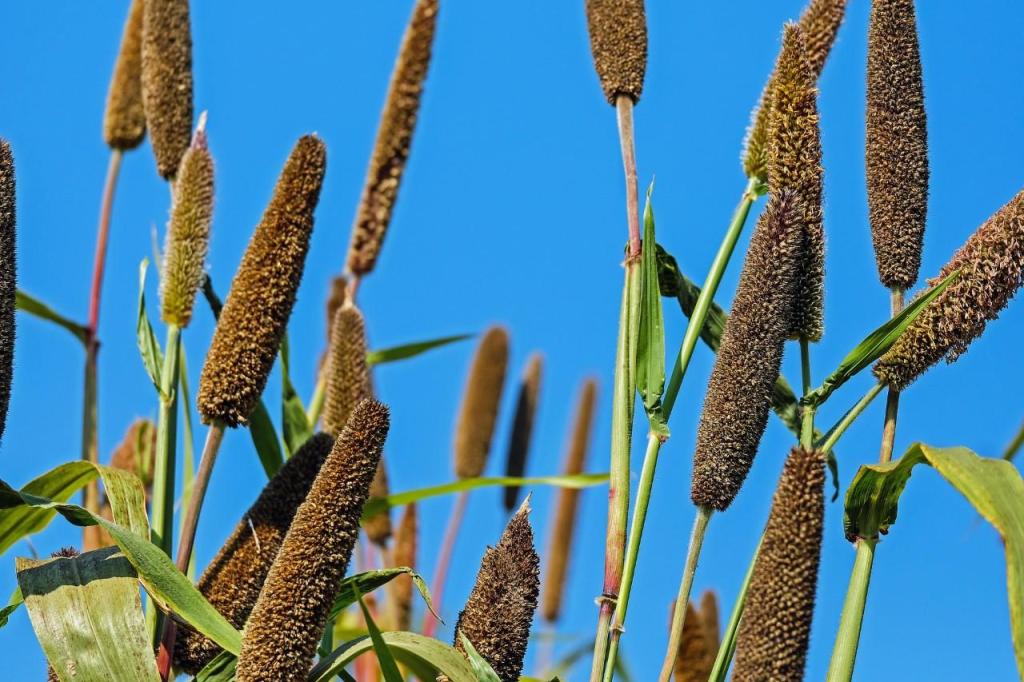
Millets are small-grained cereal crops that are widely grown around the world, particularly in marginal or low-fertile semi-arid soils. There are many different types of millet, including sorghum, pearl millet, finger millet, foxtail millet, porso millet, barnyard millet, and little and Kodo millet. Millets are highly nutritious, gluten-free, and have a low glycemic index, making them a good choice for people with dietary concerns. Apart from that, they are high in dietary fiber, protein, vitamins, and minerals, including iron, magnesium, phosphorus, and potassium. Millets are called Nutri cereals as they provide nutrients for the normal functioning of the human body.
The origin of millets is traced back to ancient times, as they were among the first crops to be cultivated by early humans. The millets originated in Asia and Africa, and evidence traces them back to 8000 BCE when foxtail millets were cultivated in China. They were also cultivated in other parts of Asia, including India and the Middle East, and were important sources for many ancient civilizations.
According to the Food and Agriculture Organization (FAO) of the UN, the global production of millet in 2020 was 30.48 million metric tons, with India being the largest producer followed by Niger and countries like China, Nigeria, Mali, etc.
Though India is the largest producer of millets, the share of millets in total food grain production has dropped from 40 to 10 percent, and the area has decreased. The production and consumption of rice and wheat over the years and becomes the staple food. Rice has replaced millet to be eaten directly, while wheat flour has replaced flours made from millet.
In India, millets are primarily cultivated in 21 states over an area of 12.53 million hectares, producing 15.53 million tons at a yield of 1237 kg per ha. The major reasons for the decline in millets over the years in India were found to be high remuneration given to other competing crops, subsidized supply of other cereals through PDS, a lack of subsidies for inputs, and changes in consumer preferences. The green revolution did have mixed effects on the millets.

However, millet’s popularity is slowly rising again due to its nutritive values, and efforts have been made to increase production through programs such as ODOP, Millet Mission, Millet Village Scheme, Mid-Day Meal, and Nutrihug-TBI. 2023 has been declared the International Year of Millet by the UN to raise awareness and pay attention to the nutritional and health benefits of millet and the indigenous crops.
Millets are versatile, grown with minimum inputs and can be used in a variety of dishes, including bread, porridge, and even beer. In recent times, the value-added products out of millets are increasing tremendously. They are superfood that has the potential to play a significant in addressing the global health and food security issues.
Here are some of the yummy traditional millet recipes: cumbu kool, ragi kali, samai pongal, ragi dosa, foxtail bisibelebath, and many more.
Cheers!
Check out the similar posts: #Decodeagri05: Hidden costs of the rice revolution! & other Agri posts
If you like what you see and wish to support my work, then
Share your thoughts/suggestion at the comment section or mail at
randomwhyss[@]gmail[dot]com
Don’t miss out! Get notified about new blog posts straight to your inbox !
(No spam, pinky promise!)
Enter your mail to receive updates


 Random Whys
2 thoughts on “Millet Magic: Ancient Grains for a Modern World!”
Comments are closed.