
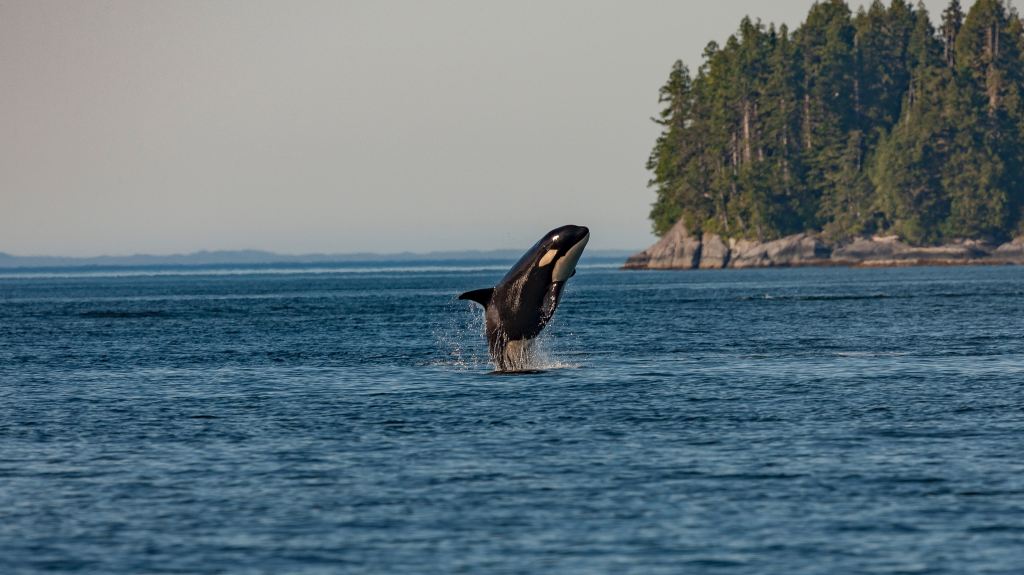
Last week was totally crazy. My mind was all over the place, and I needed something to chill out with IG. Usually, the algorithms shows more reels like the ones you’ve liked and more likely to enjoy. It was reels of whales and dolphins jumping, coming to the shore for a breath, interacting with humans etc. While I was mindlessly scrolling, I stumbled upon this heartwarming reel (check it out below). Those creatures are pure therapy! But here’s the thing: I wasn’t sure what kind of whale it was or where it was from. So, I did some internet detective work and discovered they’re kind of like humans but living their best lives in the aquatic world.
The orca, scientifically known as Orcinus orca, belongs to the dolphin family and is renowned for its striking black and white coloration. These awesome creatures can be found in all the world’s oceans, chilling in tightly knit family squads called pods. Each pod exhibits unique communication patterns and behaviors. Unbelievable but true, these pods can journey a mind-blowing 100 miles in a day, all to keep up with their food during its migration.
There are two primary types of orca pods: resident and transient. Resident pods are like big family groups with strong lifelong bonds. A typical unit within a resident pod includes the mother whale, her dependent offspring (usually ten years old or younger), and adult offspring. Male orcas are known to remain with their mothers throughout their lives, temporarily leaving only to mate before returning to their family pod. Resident pods love their fishy meals, like salmon, herring, and rockfish. They all pitch in to locate and catch schools of fish, like a well-coordinated squad.
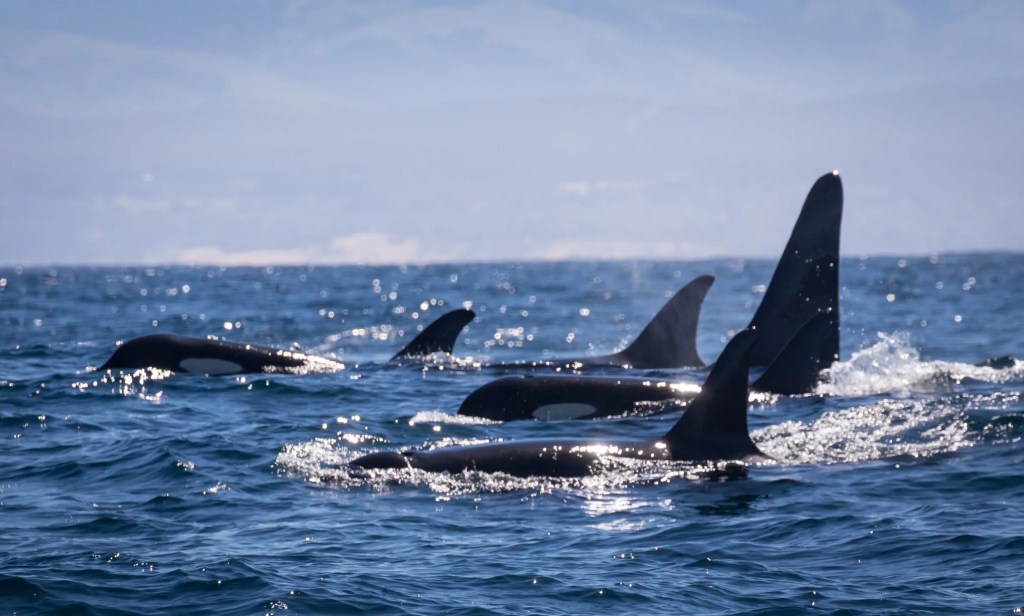
On the flip side, transients are made up of smaller family groups and frequently travel up to 100 miles while hunting for food. Their diet is all about meat; they feast on seals, sea lions, and other whales. Male orcas in the wild generally have an average lifespan of about 30 years, while female orcas typically live for approximately 50 years.
Besides looking totally majestic, these ocean creatures have brains that are seriously impressive, giving even us humans a run for our money. These brainiacs know how to plan out their hunting missions, navigate through huge stretches of ocean, and interact socially in intricate ways. It’s wild to think that some scientists actually believe these killer whales might be the second smartest beings on the planet, right after us humans. Let’s explore some.
#Language
They have a very sophisticated language with a mix of clicks, whistles, pulsed calls, and all sorts of unique sounds. Every orca pod has its own exclusive set of vocalizations, commonly referred to as dialects. These dialects are passed down through generations, ensuring the formation and survival of distinct orca social groups. Along with that, even their hunting techniques, cultural behavior, and dietary preferences are also inherited within the communities.
#Brain Size
Killer whales possess impressively large brains, with an average brain size of about 6,000 cubic centimeters, which is almost double the size of the average human brain. This size difference is significant when considering that brain size is often associated with higher cognitive abilities. Another cool thing is that, just like us humans, killer whales have a well-developed neocortex. That’s the part of the brain responsible for all the thinking, emotion, and social cognition stuff.
#Global Distribution
They are the globetrotters and kings of adaptability in the underwater world. They can be found in almost every ocean except the Arctic. Some residents stick to the coastal areas, while others (transients) are like wanderers, covering larger territories. They are incredibly fast swimmers, reaching speeds of up to 55.5 km/hr and having the ability to make sharp turns and navigate through complex environments with precision.

#Wave wash
Orcas have a significant impact on their ecosystems as they actively shape their environment. These clever creatures create some serious waves when they swim in shallow waters. Those waves shake the seals right off their cozy ice floes, making them easy targets for the hungry orcas. As they age, older females play a crucial role in their pod’s survival. They pass on their wisdom, show the ropes to the young ones, and make sure everyone knows where to find good food.
#Unihemispheric Sleep
Orcas have a unique sleeping pattern that differs from humans. They can’t just switch off and go into automatic sleep mode like us. They have to actively decide when to take a breath. To overcome this challenge, orcas employ a remarkable adaptation called unihemispheric sleep. They allow only one half of their brains to sleep at a time, while the other half remains alert. This enables them to continue breathing and stay vigilant for potential dangers in their environment. When they sleep, orcas close one eye, corresponding to the side of the brain that is awake. By alternating which side of the brain is asleep, orcas can obtain the rest they need without ever losing consciousness. During sleep, they swim slowly and steadily, typically near the water’s surface.
#Longeity
Orcas live some seriously long lives, with some hanging around for a whopping 90 years or even more. What’s even more intriguing is that female orcas experience menopause, a rarity in the animal kingdom. But, when kept in captivity, such as in aquariums or marine parks, the life span of orcas can be significantly impacted.
To sum it up, oorcas truly captivate our hearts with their intelligence, unique social structures, and remarkable adaptations. However, as we’ve explored, the captivity of these magnificent creatures poses significant challenges. Just like humans, orcas thrive in their natural environment, where they can exhibit their full potential and live long, fulfilling lives. It is crucial that we prioritize their well-being and ensure their freedom for generations to come. Let us strive to be guardians of their world, honoring their inherent rights and celebrating the wonders of their existence.
Cheers!
PS: Reel
I do send out my posts to very few people. Join my mailing list if you enjoy what you read.

 Random Whys