
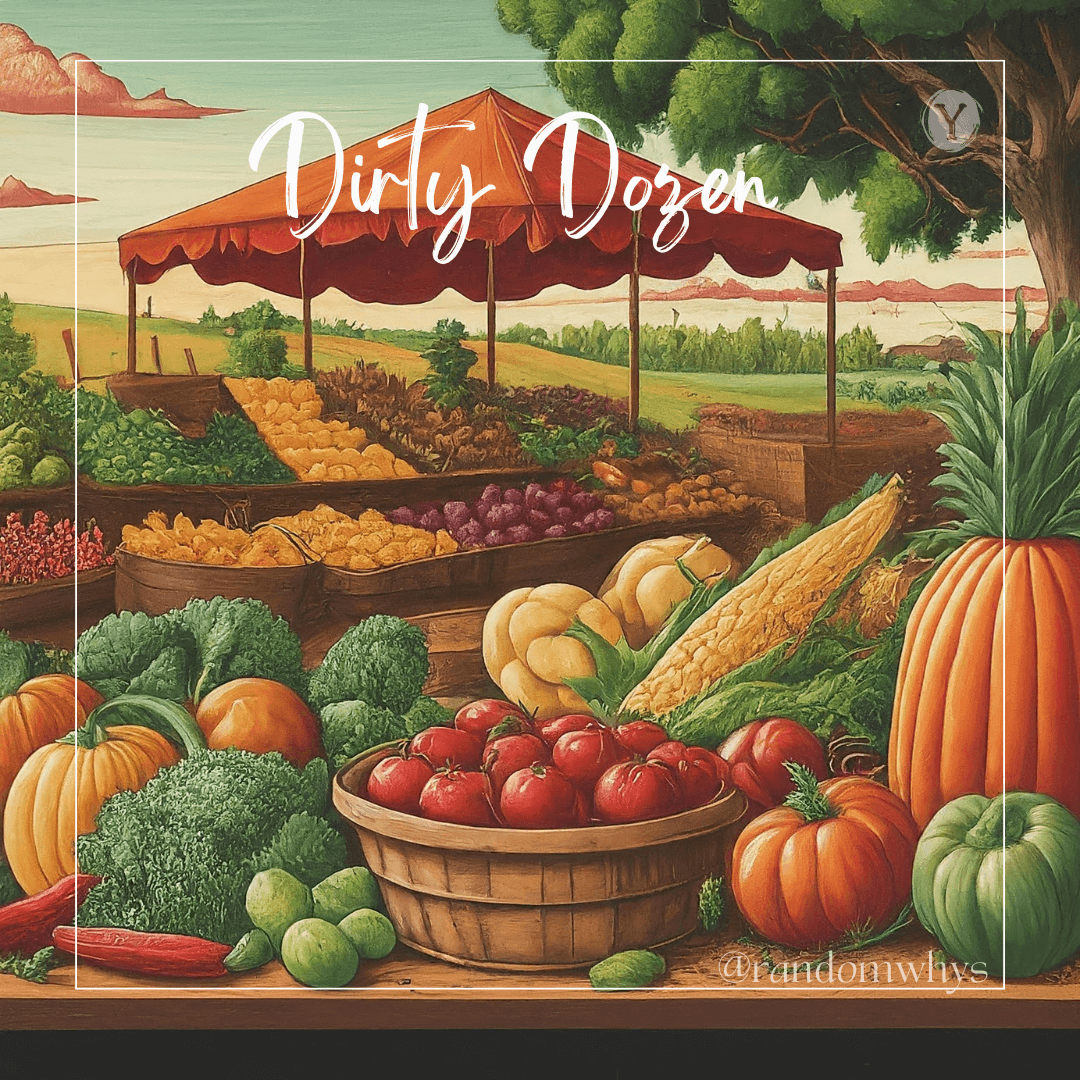
As you can see from the title, it’s not about a game. It’s about fruits and veggies. As we stroll through the shelves of the grocery store, the vibrant colors of fresh fruits and vegetables lure us, promising a burst of nutrition and flavor. However, hidden beneath the surface lies a problem that has sparked debates and raised eyebrows: the infamous Dirty Dozen.
So, what’s the Dirty Dozen?
The Dirty Dozen refers to the list of fruits and veggies with the highest pesticide residues. The Environmental Working Group raises the alarm about toxic exposures every year. Some of the Dirty Dozen include blueberries, strawberries, peaches, kale, spinach, and nectarines.
Let’s talk about why there is a need for pesticides. Pesticides are used in modern agriculture to control insect pests, weeds, fungi, and other organisms that can damage or destroy crops. They are used to increase yield to meet the demands of a growing population. This prevents losses due to pests and disease and also reduces the labour required for manual pest control methods. Farmers use integrated pest management strategies to protect their crops, rotating crops and avoiding spray applications unless necessary. And certain tough botanical crops simply can’t be grown sustainably without some level of crop protection. That’s where organic farming comes in as an alternative approach.
How about organic farming?
Organic farming uses natural inputs and biological pest control. This approach is more labor-intensive. It requires greater expertise compared to synthetic pest and weed control methods. Organic farming can achieve impressive yields. But it may not be feasible yet to solely rely on organic methods to supply food for the entire world’s population. They’d have to change their whole system, which means spending money on new practices, equipment, and setup. Plus, during the switch, they might have lower yields and profits as the soil adjusts.
Organic certification is time-consuming (usually 2 to 3 years) and costly. Also, there’s worry about dealing with pests and diseases without synthetic pesticides, which could lead to crop losses if not managed well. However, concerns rise when there are potential environmental and health risks, as well as the rise of pesticide resistance.
As a mindful consumer and agriculturist, I understand the arguments on both sides of the pesticide residue issue. The Environmental Working Group’s testing highlights higher pesticide levels in some produce. Yet, some experts argue against this. They say the pesticide levels are too low. These low levels do not pose significant dietary risks but the articles says otherwise.
But, seeing some of my favorites, like blueberries, apples, and grapes, there year after year is always disheartening. As much as I love their taste and nutritional value, I really don’t want all those pesticides to dive into the body.
What can be done?
First, eating a diet rich in fresh produce, whether conventionally or organically grown, is vastly better than not eating it at all. The nutritional benefits of fruits and vegetables outweigh the potential downsides. That’s why I try my best to buy organic when I can find and afford it.
Second, It is especially recommended for items on the “dirty dozen” list. These tend to have higher pesticide residues. But I don’t beat myself up when organic isn’t an option; And let’s be real, organic isn’t always an option for everyone’s budget or location. I make sure to wash and scrub produce thoroughly. I’m also aware of the challenges that organic farming faces compared to conventional methods.
Biggest takeaway:
I have a deep appreciation for all farmers, both organic and conventional, who put in the hard work to get food onto our plates. Without them, we wouldn’t have the plenty and variety of food that we often take for granted.
At the end of the day, eating fresh fruits and vegetables, whether organic or conventionally grown, is so much better than avoiding it. Remember to buy from the local stores that you trust. If affordable, opt for organic produce. Otherwise, after the buy, make sure that you give a good wash.
Now, who’s up for a nice, big salad?
Cheers!
Thank you for reading ♡!
If you found this helpful, please give it a thumbs up and share it with anyone who might find it useful!
If you like what you see and wish to support my work, then
Share your thoughts/suggestions at the comment section or mail at
randomwhyss[@]gmail[dot]com
Don’t miss out! Get notified about new blog posts straight to your inbox ! (No spam, pinky promise!)
Enter your email below to receive updates


 Random Whys
3 thoughts on “Organic vs. Conventional: The Dirty Dozen debate!”
Comments are closed.