
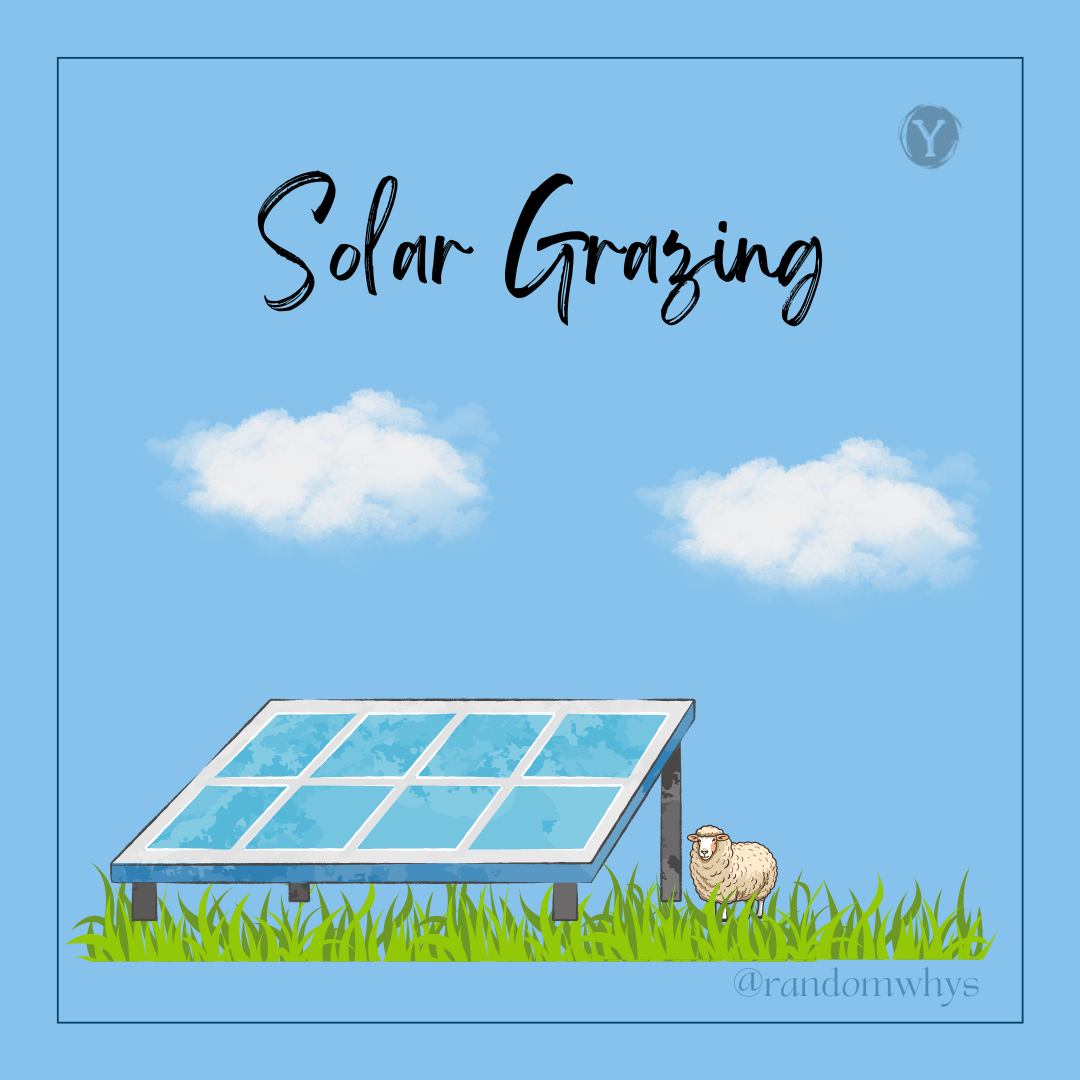
Imagine you have a big field where you can play and run around. Now, what if we could set up something in that field that could give us electricity to power our fields, homes, schools, and even charge our phones and laptops?
No, it’s not typical electricity production, but rather something that’s more sustainable and innovative.
Those are called solar panels. They are made of a material that can take energy from the sun’s rays. When the sun shines on these solar panels during the day, they can create electricity.
Solar Panels and Basics
Solar panels are devices that convert sunlight into electricity. They’re made up of many individual solar cells, which are like tiny factories that use sunlight to create electricity. These cells are constructed from special materials, with the most common option being silicon. However, other materials are used as well, such as cadmium telluride and copper indium gallium selenide.
There are two main types of solar panels made from silicon, the most common material used. The first kind is called monocrystalline. These panels are made from a single, large crystal of silicon and are generally considered more efficient at converting sunlight into electricity. However, they can be more expensive to produce.
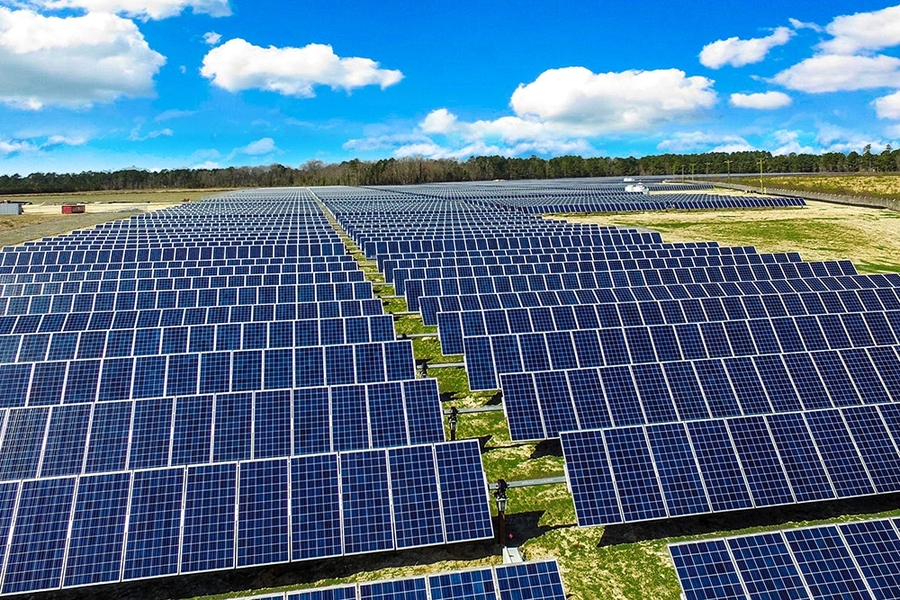
The second type is called polycrystalline. These panels are made from many smaller silicon crystals melted together. They are typically less expensive than monocrystalline panels, but they may convert sunlight into electricity slightly less efficiently.
Another type of solar panel uses thin layers of a special light-sensitive material instead of silicon. These are called thin-film solar panels. They aren’t quite as good at converting sunlight into electricity as the more common silicon panels, but they have some advantages. They can be more flexible and lightweight. Mostly used as building-integrated photovoltaics (BIPV) or portable solar chargers.
Working of Solar Panels
When photons from sunlight strike the solar cell, they impart energy to the semiconductor material, exciting electrons and creating electron-hole pairs. The built-in electric field within the solar cell separates these electron-hole pairs. (It creates an imbalance by pushing something tiny (like really tiny!) inside the material to move in a specific direction.) This generates a flow of electrons, which constitutes an electrical current. (Similar to how a battery works!) This phenomenon is known as the photovoltaic effect.
Individual solar cells are grouped together into small boxes called modules. These modules are then connected to form even larger groups called arrays. Then, they are combined to form a complete solar PV system. These arrays are usually mounted on frames or racks, sometimes on special stands that can move.
Agrivoltaics
It is a combination of agriculture and solar power on the same land. Each country has different and revised definitions for the Agrivoltaics. It is given by the German Institute for Standardization (DIN) as “Agricultural photovoltaics (Agrivoltaics) is the combined use of one and the same area of land for agricultural production as the primary use and for electricity production by means of a PV system as a secondary use.”
It involves installing solar panels on elevated structures over pastures or crops, allowing sheep (mostly) or goats to graze, and aquaculture underneath. It involves the installation of solar panels on agricultural lands, creating a dual-use system that maximizes land productivity while generating clean electricity.
Types & Variations
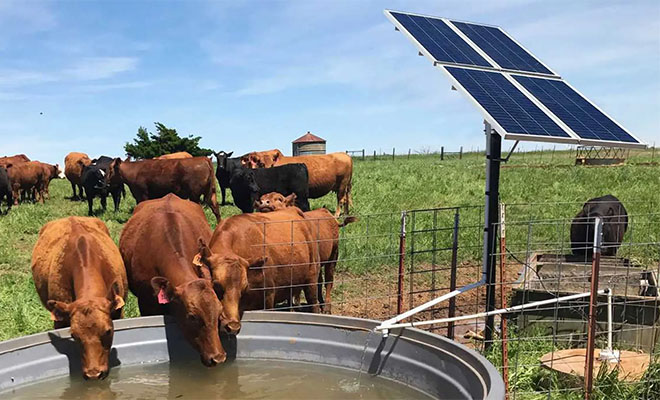
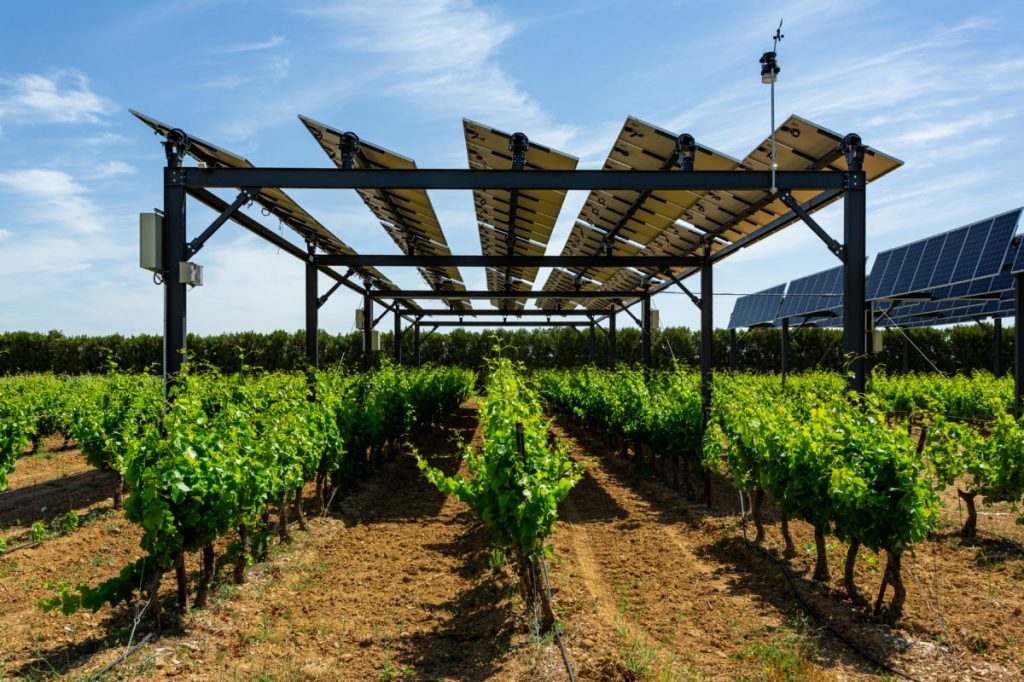
#Overhead solar PV: This is the most common setup. Solar panels are mounted on elevated structures, allowing crops or animals to grow underneath.
#Interspace PV: Solar panels are spaced out further apart, leaving more room for plants or animals to thrive in between.
#Vertical Solar Panels: While most solar panels are laid flat on the ground or tilted at an angle, some Agrivoltaics systems might use vertical panels. These panels stand upright, which can be a good option in some situations.
There are three main types of stands:
#Fixed: These stands don’t move at all. They’re simple and affordable, but they might not capture the most sunlight throughout the day.
#One-way adjustable: These stands can tilt up and down to follow the sun’s seasonal movement. This helps them catch more sunlight, especially in winter when the sun is lower in the sky.
#Two-way adjustable: These stands can tilt up and down and also rotate from east to west. This allows them to follow the sun throughout the day, catching the most sunlight possible. They’re the most efficient option but also the most expensive.
Implementation
We’ll need to put up tall structures, like big poles or frames. On top of these structures, we’ll place the solar panels. These panels will be facing the sun so that they can catch as much sunlight as possible. The elevated design of the solar PV arrays is a key feature of solar grazing systems. The height and spacing of the arrays are carefully engineered to allow sufficient clearance for agricultural activities to take place underneath.
Let’s understand with an example.
Area: 100m * 100m (total: 10,000 m2). (Without spacing)
Panel size: 2m * 1m (2 m2).
Output per panel: 250W to 450W (Let’s take 300W – 0.3KW)
Average Solar Irradiance: 5 KWh/m2 (differs depending on location)
Panel efficiency: 20%
Derating Factor = 0.8 (Dust, weather phenomena, temperature variations, etc.)
Calculation
Total number of panels = Total area/area of panels = 10000/2 = 5000 panels (not considering the space)
Total installed capacity = Total number of solar panels Output per panel = 50000. 3KW = 1500KW
Energy Generated
Energy generated = Total installed capacity average Solar radiance Panel Efficiency * Derating Factor
= 1500 5 0.20 *0.8
= 1200 KW/day
= 4,38,000KW/year
Countries
Countries like China, Japan, Germany, Italy, and France are advancing in the area of agrivoltaics. While in India, there are multiple projects going on in the areas of Gujarat, Uttar Pradesh, Telangana, Maharashtra, Delhi, Rajasthan, Himachal Pradesh, etc. Here are some of the insights and outcomes of those projects[1].
Benefits
#Double Duty from Land: Agrivoltaics lets farmers get more out of their land. By putting solar panels overhead, they can still grow crops or raise animals’ underneath, like a two-in-one system!
#Sun Power for a Greener Future: Solar panels use the sun’s clean energy, so farmers rely less on fossil fuels that pollute the air. This helps fight climate change and keeps the environment healthier. Plus, the shade from the panels can improve soil health and provide a haven for wildlife.
#More Income for Farms: With Agrivoltaics, farmers can lease space on their land to companies that install solar panels. This creates a new income stream, making farms more financially secure, especially in areas where weather or prices can be unpredictable.
#Stronger Energy System: Solar panels spread out power generation, reducing reliance on big power plants and imported fuels. This makes the energy system more reliable, especially in remote areas where electricity might be scarce.
#Happy and Healthy Animals: The shade from solar panels keeps animals cool and comfortable, especially in hot climates. This can also protect them from harsh weather like hail or heavy rain. Vertical panels can act like walls, providing extra shelter.
#Protection for Crops: The panels can act like a shield, safeguarding crops from damaging hail or strong winds. They can also help reduce dust blowing onto the panels, keeping them clean and efficient.
Challenges to Consider
#Room for Machinery: The support structures for the solar panels can make it trickier to use big farm equipment. This might mean more manual labor, which can increase costs.
#Keeping the Panels Clean: Since the panels are high up, cleaning them can be difficult. Dirty panels don’t work as well, so there’s a balance to strike.
#Upfront Costs: Setting up an Agrivoltaics system can be expensive, especially for small farmers.
Agrivoltaics is a win-win for farms and the environment. It unlocks clean energy generation while preserving agricultural land use. Challenges exist, but ongoing advancements in India show promise for a sustainable future where farms flourish as powerhouses of both food and clean energy. Lets look forward!
Cheers!
PS: Wow, this is a monster one!
Thank you for reading ♡! If you found this helpful, please give it a thumbs up and share it with anyone who might find it useful!
If you like what you see and wish to support my work, then
Suggestions/mistakes are most welcomed!
randomwhyss[@]gmail.com
Reference
- International Institute for Sustainable Development (IISD). (2023, May). Agrivoltaics in India: Challenges and Opportunities for Scale-Up. https://www.iisd.org/system/files/2023-05/agrivoltaics-in-india.pdf
- Pulipaka, S., & Peparthy, M. (2021). Agrivoltaics in India: An Overview of Operational Projects and Relevant Policies National Solar Energy Federation of India. https://www.energyforum.in/fileadmin/user_upload/india/media_elements/Photos_And_Gallery/20201210_SmarterE_AgroPV/20201212_NSEFI_on_AgriPV_in_India__1_.pdf
- Trommsdorff, M., Gruber, S., Keinath, T., Hopf, M., Hermann, C., Schönberger, F., Högy, P., Zikeli, S., Ehmann, A., Weselek, A., Bodmer, U., Rösch, C., Ketzer, D., Weinberger, N., & Vollprecht, J. (2022). Agrivoltaics: Opportunities for Agriculture and the Energy Transition Fraunhofer Institute for Solar Energy Systems, ISE. https://www.ise.fraunhofer.de/content/dam/ise/en/documents/publications/studies/APV-Guideline.pdf
- Wall article
- More Notes
Don’t miss out! Get notified about new blog posts straight to your inbox ! (No spam, pinky promise!)
Enter your email below to receive updates.


 Random Whys