

Think about one ingredient found in lots of things you use every day, like cookies and shampoo. This ingredient is everywhere because it’s useful and cheap, but making it causes a lot of damage to the environment. This ingredient is called palm oil. It’s great for some things, but it brings up big questions about how we take care of the planet. Let’s explore.
The oil palm tree (Elaeis guineensis) is believed to have originated in West Africa. The fruits (orangish red) have been used for food, fiber, and oil. Palm oil cultivation dates back to 3000 BC in Egypt, where it was used for lamp fuel and in religious ceremonies. Later in the 19th century, palm oil gained widespread commercial significance. Then, it was used in the manufacture of soap, candles, and lubricants.

The global demand for palm oil fuelled its cultivation beyond its native regions. Europeans introduced the oil palm to the Americas (16th century) and Southeast Asia (19th century). Today, Indonesia (59%) and Malaysia (24%) are the world’s largest producers and exporters of palm oil, accounting for approximately 83% of global production. Thailand, Colombia, Nigeria, and Papua New Guinea also contribute to the production.
India produces around 305,000 metric tons (0.4% of global production). In India, palm oil cultivation is concentrated in the southern and northeastern regions. Andhra Pradesh is the primary producer and includes other states such as Goa, Karnataka, Kerala, Mizoram, and Tamil Nadu. The Indian government has tried to increase the area by implementing the National Mission on Edible Oils—Oil Palm (NMEO-OP).
Palm cultivation requires specific climatic conditions, including high temperatures, rainfall, and well-drained soils. The oil palm is a perennial crop that can yield fruits for up to 30 years, with peak production occurring between 6 and 10 years after planting. 25–30 tons of fresh fruit bunches per hectare. Have a look at the other requirements here.
As the trees mature, massive bunches of orange-red oil palm fruits emerge. Harvesting is typically done every 10–14 days. It involves skilled workers using sharp tools (a hook) to carefully remove the fruit bunches without damaging the tree.

The fruits are harvested and then processed to separate the pulp from the kernel. The pulp is crushed and heated to extract the crude palm oil, while the kernel is further processed to produce palm kernel oil. This dual output makes the oil palm an exceptionally efficient crop. It yields more oil per hectare than any other vegetable oil crop. This results in affordability for both producers and consumers.
Let me add a YouTube link for palm oil extraction.
Palm oil has several advantages. It is a highly efficient crop. Moreover, it remains stable at high temperatures. It is also versatile, with a high smoke point and a long shelf life, making it suitable for frying and baking. Additionally, palm oil is used in biofuels (Lets explore later), cosmetics, and industrial products.
However, the story of palm oil is not without its dark side. On the health side, increased consumption of palm oil might raise LDL (bad cholesterol) and the risk of cardiovascular disease.
Recently, there was talk in the town regarding the usage of palm oil in Lays, especially in India. If you had followed Food Pharma, you’d have an idea. Indian Lays uses palm oil, which is not used in other countries. They have agreed to reduce and initiated the process of mixing the sunflower and palm oil.
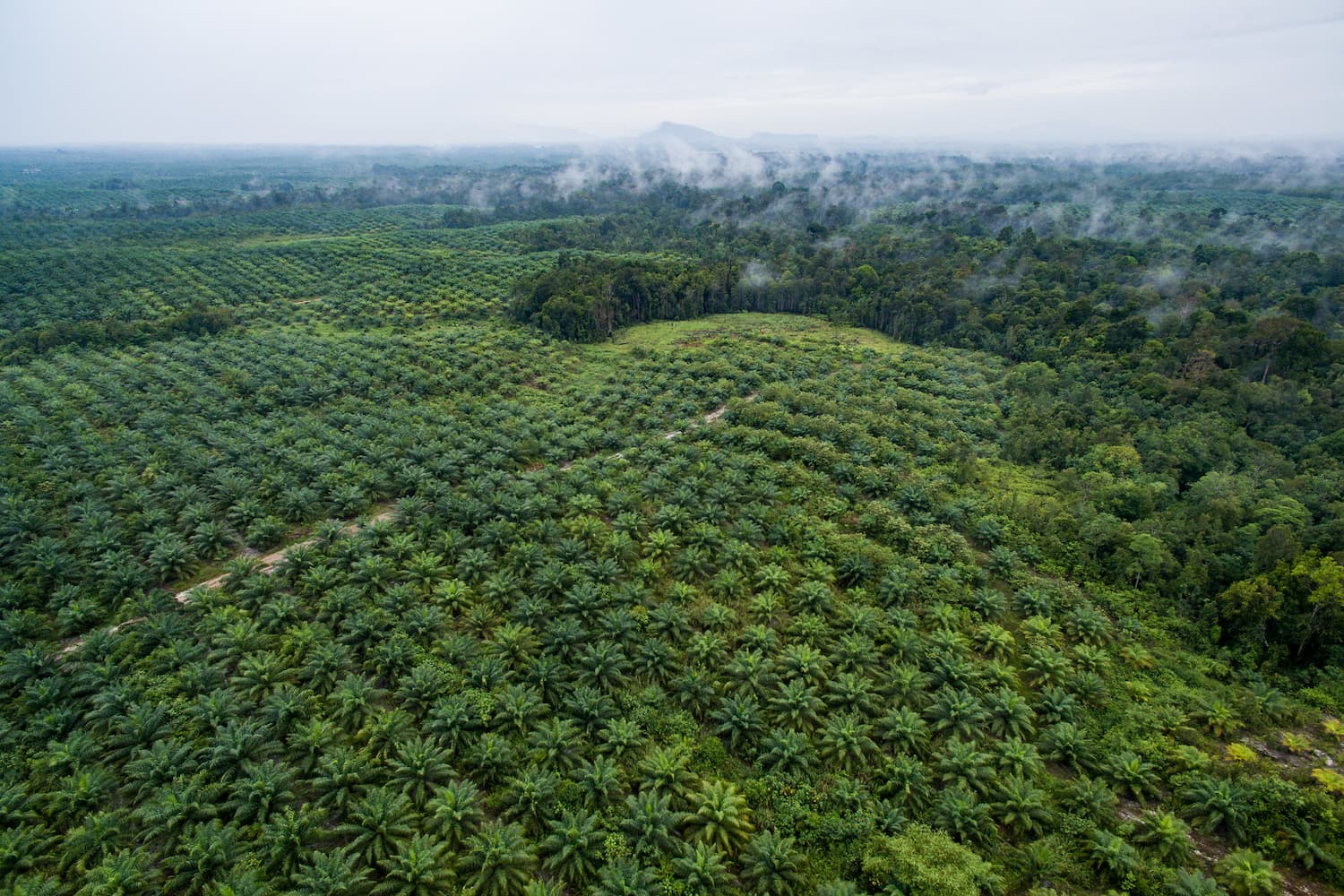
But the most pressing concern is deforestation. To make way for plantations, vast areas of rainforest, particularly in Southeast Asia, are being cleared. This not only destroys ecosystems but also relocates indigenous communities. It also contributes significantly to greenhouse gas emissions.
Let me brief it!
Actually, deforestation releases massive amounts of carbon dioxide stored in trees. These are usually grown over the peatlands. Peatlands are a type of wetlands that are in a waterlogged condition and prevent plants from decaying and forming a peat layer on the surface. They store a good amount of carbon. But clearing and draining peatlands releases significant greenhouse gases, contributing to climate change. Almost responsible for 5% of global anthropogenic CO2 emissions. Have a look at Indonesia’s palm oil production and its harm.
Another issue is labor exploitation. Reports of unethical labor practices, including child labor and inadequate working conditions, have tarnished the palm oil industry’s image. Concerns exist regarding the safety of agricultural chemicals used in plantations, potentially harming not only workers but also surrounding communities and wildlife.
The environmental issues surrounding palm oil have provoked an international outcry. Many countries have enacted laws to combat deforestation and promote sustainable palm oil production. But enforcing these laws is tough, and illegal deforestation still happens. RSPO, and Other Certifications: In response to these concerns, various sustainability initiatives and certification schemes have emerged.
The Roundtable on Sustainable Palm Oil (RSPO) is a prominent organization that has established standards for sustainable palm oil production. Certification through the RSPO shows a commitment to responsible practices, including minimizing deforestation and protecting biodiversity.
Other certification schemes, such as the International Sustainability and Carbon Certification (ISCC) and the Rainforest Alliance Sustainable Agriculture Standard, also aim to promote sustainable practices in the palm oil industry. These initiatives empower consumers to make informed choices by opting for products containing RSPO-certified or similarly accredited palm oil.
The palm oil teaches us how efficient it is yet its impact on nature and people. Even though it’s useful, the way we make it now harms the environment. Deforestation, habitat loss, and greenhouse gas emissions are just a few of the hidden costs associated with palm oil production.
By working together, we can ensure that the palm oil we consume doesn’t come at the expense of our planet’s health. Consumers can make a big difference by asking companies to be clear about where their palm oil comes from. And also picking products with sustainable palm oil certifications. This puts pressure on the industry to do the right thing. Governments and organizations can help by making stricter rules, finding other crops that are better for the environment, and supporting farmers who use sustainable methods.
This doesn’t mean we have to stop using palm oil altogether; it just means we need to use it in a better way. That way, palm oil can be a good thing without hurting our planet. The choice is ours! To continue down the path of unsustainable practices or to forge a new course towards a future.
Cheers!
Thank you for reading ♡!
If you found this helpful, please give it a thumbs up and share it with anyone who might find it useful!
If you like what you see and wish to support my work, then
Share your thoughts/suggestions at the comment section or mail at
randomwhyss[@]gmail[dot]com
Don’t miss out! Get notified about new blog posts straight to your inbox !
(No spam, pinky promise!)


 Random Whys