

Have you heard of the domino effect? It’s a series of events where each event triggers the next, creating a cascading impact. This morning, I read a story on social media about the structure, or “doll,” of a dugong. Curious, I discovered that a dugong is a sea cow, celebrated today for its ecological importance. Questions arose: What exactly is a dugong? Is it a mammal? How is it related to elephants? What does it eat? Why is it endangered? And how does climate change affect it? Let’s explore.
#What is a dugong?
Dugongs, often called sea cows. They are marine mammals that play an important role in maintaining the health of their habitats. They roam around the shallow coastal waters of the Indian and Pacific Oceans for millions of years. Unfortunately, climate change poses significant threats to their survival. Dugongs are classified as vulnerable, meaning they are at high risk of facing extinction.

#Why is it called a sea cow?
Dugongs are called sea cows because, like cows, they graze on plants—in this case, seagrass. Using their bristly lips, they uproot and eat seagrass, resembling cows grazing in a field. A mature dugong can reach 3 meters in length and weigh up to 400 kg, making them one of the largest marine herbivores. An interesting fact is that early explorers saw these grazing giants, and, well, they looked like cows in the sea. This catchy nickname stuck, with “sea cow” and the French “vache marine.”
#History and Evolution
Dugongs have a rich history, with fossil records showing they’ve inhabited our oceans for over 40 million years. They evolved from terrestrial, plant-eating mammals, adapting to a semi-aquatic lifestyle over time. Dugongs belong to the order Sirenia, which also includes manatees. They share a common ancestor with elephants. Unlike whales, which evolved from terrestrial carnivores, dugongs and other sirenians evolved from herbivorous ancestors.
#Relationship to Elephants
Dugongs and elephants have a common ancestor. They share similarities in their tooth structures and skeletal systems. Both have a streamlined body adapted for their respective environments—coastal waters for dugongs and land for elephants. This close evolutionary relationship is fascinating and highlights the unique adaptations each species has developed over millions of years
#Habitat and Distribution
The Indo-West Pacific region’s warm coastal waters are home to dugongs. They are mostly found in Australia’s shallow waters, the Great Barrier Reef, and the Queensland coast. They feed mainly on seagrass. It is abundant in sheltered bays, mangrove channels, and the waters surrounding islands.
#Adaptations and physical characteristics
Since they eat plants, you might wonder if they might be ruminants. No, they have a simple digestive system. They have a single-chambered stomach and a long, coiled intestine. Their digestive process relies on the fermentation of plant material by gut microbes. Similar to horses and other hindgut fermenters.
They breathe through nostrils located on the top of their snout. This allows them to surface and take breaths without exposing their entire body. They can hold it up for 6 minutes. They have efficient respiratory systems and a high tolerance for low oxygen levels. This allows them to remain submerged for extended periods while feeding on seagrass beds.
#Diet and ecological role.
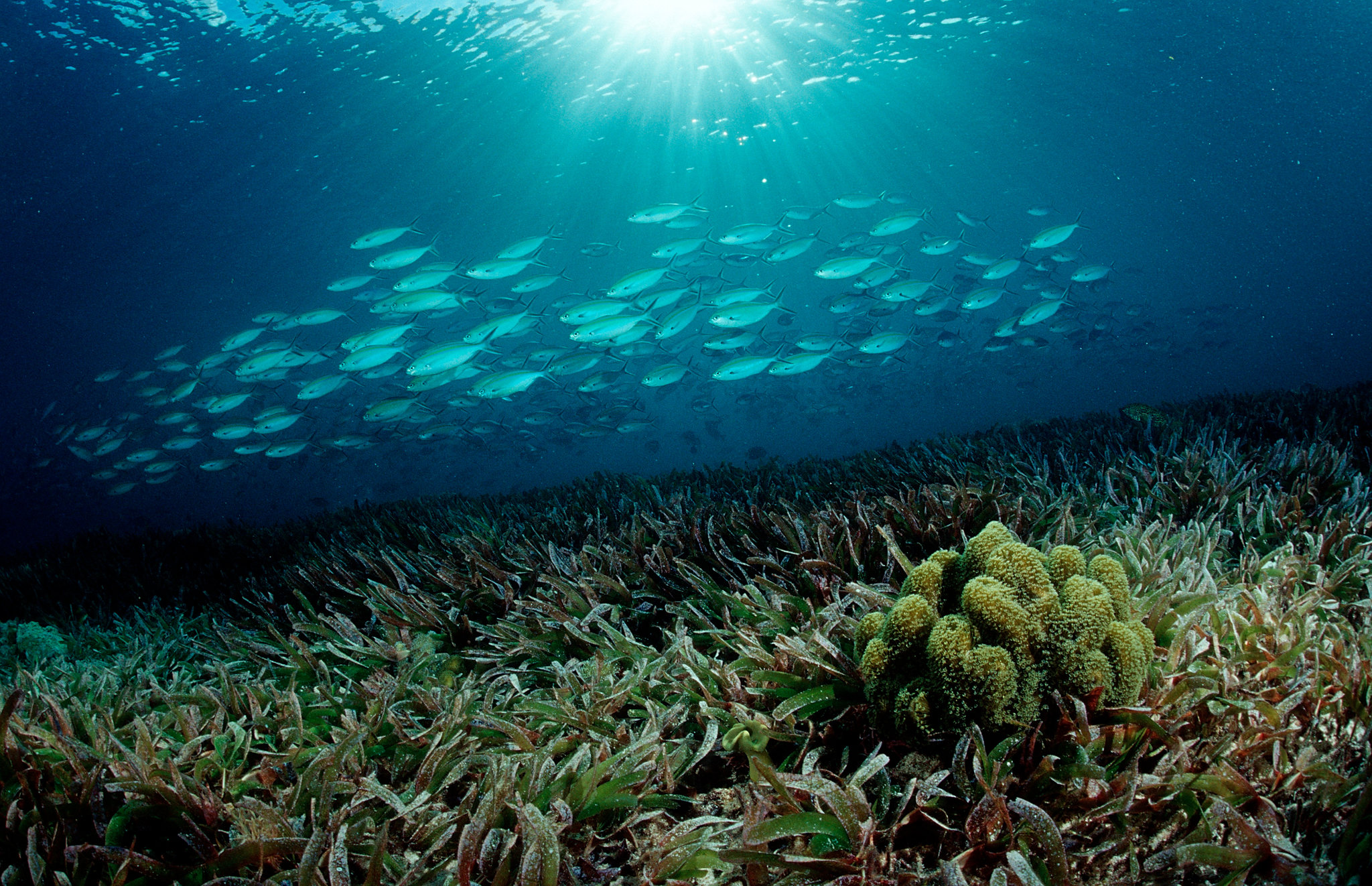
Dugongs feed almost exclusively on seagrass, making them an essential component of their ecosystem. Seagrass isn’t a grassy weed; it’s a flowering plant. It supports a wide range of marine life. By grazing on these plants, dugongs help maintain the health of seagrass meadows, which in turn support fish, crustaceans, and other marine species.
#Seagrass and climate change
Seagrass meadows are critical not only for dugongs but also for combating climate change. They are not grasses instead a flowering plant. These underwater plants sequester significant amounts of carbon dioxide, acting as carbon sinks. Unlike land plants that release carbon upon decomposition, seagrass meadows create oxygen-poor environments where decomposers struggle.
This slow breakdown allows dead seagrass and captured carbon to be buried beneath sediment layers, locking away carbon for years. Seagrass ecosystems can sequester carbon at a rate up to 35 times faster than tropical rainforests, making them vital for both climate regulation and ecosystem health.
However, human activities and the impacts of climate change, such as rising temperatures, ocean acidification, and coastal development, threaten seagrass meadows. Consequently, dugongs face the dual threat of habitat loss and reduced food availability.
#Conservation Efforts and Organizations
Numerous organizations are working to protect dugongs and their habitats. The Convention on International Trade in Endangered Species of Wild Fauna and Flora (CITES) lists dugongs to prevent their trade. The World Wildlife Fund (WWF) and the United Nations Environment Programme (UNEP) also run various initiatives to conserve dugong populations and their seagrass habitats.
These initiatives include establishing protected marine areas, researching seagrass restoration techniques, and raising public awareness. Every year, on May 28th, we celebrate International Dugong Day to highlight these efforts and the importance of protecting these gentle sea cows.
In a nutshell, our actions on land ripple through the ocean, causing a chain reaction that threatens dugongs. Coastal development, pollution, and climate change are pushing these gentle giants toward extinction. To break this cycle and protect dugongs, we need to be more mindful of our environmental impact and work together to preserve their underwater homes. Saving the dugongs means taking better care of our planet, benefiting us all.
Cheers!
PS: World Dugong day!
Thank you for reading ♡!
If you found this helpful, please give it a thumbs up and share it with anyone who might find it useful! Do check out the latest posts on the Home
If you like what you see and wish to support my work, then
Share your thoughts/suggestions at the comment section or mail at
randomwhyss[@]gmail[dot]com
Don’t miss out! Get notified about new blog posts straight to your inbox !
(No spam, pinky promise!)
Enter your mail to receive updates


 Random Whys