
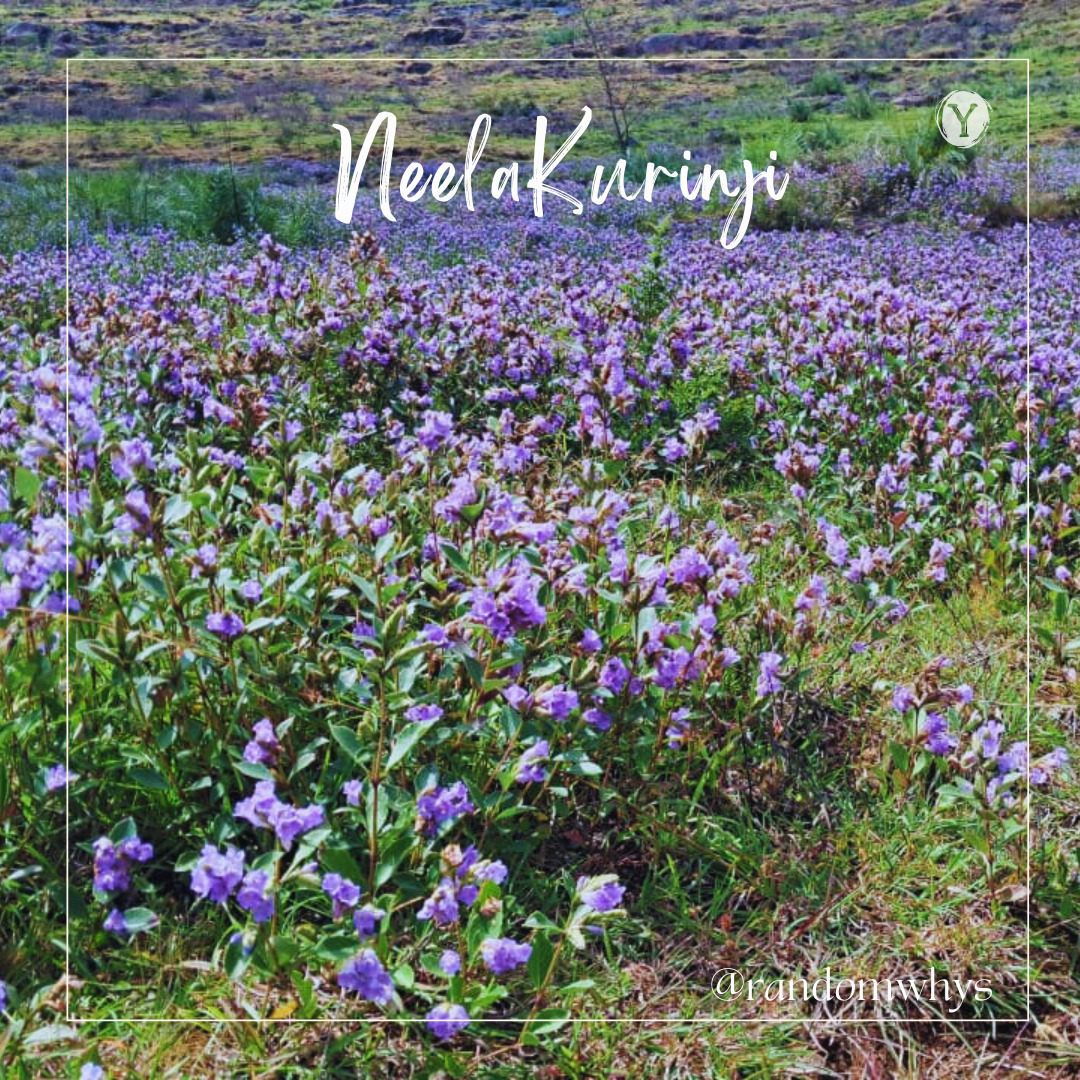
Last week was fun but it was like a learning session. I heard of this Kurinji flower but haven’t witnessed it. It is called Kurinji or Neelakurinji (Strobilanthes kunthiana) , found along the Western Ghats of India. It is a shrub, grown mostly on the grasslands. They bloom once in twelve years. Once they bloom, you see a burst of blue (kind of of purplish tint) across the mountains. The bloom of Neelakurinji is more than just a visual spectacle but it holds deep ecological and cultural significance, especially in Tamil literature and history.
#Tamil Literature
Neelakurinji has deep roots in Tamil culture and literature. During the Sangam period, the landscape was classified into five regions (known as Thinai)—Kurinji (mountains), Mullai (forests), Marutham (agricultural lands), Neithal (coastal areas), and Palai (desert). Maybe named because of the flower. I still remember studying the table which these different landscapes and its characteristic for my Tamil exam. These flower is not just a part of nature but a symbol of their heritage too.
As we know the bloom cycle of the Neelakurinji happens once every 12 years, it was sometimes used as a reference for measure time and age. The ancient community people (Paliyan tribal people) living near the Western Ghats used the flowering to calculate their ages. For example, people would say, “I have seen three Neelakurinji blooms,” meaning they are approximately 36 years old. Interesting isn’t it? I believe, those people would’ve way happier than us. No clocks, No calender, No meetings! Simple life! Lol!
#Honey Bees
The place was very clam and you would be able hear those buzzing bee sound echoing acroos the mountains. There were so much of bees. These flowers provide an abundance of nectar. The bees are drawn to the nectar and help with pollination. In return, honey bees benefit from the rich food source, producing honey during this time. This interaction also supports the broader ecosystem and helps the survival of the other species. However, if the blooming doesn’t happen as expected due to climate or environmental changes, it can affect bee population, honey production and the many species that rely on them. Most the flowerings gets delayed .
#Different Bloom Cycles
While Neelakurinji blooms every twelve years, another species of Kurinji (Strobilanthes callosa) flowers once every eighth years. The first seven years dryness followed by flowering in eighth year. Sea of lavender blush. This shows how different species of the plant have adapted to different cycles. Who knows, some might have hundred? These mass blooms create a surge of nectar and pollen, supporting honey bees, insects and animals.
#Grasslands and Ecosystem
The grasslands around Neelakurinji are also important. These grasslands help prevent soil erosion and provide food for grazing animals. The plants and shrubs in this ecosystem helps to absorb water and prevent landslides, especially on the steep hills of the Western Ghats. The connection between Neelakurinji and the grasslands creates a balance that supports life in the region. However, both are under threat from human activities like deforestation, construction and many more.
#Climate Change
Climate change poses a serious threat to Neelakurinji. The plant’s blooming cycle is closely tied to rainfall and temperature, and changing weather patterns can delay or disrupt the bloom. Over time, this could reduce the frequency of these blooms, harming the entire ecosystem. It is the connections that exist in nature, where plants, bees, grasslands, and even the climate work together to maintain balance. I am reminded of a line from a song!
உலகத்தில் எதுவும்… தனிச்சு இல்லையே…!
#Conservation Efforts
Today, Neelakurinji faces threats of habitat loss. Ofcourse, human activities included. Responsible tourism and stricter land use policies are being required to ensure that future generations can witness this beautiful blooms. It is not just saving a flower but it’s about preserving the rich biodiversity and cultural heritage that it represents.
#Blue Mountains
The Nilgiris in southern India are often called as Blue Mountains, and this name comes from a combination of two reasons. One is because of these flowers and the other one is due to blueish haze (Rayleigh scattering). The eucalyptus trees in the Nilgiris also plays a role in this haze it seems, as they release oils into the atmosphere, enhancing the bluish tint. There is a blue mountain express as well.
Witnessing these Neelakurinji bloom is an unforgettable one. It is a rare moment when beauty, nature, and culture coming together! Make sure to see it if you get the chance!
Cheers
Check out the other posts of Agriculture
If you like what you see and wish to support my work, then
Share your thoughts/suggestion at the comment section or mail at
randomwhyss[@]gmail[dot]com
Don’t miss out! Get notified about new blog posts straight to your inbox !
(No spam, pinky promise!)
Enter your mail to receive updates


 Random Whys