
There’s something about Ram’s movies I keep returning to. It’s not about a big message, not always. It’s more like you walk out of it and there’s this light ache, a soft warm, something that sits in your chest.
Paranthu Poo did that too. The entire narrative revolves around one family. Not a big, complicated one. Just real, layered like us or the neighbor. And that’s the beauty of it. The characters aren’t written to be loud or clever just raw.
The pacing is kind of slow. Like the story knew it didn’t have to prove anything. It felt like you’re allowed to sit still and enjoy. The story revolves around a single family and navigates parenting, not from a preachy lens, but from a child’s point of view.
As someone who hasn’t entered the parenting phase yet, I don’t want to comment on modern parenting, but as a child someone who’s been on the receiving end, I could sense how clearly Ram has captured that emotion. The lens starts from Anbu, the kid, and slowly change his parents.
Anbu, who starts off as this slightly notorious boy, naturally grabs our attention in. He just feels real. Watching him reminded me of something I’ve been feeling lately and how hard it is to find new friends as you grow older. People my age are caught in work loops, family demands, and unpredictable life curves.
So when the film hinted at the absence of in-person friendships and boredom. One of the strongest parts of the movie was the contrast between the two families that Anbu interacts with. In one, there’s an old motorcycle, a modest restaurant, warm conservation between the parents, and a child who runs and plays freely.
In the other, there’s a sophisticated household with all the amenities from body massagers to the latest motorcycles, but very little open space, both literally and emotionally.
Anbu’s behavior in both settings is shown beautifully. In the first, he exchanges his skating board for a pambaram. In the second, he silently leaves a duck egg for the girl and learns how that girl brought a shift in the father’s behavior. There’s no black and white here, just a soft observation that the environment we grow up in subtly shapes us, and sometimes, a child teaches the adult, not the other way around.
The ending of the film made me smile, but in a peaceful one. Anbu chooses to stay in the countryside because he wants to be around people. That one choice says a lot. It reminded me that in between all the noise of progress and individualism, what we really need is human connection of loved ones. Or at the very least, nature.
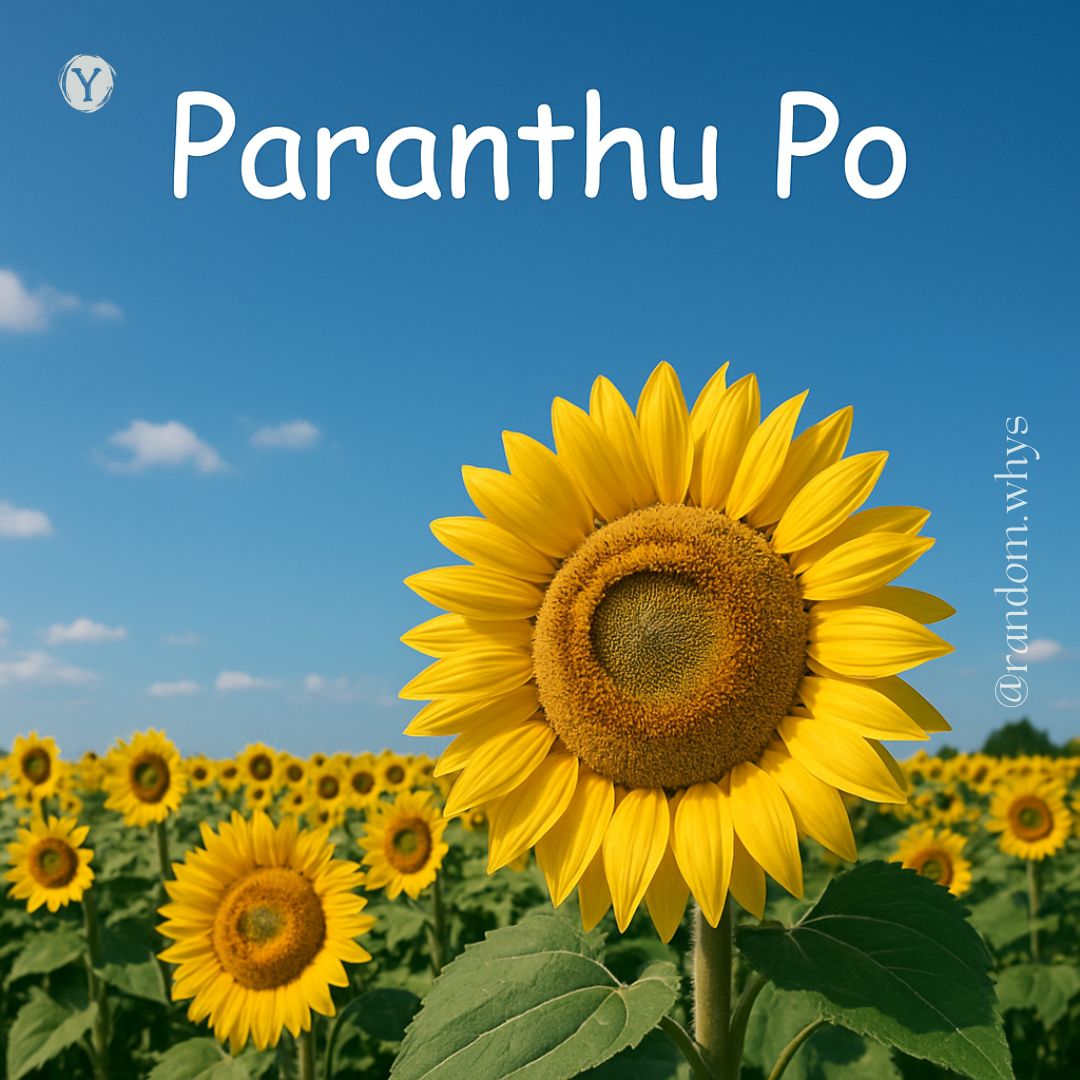
That felt like the real takeaway for me, to not chase more, but to stay connected. I also really liked the communication between the couple, Gokul and Glory. Their relationship was shown and frequency of communication and softness that’s rare to see on screen. They literally back each other amidst the chaos. I’m not sure how easy it is to replicate that in real life, but I do know that such couples exist. Sunflower! lol, cute and matured conservations. The generous of glory and few scenes gives you warmth.
It was refreshing to see. If I had one small critique, it would be the songs. They felt slightly unnecessary. It’s available on JioCinema. It reminds of song that I was introduced to while watching Modern family. Its called Cats in the cradle. Song is little heavy tho. Pace yourself to hear.
Cheers
PS: Smoking kills
Check out the previous post: Strength that lasts!
If you like what you see and wish to support my work, then
Share your thoughts/suggestion at the comment section or mail at
randomwhyss[@]gmail[dot]com
Don’t miss out! Get notified about new blog posts straight to your inbox !
(No spam, pinky promise!)
Enter your mail to receive updates


 Random Whys
One thought on “Paranthu Poo (2025) Movie Review”