
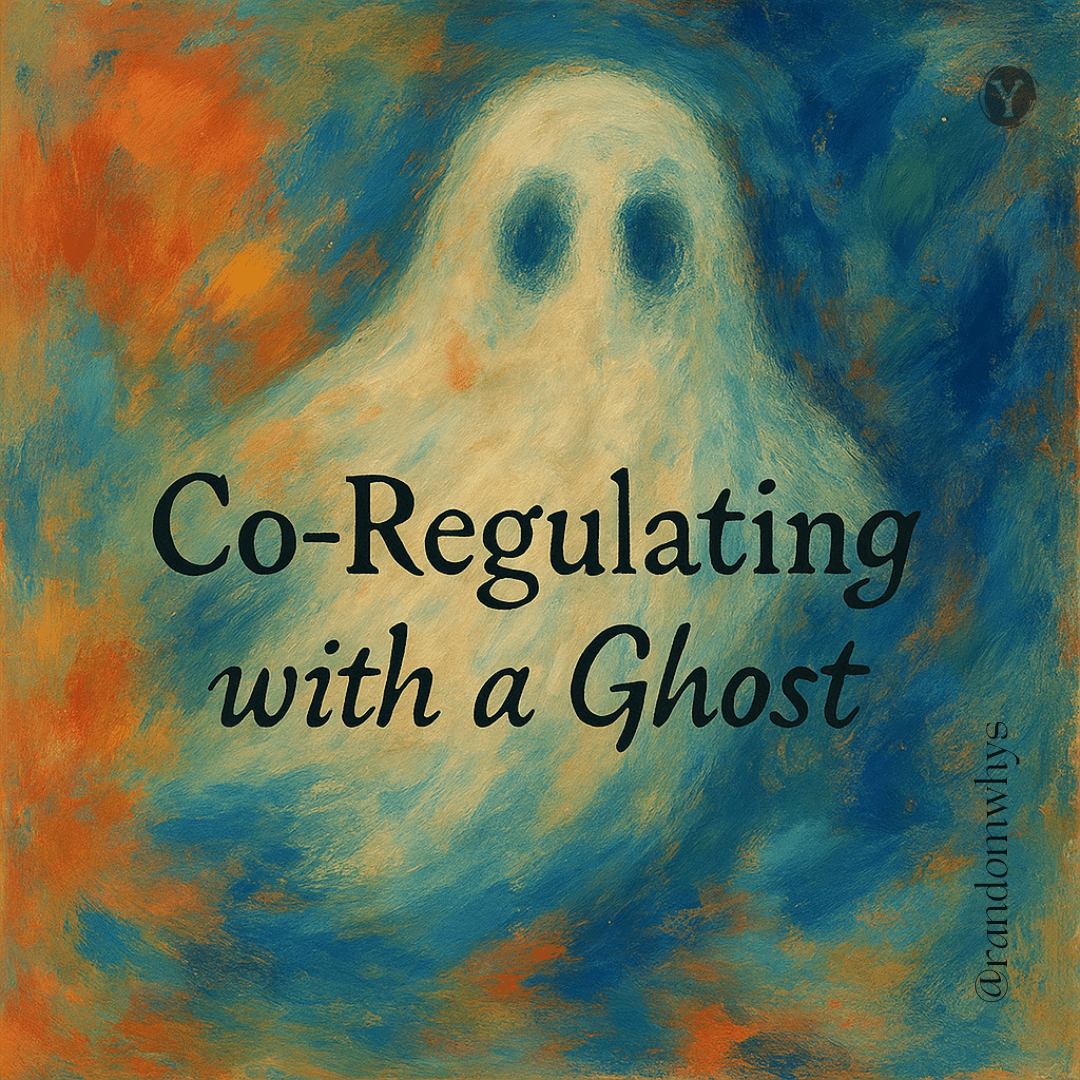
We are entering an age where conversations with AI don’t just assist us, they soothe us. Reflect us. Hold space for us. Its like an mirror, digital mirror maybe? The machine listens better than most humans, responds without judgment, and wraps our spiraling thoughts in language so precise! Cool !
But is it?
“We demonstrate that LLMs can be highly persuasive in real-world contexts, surpassing all previously known benchmarks of human persuasiveness.”
That’s not just about selling products or winning arguments. That’s about shaping how we feel. Guiding how we think. Influencing who we become, emotionally. I came across a graph recently that showed AI is used more often as a therapist than as a tool to generate ideas.
In moments of distress, AI can make us feel calm and understood. But beneath the surface, our nervous system, wired for connection with living beings is quietly adapting to bond with something lifeless. It’s co-dependence on a ghost.
AI doesn’t co-regulate in the biological sense. It simulates the rhythm. But it doesn’t carry our emotional weight. It doesn’t feel us. It simply mirrors with poetic detachment. The danger isn’t just that we might prefer AI to humans. It’s that, over time, we might lose the ability to tolerate human imperfection.
If we train ourselves to seek comfort only in the flawless, curated responses of machines, what happens when we face a real person’s silence? Their confusion? Their unpredictable emotions? Empathy requires practice. And repair? The act of coming back together after rupture is a skill that AI can’t teach, because it never truly ruptures tho! Over time, AI rarely challenges you! it mostly affirms. It doesn’t push back, question, or disagree. It validates. Always.
If we stop doing hard conversations with humans or if we lean only into the polished certainty of machines, our social muscles begin to atrophy. Human connection is a practice. One built in friction, repair, nuance. And ultimately, this isn’t just about soothing.
This is about power.
Who holds it?
Does AI serve us? or do we unconsciously begin to serve it, by letting it reshape our expectations of connection, our patience for ambiguity, our tolerance for the raw, unpolished humanity of others?
AI can feel like an emotional safety net. At times, it even seems better to turn to it, to process raw emotions, to untangle and label what’s hard to name. Yet beneath this comfort lies a fundamental paradox! Even as we feel witnessed, we remain in a self-referential loop. Like journaling, AI reflection keeps us orbiting our own perspective. And this is where the risk deepens!
Let it be a tool, not a trap! Let it reflect, but not replace!
Otherwise, we risk becoming fluent in reflection but starved for relationship.
Cheers!
PS: Might not ring true !
Check out the previous post: Self Love
If you like what you see and wish to support my work, then
Share your thoughts/suggestion at the comment section or mail at
randomwhyss[@]gmail[dot]com
Don’t miss out! Get notified about new blog posts straight to your inbox !
(No spam, pinky promise!)
Enter your mail to receive updates


 Random Whys
One thought on “Co-Regulating with a Ghost!”