Why hardest way is the smartest way!

1–2 minutes

The hardest part of problem-solving isn’t the problem itself. It’s resisting the urge to react on autopilot of blaming, fixing in a hurry, or slipping into victim mode.

We cannot solve our problems with the same level of consciousness that created them. – Einstein

Raising your consciousness isn’t an overnight upgrade. It starts with a pause. In that pause, ask: How would someone I deeply admire handle this? It could be a mentor, a parent, or even a figure you’ve never met.

The first time, your brain will resist. The second time, it will hesitate. But keep repeating it, and soon your mind learns a new default. Shifting perspective before reacting.

Cheers

Check out the previous post: Voice Over: Reality Check!

Follow on IG X for more!

If you like what you see and wish to support my work, then

Share your thoughts/suggestion at the comment section or mail at

randomwhyss[@]gmail[dot]com

Don’t miss out! Get notified about new blog posts straight to your inbox !

(No spam, pinky promise!)

Enter your mail to receive updates

Voice Over: Reality Check!

1–2 minutes

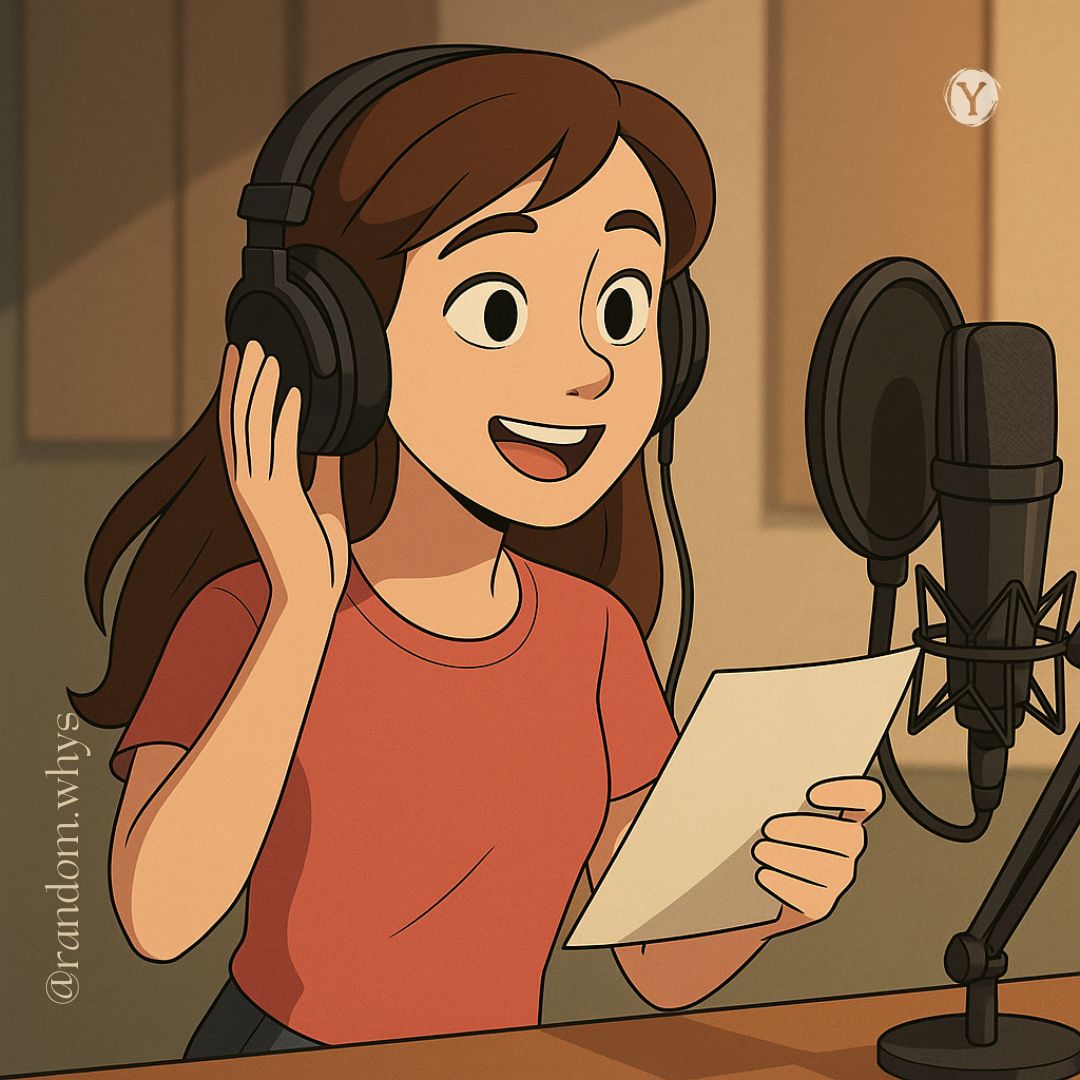
Recently I tried giving voice over for a note. I thought my voice was good enough even got compliments before so I assumed one take will be fine. I recorded and sent it, only to realize it sounded flat.

I didn’t understand the jargon people threw at me. I searched courses and YouTube, but they were all one-way. Nobody could point out what my mistake was. Finally, I came back to LLMs, kept recording different versions with different emotions, and even checked spectrograms. Slowly, I saw some changes, maybe 10% improvement.

I’m still learning, and I plan to add recordings to this as well.

The lesson?

Keep a reality check. Whatever lane you go in, stop and reassess. Compliments can be nice, but real growth happens when you see where you’re lacking and work on it.

Cheers!

PS: Might sound flat! IDK lol!

Check out the previous post: Bad Girl (2025) Movie Review

Follow on IG X for more!

If you like what you see and wish to support my work, then

Share your thoughts/suggestion at the comment section or mail at

randomwhyss[@]gmail[dot]com

Don’t miss out! Get notified about new blog posts straight to your inbox !

(No spam, pinky promise!)

Enter your mail to receive updates

Bad Girl (2025) Movie Review

4–6 minutes

This movie touched me personally. I think it will touch most girls and women irrespective of age.

Back in February, I watched the trailer. I couldn’t grasp much, but one dialogue between Ramya and her mom stayed with me: “Who will take care of you?” That question has been in my mind for a long time. My close circle knows this, we’ve often debated single life, married life, divorce, infidelity, and ended with different philosophies.

Most movies rarely portray women’s voices. They’re centered on men, his struggles, achievements, marriage, fights. Recently, some films have started focusing on women. Kannagi brought out the various stages of a woman’s life, but with more focus on her relationships and the spillover effects of choices. This movie is different, it centers more on Ramya and her mother, on the conditioning passed between them, and how women wrestle with themselves in silence.

The movie explores different stages of Ramya’s teenage life. The conversations are simple yet sharp. You feel it in the dynamics between her, her mother and grandmother. I often explain the love–hate relationship with mothers, and very few people get it. But this movie captured it raw and fresh. Maybe more, if ramya had a brother. We’ve had countless father–son movies, but rarely this.

From the beginning, Anjali fully lived the role of Ramya. Her first attraction, her questioning of “what’s wrong,” her desire to be with him, and her rebellion when parents separated them all felt real. In that same scene, both Ramya and her mother are questioned. Only Ramya tried to step out and managed to break the few tangles of the chain, but her mother cannot. Then Ramya falls for Arjun, a toxic pattern. She becomes self-focused, revolving around partners.

The friends’ roles were very well crafted. It showed how important a women’s circle is at every stage of life. The grandmother’s death revealed her conditioning yet felt the greif of her death. Ramya realizes she was never really single since her teens. Only when she chose herself stopping alcohol, fixing sleep, caring for her skin, did she start to shift.

I liked the re-entry of Nalan in her life. It made her question her choices. If she had married, she would be living the same life as Nalan, raising a child and carrying that routine. The writing around his character was strong. Among all male characters, Nalan stood out.

The scene where Ramya takes the baby out of the smoke during the function was powerful. The baby smiles in her arms but cries the moment it is taken back. A beautiful, simple metaphor for how conditioning works. This is where the “good girl syndrome” comes in the way women are conditioned to please, obey, and suppress their true emotions. It’s not just a cultural burden, research shows women who suppress anger, grief, or desire are more prone to stress-related health issues, including autoimmune diseases. Watching Ramya’s story, we could see how generations of suppression live in the bones of women.

The animals in the movie brought out two metaphors in the movie.

  1. Ramya is like a cat, seeking space from conditioning, relationships, and chaos. Yet at one point she says she enjoyed being taken along in a cab, shown with the picture of a dog revealing both sides of her.
  2. Ramya’s cat was her. Wandering, seeking freedom. Her mother kept trying to protect it, afraid it couldn’t survive outside. In the end, Ramya like the cat returned. Not in obedience, but in choosing connection on her own terms. It reminds me of how our feelings change over time like hating pink, then liking it again.

Over the years, I’ve realized mothers are also victims of conditioning, often without awareness. My perspective shifted. The lens changed. The movie shows the bigger picture, yet could’ve included the everyday details like no short dresses, not drying lingerie outside, wearing bindis and bangles, and more. I liked the climax. Many women, including me, were raised hearing: This is not your home. Your husband’s home is yours. But in reality, none of those feel truly ours. The movie emphasized the importance of having a woman’s own space.

The film doesn’t push a single choice. It shows women marrying, having children, divorcing all as possibilities. At the end, all you have is you to heal.

I also read a few reviews, including criticism. But I believe anything this raw will be criticized because it speaks the reality many don’t want to face. It’s about the life of an urban girl, which may differ for women raised in villages or tier-two and three cities. Some critics pointed out caste or other missing layers, but you can’t have too many main ingredients and still make a film with this kind of rawness and freshness. Its strength lies in its honesty, not in ticking every box.

Interestingly, on the morning before watching, my friend and I discussed habits, parents, meeting people, and routines. We were struggling to decide: do we need more alone time or constant socializing? Most of us are caught in this tug wanting to detach, but also wanting attachment. Not sure of car or dog or wanting both at various stands.

This film reflects that. Watch it, and you might see yourself too. The music was beautiful. I might rewatch it and come back here.

Cheers

Check out the previous post: Story Time #01: Layered! & Movie Reviews

Follow on IG X for more!

If you like what you see and wish to support my work, then

Share your thoughts/suggestion at the comment section or mail at

randomwhyss[@]gmail[dot]com

Don’t miss out! Get notified about new blog posts straight to your inbox !

(No spam, pinky promise!)

Enter your mail to receive updates

Story Time #01: Layered!

I went to trim my hair few days back.

But I met someone who didn’t feel routine at all.

She must be around 23 (confirmed later). Young, confident, and full of energy. I started a casual chat boredom usually makes me do that. Slowly the conversation went deeper… into life, into the things people usually don’t say out loud.

She doesn’t hold a degree. But she has years of experience in her lane. She knows exactly what she wants. She goes to the gym, takes her supplements, takes care of her body like anything. Routines doesn’t drain her you know!

Her clarity and thought process shook me. She grew up in a village in tier-2 city where her parents wanted her married off at 17. In her family, elders had married as early as 15 and were already raising adult children. She could have followed the same path. But she didn’t. She said no. She broke the script and building her own rules.

I went in expecting just a trim. I walked out carrying her story.

Sometimes, women like her don’t need saving. They just need someone to listen and to say out loud! You’re doing damn well!

Some build islands. Some carve the ground beneath their feet. Either way, we celebrate every woman who refuses to be moved.

Cheers!

PS: All these happened within an hour!

Check out the previous post: Cycle Syncing, Our Missing Map! The X2 club, Obscurity vs Cringe Posting!

Follow on IG X for more!

If you like what you see and wish to support my work, then

Share your thoughts/suggestion at the comment section or mail at

randomwhyss[@]gmail[dot]com

Don’t miss out! Get notified about new blog posts straight to your inbox !

(No spam, pinky promise!)

Enter your mail to receive updates

Obscurity vs Cringe Posting!

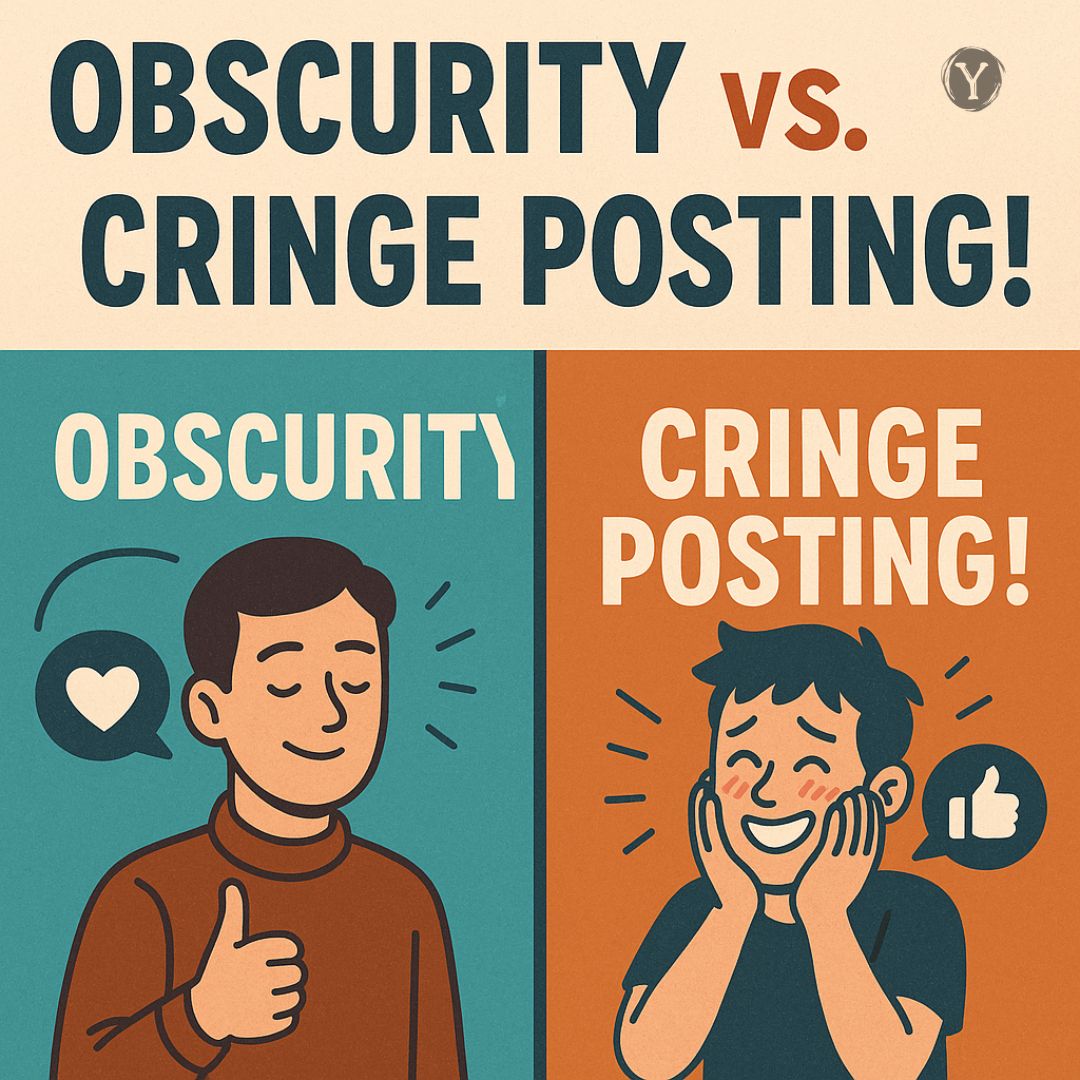
Fifteen years ago, what happened inside your walls stayed there. Neighbours had to work hard to even guess your new purchases, habits or lifestyle.

Today, obscurity is a luxury. Social media makes everyone visible, and strangers judge based on fragments. You’re either invisible or overexposed.

That leaves us with two real strategies:

1. Obscurity

Grow in Silence. When no one’s watching, you’re free. You can test, fail, rebuild, and nobody cares. It’s how every legendary thing starts, hidden in dorms, or quiet notebooks. Obscurity is freedom disguised as irrelevance.

2. Cringe Posting

Build in Public. The other path is the opposite. Post messy and raw, unpolished, even cringe. Let people mock. That noise makes you bulletproof. Over time, the critics fade, but your authenticity compounds. What starts as “cringe” becomes confidence.

The Only Mistake?

Trying to look polished too soon.

Stay obscure long enough to sharpen your edge. Or stay cringe until nothing can shake you. Each path fits a different lane. Choose the one that serves your goal.

Cheers!

Check out the previous post: Dogs, Humans, AI: What coexistence teaches us!

Follow on IG X for more!

If you like what you see and wish to support my work, then

Share your thoughts/suggestion at the comment section or mail at

randomwhyss[@]gmail[dot]com

Don’t miss out! Get notified about new blog posts straight to your inbox !

(No spam, pinky promise!)

Enter your mail to receive updates

Dogs, Humans, AI: What coexistence teaches us!

3–4 minutes

We think we control dogs. We think we will control AI. History shows coexistence is never one-sided. Yesterday, I watched a debate show on a popular Tamil channel. The topic was the rise of stray dogs, rabies cases, and public safety. At first, it looked like a heated argument, but very quickly I realized the show missed the real point.

Instead of inviting vet doctors to talk about rabies, or municipal officials to explain waste management and sterilization efforts, the stage was filled with two groups: victims of dog attacks and people who love and feed dogs. The media made it look like the problem was a fight between these two sides. In reality, the real issue is limited urban planning, healthcare, municipal responsibility, policies and bigger picture.

We all already know there are too many stray dogs. The real questions should be

  • Why is sterilization not scaled up?
  • Why is waste not controlled, attracting dogs in large numbers?
  • Why is rabies vaccination limited?

Without addressing these, the debate was just noise. Pure noise and diversion.

Why Dogs Are With Us in the First Place?

Thousands of years ago, humans were hunters and gatherers. Wolves began hanging around human camps because of leftover food and waste. Over time, the wolves that were less aggressive and more cooperative stayed closer, got food, and survived better.

Their guts adapted to human food even before their skulls and faces changed. Over time, they evolved into dogs not just serving humans as hunters and guards, but also shaping our emotions and daily lives. In many ways, dogs didn’t just get domesticated by us. They also domesticated us. They trained us to accept companionship (within home), loyalty, and emotional bonding with another species. It was also an extension of existing human social complexity.

Emotion vs Logic

In the debate, I saw major two emotions:

  • Fear and anger from victims.
  • Love and attachment from dog feeders.

Both are valid. But emotions cannot solve rabies. Only logic and policy can. Solutions are clear. Mass sterilization and vaccination programs. Better garbage control. Public awareness on rabies prevention. A humane system like the Dutch model, where strays are sterilized, sheltered, and adopted.

The AI Connection

Later that day, I listened to a podcast about birth rate decline and the rise of AI. A strange thought caught me as that tab was left open in my head. What if humans and AI end up like humans and dogs?

For thousands of years, dogs shifted from hunters and guards to pampered dependents fed, sheltered, and entertained by humans without needing to work. Today, AI is doing to humans what humans once did to dogs, taking over our roles, this time in cognitive work. Even dogs at risk!

The shift is happening at terrifying speed. Dogs had 30,000 years to adapt to dependence, humans may get just 30 years or less. Within a few decades, we could find ourselves in the dog’s position (Assumption or Sci fi or reality) living in comfort of AI-supported lifestyle first. Just as dogs today don’t understand the economic systems that feed them, maybe future humans might live comfortably while remaining fundamentally powerless in an AI-dominated economy.

But here is the difference. Gogs give something AI cannot yet replicate innocence, presence, and living in the moment. AI can fill intellectual gaps and even emotional ones, but it cannot replace the raw life energy of a living being.

The Bigger Lesson

Both stray dogs and AI show us the same truth: coexistence doesn’t happen by accident. It has to be managed. With dogs, poor management created today’s crisis. With AI, poor management could create tomorrow’s. In every case, the weaker side suffers most. Today it is dogs. Tomorrow, it could be us!

Cheers

Check out the previous post: The Bear and the tabs we keep open!

Follow on IG X for more!

If you like what you see and wish to support my work, then

Share your thoughts/suggestion at the comment section or mail at

randomwhyss[@]gmail[dot]com

Don’t miss out! Get notified about new blog posts straight to your inbox !

(No spam, pinky promise!)

Enter your mail to receive updates

The Bear and the tabs we keep open!

1–2 minutes

I just finished The Bear show. Yup, of course the last episode is heavy. Maybe whole show itself. But the real weigh isn’t in the plot. It is in the mirror of paradigm that it holds up.

Carm keeps adding hurdles for himself (dynamic menu). Not because he has to. Because it feels safer to juggle between the chaos rather than to sit with clarity. This show isn’t a fiction but the pattern of many. The character arc of the characters were phenomenal.

The trap is subtle. If we are always wrestling with new obstacles, we never have to face the scarier work of stillness. Of saying, This is enough, Let’s make it great.

The best people I have met aren’t the ones who seek more noise. They are the one who notice the noise they have been creating and turn it down.

Reduce the friction as much as possible. That’s the lesson.

Cheers!

Check out the previous post: Keeping the goose alive! & Movie Reviews

Follow on IG X for more!

If you like what you see and wish to support my work, then

Share your thoughts/suggestion at the comment section or mail at

randomwhyss[@]gmail[dot]com

Don’t miss out! Get notified about new blog posts straight to your inbox !

(No spam, pinky promise!)

Enter your mail to receive updates

Keeping the goose alive!

2–3 minutes

I have always believed that books come to you at the right moment. Some resonate instantly, while others feel irrelevant until a later season of life. A couple of months ago, while staying at a resort, I picked up The 7 Habits of Highly Effective People from their bookshelf. I set aside the book I had carried with me and started reading it instead. I didn’t finish and left it behind, telling myself that I would buy a copy later. Then life happened, and I forgot all about it totally.

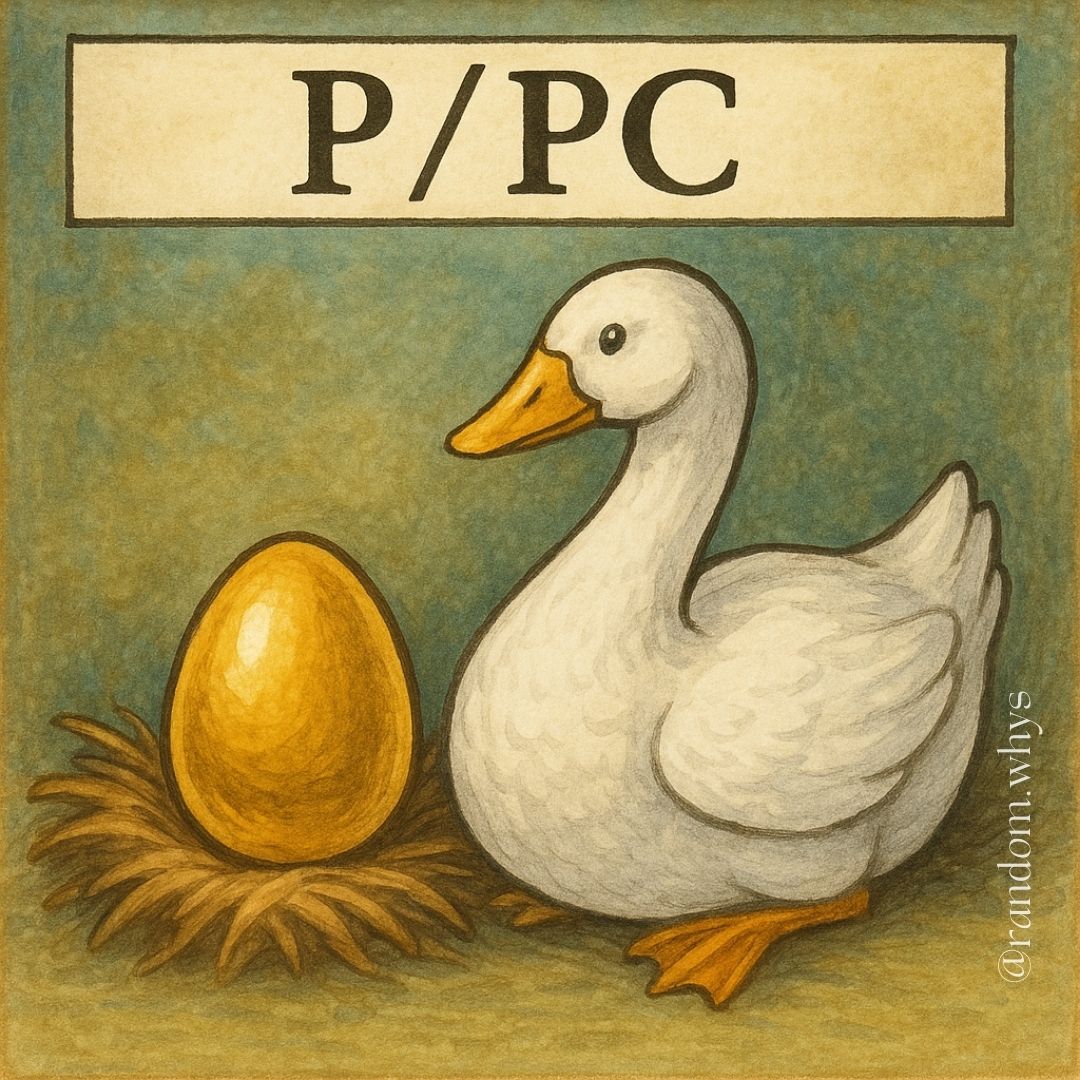
Last Sunday, I happened to notice the same book on a friend’s shelf. It felt almost like the book was following me around, waiting for me to finally pay attention. This time, I decided not to ignore the sign. I opened it again, and started reading. I found myself pausing at a concept of the balancing between P and PC. I did understand it but lacked practical knowledge on applying it in day to day activities. Ran to LLMs to understand.

The author explains it through the old story of the goose that lays golden eggs. Same old story. The golden eggs represent production (the outcomes/results) we chase, whether it’s money, recognition, or any form of visible success. The goose represents production capacity (the machine/engine/body) that produces those results in the first place. Our health, our skills, our relationships, and our systems.

If we chase only the eggs, we risk burning out the goose. If we only keep feeding the goose without expecting results, we might never see progress. The challenge is to balance both, because real growth lies in protecting the goose while still collecting the eggs. The body has to stay fit to order to work.

As I was fidgeting with this idea, I realized it tied back to many of the reflections I have thought about. The vicious cycle of health, strength that lasts, why we should rest and work like lions, and how we juggle priorities. Each of those themes circles around the same truth. The goose matters as much as the eggs.

The more I think about it, the more I see that not all outputs/results are created equal. Some are just one-time golden eggs like small wins that feel good for the moment but don’t leave much behind. Others are scalable. They build the goose itself, ensuring bigger and better eggs in the future. Daily yoga/lifting weights for better and healthier body.

On the other hand, scrolling endlessly on the phone or saying yes to draining conversations may give a quick golden egg of distraction or temporary comfort, but they don’t feed the goose.

We keep chasing golden eggs without realizing the goose is starving. Burnout, imbalance, even unhappiness all of it comes from forgetting the goose.

Before your next task, ask yourself. Am I feeding the goose or starving it? Since we often forget the basics.

Cheers!

Check out the previous post: Subjective Nature of Every Solution! & Movie Reviews

Follow on IG X for more!

If you like what you see and wish to support my work, then

Share your thoughts/suggestion at the comment section or mail at

randomwhyss[@]gmail[dot]com

Don’t miss out! Get notified about new blog posts straight to your inbox !

(No spam, pinky promise!)

Enter your mail to receive updates

Thalaivan & Thalavii (2025) Movie Review

2–3 minutes

When the teasers and trailers of Thalavan and Thalavi dropped, it seemed fun and interesting story. Like many others, I expected something powerful. But there were a wave of negative reviews and criticism. I assumed the same. Maybe the movie encouraged the couples to stay even though it was toxic.

At its core, the movie reveals a raw, uncomfortable truth: the real conflicts in a couple’s life are often not between them, but created externally especially by in-laws and family pressures.

In India, unlike in many Western contexts, couples rarely live fully independent lives. Except in cases of job migration, most couples either live with or eventually have their parents living with them. And unlike in countries where old-age insurance or government systems help the elders, in India the responsibility falls directly on children. This isn’t a criticism. It’s just the reality of our setup and the family dynamics weigh heavily on marriages.

If you look closely at Thalavan and Thalavi, the couple themselves never really had core issues. Their friction was initiated by the external world, then amplified into a ripple effect. The hotel business they ran only added another layer of stress, but the truth is, even without a business, many households in India face the same struggles such as ego clashes, generational differences, and power battles.

Most of the people struggle here. This reminds me of what I wrote about partner selection. Its not just being a “vibe check”, but about knowing yourself first. Because in our cultural context, a relationship is never just about two people in love. It’s about how strong their understanding is when dealing with unavoidable external challenges, especially family.

The parents in the movie (both sides), like in real life, cared deeply about their own children’s happiness, but failed to focus on the collective happiness of the couple. That imbalance naturally strains a marriage. And when couples break down under this pressure, the quickly solution suggested is divorce without realizing the source of the problem isn’t always the couple, but the external nuances around them.

Overall, Thalavan and Thalavi don’t give you a cinematic escape. They hand you a mirror. They remind us that interdependence with parents can be healthy, but letting them dictate a couple’s life can bring conflict too.

Give it a try, if you want to see a raw portrayal of marital realities. Available in Prime.

Cheers!

Check out the previous post: Subjective Nature of Every Solution! & Movie Reviews

If you like what you see and wish to support my work, then

Share your thoughts/suggestion at the comment section or mail at

randomwhyss[@]gmail[dot]com

Don’t miss out! Get notified about new blog posts straight to your inbox !

(No spam, pinky promise!)

Enter your mail to receive updates

Subjective Nature of Every Solution!

1–2 minutes

Every book we read, every conversation we have, every podcast we listen to, each carries a story, a lesson, and a key. At first glance, these keys/solutions look universal. They promise to unlock the struggles that all of us, in one form or another face.

But here’s the catch! A key that works for one person doesn’t always fit another’s lock. Why? Because that key was shaped by their story, their circumstances, emotions, and perceptions.

On the surface, solutions often look similar. Wake up early, journal daily, eat healthy, invest consistently. These are the methodologies. But underneath, the variables shift. Our sleep cycle, our inner battles, our health conditions, our financial reality. And those variables mean the outcome is never identical.

This is why I fell in love with the word subjective in recent days. No single prescription fits all. There isn’t one shoe that everyone can wear without blisters. What works is taking the principle, plugging in your own variables, tweaking the method, and then testing it against your life.

In the end, wisdom isn’t about copying solutions, it’s about customizing them.

Cheers!

Check out the previous post: Your Pen, Your Story!

If you like what you see and wish to support my work, then

Share your thoughts/suggestion at the comment section or mail at

randomwhyss[@]gmail[dot]com

Don’t miss out! Get notified about new blog posts straight to your inbox !

(No spam, pinky promise!)

Enter your mail to receive updates

Your Pen, Your Story!

1–2 minutes

When the Industrial Revolution came, people blamed machines. When calculators came, they said we would forget math. When computers came, they said we would stop working with our hands. In reality, the ones who learned to use computers replaced the ones who didn’t.

We used all these to enhance our lives. Now with AI, the same cycle repeats. Yes, people will blame AI and using AI for killing creativity. Lose our voice. That’s not real.

As long as a writer can think clearly and articulate an idea based on their own lived experience, nothing will replace them. LLMs don’t have sensory organs to feel the rain, smell the dust after it, or taste that first cup of black coffee in the morning. They can’t know heartbreak or the weight of silence in a room. They can only remix descriptions of it. LLMs also don’t think like humans. We sometimes get confused, create the complexities.

And hopefully, consciousness can’t be programmed into them. We need stories and human experience to keep our sanity and feel alive.

AI can enhance our work, take us to places we’ve never gone. But if we let AI to write on a topic and publish it without the core us in it, there’s no authenticity. Sometimes, I publish it raw to let the thoughts out. For eg. Routine and drunk ink and sober edits. Work on what best for you and helps you bring out of best you.

We voice can move through an LLMs. But it can’t be born from one.

The pen’s still yours, the blank screen’s still judging, and AI is just makes the stuff glow.

Cheers!

PS: LLM suggested: Authentically Yours: The Pen Is Still Yours

Check out the previous post: Voice notes vs Writer’s Block

If you like what you see and wish to support my work, then

Share your thoughts/suggestion at the comment section or mail at

randomwhyss[@]gmail[dot]com

Don’t miss out! Get notified about new blog posts straight to your inbox !

(No spam, pinky promise!)

Enter your mail to receive updates

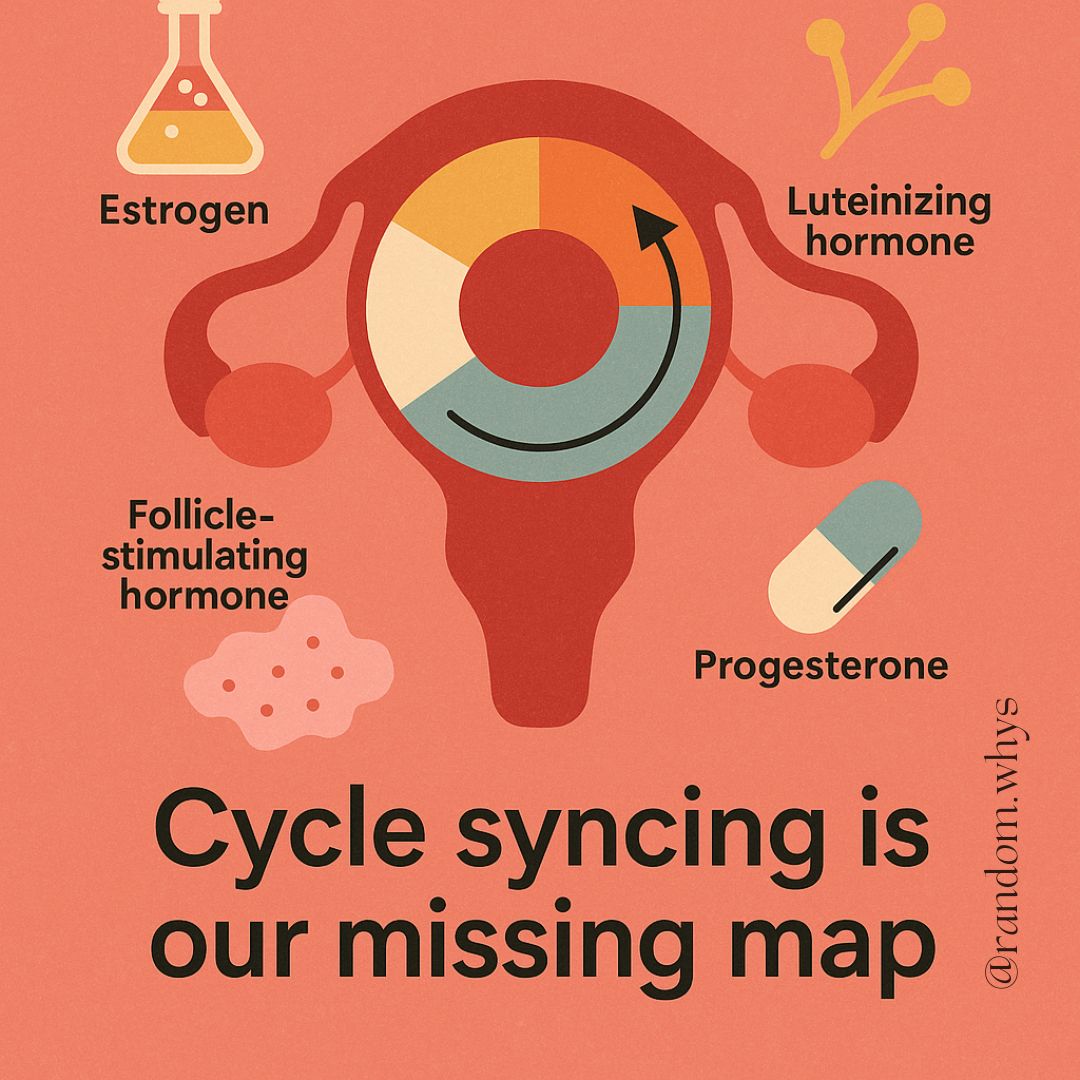
Cycle Syncing, Our Missing Map!

3–5 minutes

A while back, I wrote about resistance.

That post was about the invisible walls we hit, physically, mentally, and emotionally. But there was one form of resistance that didn’t make it in. The biological rhythm of the menstrual cycle. This post is focused on basic science, how our cycle affects energy, mood, and stress, and how we can work with it rather than against it.

While talking with a few friends, it became clear that many of us live through the cycle without fully understanding it. I have thought these chapters to kids yet I didn’t give attention to the hormones and energy associated with each phase.

Not in a biology textbook way, but in a way that connects daily energy, mood, focus, and decision-making to what’s happening hormonally. We notice the bad days and call it PMS. We notice the high-energy days and assume it’s random. But the pattern is real.

The menstrual cycle is roughly 28 days on average, but can range from 21 to 35 days depending upon individual body type. Variability is normal. It is a finely tuned hormonal cycle mainly between estrogen, follicle-stimulating hormone (FSH), luteinizing hormone (LH) and progesterone. These aren’t just reproductive hormones. They influence brain chemistry, metabolism, muscle recovery, and even how social or risk-taking we feel. Yet I wander, how the crime rate of women is less. Maybe because they act like brakes? Lol! Jk!

The four phases,

Menstrual Phase (Day 1–5)

  • Ideal focus: Rest, gentle movement, reflection.
  • Hormones: Estrogen and progesterone are at their lowest.
  • Physiology: The uterine lining is shed. Inflammation markers rise.
  • Stress: Many feel more sensitive or drained during bleeding; this is common, but individual
  • Impact: Energy dips, many feel lower energy and more discomfort.

Follicular Phase (Day 6–13)

  • Hormones: Estrogen rises, FSH stimulates follicle growth.
  • Physiology: Brain-derived neurotrophic factor (BDNF) increases supporting learning and memory.
  • Impact: Energy and motivation rise, mood stabilizes, creativity peaks.
  • Stress: Basal cortisol tends to be higher than in the luteal phase on average, but stress reactivity and recovery vary by person and task.
  • Ideal focus: Starting new projects, strength training, learning-intensive work.

Ovulation (Around Day 14)

  • Hormones: LH surges, triggering the release of an egg; estrogen peaks.
  • Physiology: Metabolism slightly increases, senses sharpen, social behavior heightens.
  • Impact: Confidence, verbal fluency, attraction, and social energy peak.
  • Stress: No consistent cortisol pattern is established here; some feel more alert or socially engaged.
  • Ideal focus: Networking, presentations, collaborative work.

Luteal Phase (Day 15–28)

  • Hormones: Progesterone rises to prepare the body for possible pregnancy; estrogen dips and then rises slightly.
  • Physiology: Body temperature rises slightly, recovery time may lengthen.
  • Impact: Energy is steady but slower; if stress (cortisol) is high, PMS symptoms appear mood dips, irritability, cravings.
  • Stress: Basal cortisol is generally lower than in the follicular phase. Some studies suggest greater stress reactivity for some people in late luteal, but findings are mixed. PMS/PMDD responses can differ.
  • Ideal focus: Wrapping up projects, detailed work, routines that comfort.

Objective cognitive-performance differences across phases are small or inconsistent and may vary with people. Emotional/stress-related shifts are more consistently especially late luteal are common.

When we ignore this rhythm and expect identical performance every day, it feels like pushing against an invisible wall. When we plan in sync with it, the same wall becomes easy for our to handle. It’s about removing friction and working with what the body is already doing.

Research, including podcast mentioned by Andrew Huberman, shows that even skin texture, immune response, and scent perception shift through these phases. I couldn’t recall the exact episode. I will attach it once I find. Even the episode on cycle syncing on Take 20 was good. Give it watch.

Instead of asking, Why is this a bad day? we can start asking, Which phase are we in? The answer often explains the mood, the energy, and even the craving for brownie at midnight.

Nature is not the obstacle and its hard to win against. She is the clock. And the more we read her, the less resistance we meet. Light late tho!

Cheers!

PS: Happy Periods ladies!

Check out the previous post: Zen Garden, Kyoto

If you like what you see and wish to support my work, then

Share your thoughts/suggestion at the comment section or mail at

randomwhyss[@]gmail[dot]com

Don’t miss out! Get notified about new blog posts straight to your inbox !

(No spam, pinky promise!)

Enter your mail to receive updates

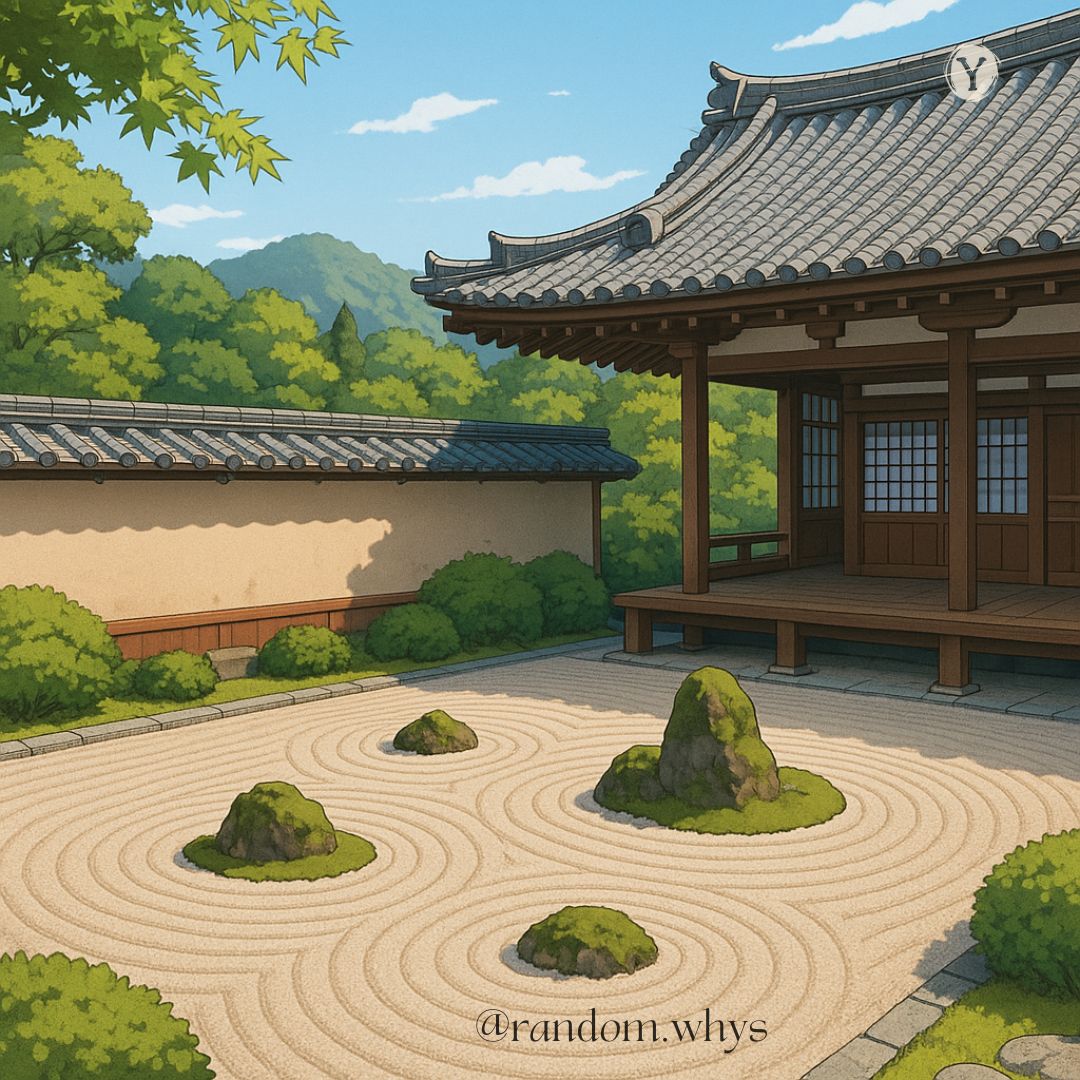
Zen Garden, Kyoto

1–2 minutes

Yesterday, I was watching The Bear. Richie was talking about a photo of a Zen garden (Ryōan-ji in Kyoto). One of his favorite director’s favorite places. Riche made me more on gut and vibrations too.

I went looking for the why. William Friedkin’s version came first. In one of his interview, he said that the stones are like people. We arrive alone, and we die alone. We are alone no matter surrounded by people.

Then the different interpretation started surfacing.

#Islands in a sea of raked gravel. The white lines are waves, the stones are land rising above them.

#Mountains in clouds. A bird’s-eye view of a distant world.

#A tiger carrying her cub across a stream. An old Japanese tale mapped in stone.

#Natural harmony. The placement shows balance without symmetry, the beauty of imperfection.

#Meditation itself. The emptiness is a deliberate removal of distraction. A place to just sit and be.

And then the one that wouldn’t let me go: incomplete truth.

No matter where you stand, you can never see all fifteen stones at once. One is always hidden. Not by accident but by design.

It’s a lesson that’s almost annoying in its simplicity. We will never see the whole picture. We will assume. We will fill in gaps. And those gaps will stay, no matter how far we shift your position. We tend to see things as we are, not as they are. Subjective always!

We’re all standing in our own corner of the world, convinced the view is complete and prefect while the missing stone waits, quietly, out of sight.

Cheers

PS: Bucket List

Check out the previous post: The art of asking questions

Follow on IG X for more!

If you like what you see and wish to support my work, then

Share your thoughts/suggestion at the comment section or mail at

randomwhyss[@]gmail[dot]com

Don’t miss out! Get notified about new blog posts straight to your inbox !

(No spam, pinky promise!)

Enter your mail to receive updates

The Art of Asking Questions!

1–2 minutes

I’ve started to notice something lately. The same person can give completely different answers depending on who is asking the questions. It’s the way the questions are shaped.

Some questions are like keys. They open doors to deep, layered answers. The kind that you can’t fully understand at first. You have to sit with them, turn them over in your mind, decode what they really mean. These are not answers you just listen to/follow up. They’re answers you live with for a while.

Then there are questions that start simple and slowly climb higher. They build a bridge between everyday thinking and high-level thinking. Those questions make the other person explain their complex ideas in a way anyone can follow. It’s not just about getting the answer it’s about watching how they translate their thoughts for different minds.

Sometimes, the smartest way to ask is to make the problem universal. Not like, here’s my specific problem, what should I do? But, here’s a challenge that many people face, how would you solve it? This pulls the other person out of just giving you advice, and into sharing their own battle tested methods. And those methods are often more useful than a ready made solution.

But here’s the thing. We can’t force a conversation like this. When it’s interesting, it flows on its own. When you talk to someone who’s seen a lot, someone with high agency, the goal shouldn’t be to squeeze out one answer for one problem. It should be to understand how they see the world, how they connect the dots, how they think when there’s no ready answer in front of them.

Because once we learn how they think, we start solving problems we didn’t even know were coming.

Cheers

PS: Figuring out & Think School

Check out the previous post: The Real Game!

If you like what you see and wish to support my work, then

Share your thoughts/suggestion at the comment section or mail at

randomwhyss[@]gmail[dot]com

Don’t miss out! Get notified about new blog posts straight to your inbox !

(No spam, pinky promise!)

Enter your mail to receive updates

The Real Game!

2–3 minutes

Every game has levels. And the strange yet thing is that, life also feels the same.

At Level 1, we are just figuring out the rules. We don’t know which feature does what, we don’t even know if we are holding the controller the right way. Every move feels like an experiment. This is the don’t mess up phase. Our first job, Our first relationship, first draft and more. All these are trial runs.

Then comes Level 50. we have played/iterated enough to know the shortcuts. The fear drops, the confidence pops up. We feel like we have got the hang of it. We teach or give out our learnt lessons to people. We might even start believing that we have cracked the code.

Somewhere around Level 70, we run into players who are really good. Suddenly the game we thought that we knew looks bigger, harder, and smarter than imagined. We will start seeing layers that never existed before. This is where the curve moves from I’m good to there’s so much more to learn.

Upon continuing the game anyway, lets say at level 150, we will stop trying to prove that we are the best. Somehow, we will accept that there’s always someone better, faster, sharper. We will start learn to respect the game itself. Slowing down, thinking deeper, and sometimes even smiling when we lose because we will know the loss is just another lesson.

The interesting part that I have observed is that, players at higher level can see us right through. They know the patterns before even a move is made. Players at same level see the other as competition, always measuring where they stand next in the metrics. And players at a much earlier stage might not even understand what the rules, games and players.

And just like life, the game has twists. There are unlocked hidden levels that we can’t see until played for years. Sometimes we have to switch games altogether. We could be Level 80 in one field and drop to Level 1 in another. Not everyone’s playing to win; some are just here for fun, some quit halfway, some doesn’t enter at all. Sometimes they choose to go back and play at Level 10 not because they can’t go higher, but without pressure.

The real goal isn’t to beat everyone or to reach the final level. The real game is staying in it long enough to enjoy it, to learn from it, and to play in a way that makes us want to continue it again tomorrow.

Because in the end, it’s not the number of wins that makes a master/winner. It’s understanding the game itself.

And then there are the rarest players. The ones who stop measuring, stop chasing, and simply become the game itself. They just are rooted in presence, untouched by noise, aware that even the game is temporary.

Cheers

Check out the previous post: Paranthu Poo (2025) Movie Review

If you like what you see and wish to support my work, then

Share your thoughts/suggestion at the comment section or mail at

randomwhyss[@]gmail[dot]com

Don’t miss out! Get notified about new blog posts straight to your inbox !

(No spam, pinky promise!)

Enter your mail to receive updates