Blog

Choosing Who We Become!

2–3 minutes

I’m simply connecting dots from the books I’ve been reading lately and they all seem to arrive at the same point.

Once we know ourselves, truly know ourselves, the question changes from Who is influencing us? to Who are we choosing to become?

Nietzsche wrote, He who has a why to live can bear almost any how.

Frankl saw this in the harshest reality in the concentration camps. The prisoners who held onto a why (a family waiting, a mission unfinished, a person they wanted to remain) survived longer than those who lost meaning. A few stayed true to themselves despite the cruelty around them; they didn’t let the environment turn them into something they were not. Their purpose kept them alive when everything else was stripped away.

Stephen Covey says that it Begins with the end in mind. Imagine our eulogy. What do we want people to remember? Integrity? Courage? Kindness? Wisdom? Then we build our lives backward from that vision.

But here’s the uncomfortable part!

The reason most people never do this work isn’t lack of information. Maybe it’s fear. When we define our own “why,” we lose our excuses. We can’t blame our parents, our past, or our circumstances. We become responsible. We must stand alone with our choices. Quite scary to own up for everything in life right?

That’s why the five-people principle is so seductive. It lets us off the hook. I’m just a product of my environment. But once we know ourselves and choose our direction, we’re admitting that this is on me now.

All these thinkers are pointing to a shared idea

  • Know our why (the inner anchor)
  • Define who we want to be and not what we want to have
  • Let that vision guide our choices

This is how we escape unconscious conditioning. Most of us inherit our why from society and never question it. But when we choose it consciously, everything shifts.

We select the five people around us based on who supports our becoming. We see suffering as a test and proof of our commitment to our values. We stop drifting because there’s a North Star in sight.

Everything external can fall away. Who we choose to be is what remains.

Cheers

Check out the previous post: Child Labor, Chocolate & the Creator Economy!

Follow on IG X for more!

If you like what you see and wish to support my work, then

Share your thoughts/suggestion at the comment section or mail at

randomwhyss[@]gmail[dot]com

Don’t miss out! Get notified about new blog posts straight to your inbox !

(No spam, pinky promise!)

Enter your mail to receive updates

Child Labor, Chocolate & the Creator Economy!

3–4 minutes

As someone working in agricultural research, my exposure to cacao was limited. Cacao was mostly intercropped beautifully with towering coconut trees and even now. The notion I carried was simple. The workers (agriculture) were likely local women, toiling hard but within a visible community framework. It got shattered this week.

While exploring cacao for a completely different project, I did not expect the child labour in cocoa. So shocked that I tweeted about it immediately because how did I, someone working in the agri space, miss this?

The Invisible Workforce

While the common perception of field work often defaults to adult labor, data underscores that the foundation of the global chocolate industry involves significant exploitation.

According to various studies, the epicenter of this crisis remains Côte d’Ivoire and Ghana, which collectively supply nearly 60% of the world’s cocoa. 1.56 million children are engaged in cocoa-related child labour. Of particular concern is that around 1.48 million children (aged 5–17) perform hazardous tasks, including operating sharp tools, applying agricultural chemicals, and transporting heavy loads. This figure represents 43% of children living in cocoa agricultural households.

Though the data is most robust for West Africa, the U.S. Department of Labor notes the use of child labor in cocoa production in countries including Cameroon, Nigeria, Brazil, Guinea, and Sierra Leone, highlighting the systemic, poverty-driven nature of the issue. The prevalence of child labor increased over a decade (2008-09 to 2018-19), growing by 14 percentage points alongside a massive 62% rise in cocoa production, underscoring the direct link between global market demand and on-the-ground exploitation.

The Creator Economy Enters Cocoa

Right when I was going down this rabbit hole, I also found myself watching a pod conversation about Feastables & Prime. I’ve always seen Mr. Beast as the YouTube guy planting trees and giving aways… not someone running a consumer goods.

The recent public announcements say they are working toward ending child labour in their cocoa supply chain, shifting to traceable and certified sourcing. And honestly? That caught my attention.

A commitment to 100% Fairtrade Certified Cocoa, providing baseline assurance regarding labor standards. The critical differentiator is the commitment to pay farmers the Living Income Reference Price (LIRP) or market price, whichever is higher. Since farmer poverty is the primary driver of child labor, this commitment directly targets the systemic problem. Implementation of Child Labor Monitoring and Remediation Systems (CLMRS) to identify and remove children from hazardous work, demonstrating a continuous oversight process.

Beyond Hype

The immediate question that arises when a high-profile, creator-led brand adopts a major social mission is: Is this genuine change or highly effective PR?

The adoption of robust, third-party verifiable standards (Fairtrade, LIRP, CLMRS) by a rapidly scaling brand sets a new, higher standard for the industry. This is good. By integrating social accountability into the business model from inception, Feastables transforms ethical sourcing from an optional add-on into a core competitive advantage that resonates with conscious consumers.

The success of this model will determine if the creator economy can be a force for positive change in global supply chains. The true test for Feastables, and for the consumers supporting it, is not the initial intention, but the sustained and verified implementation of its commitments. It serves as a necessary challenge to establish, demonstrating that high-volume, competitive pricing need not preclude a fair and ethical supply chain.

Of course, even well-intentioned certification systems have been criticized for gaps in enforcement and for sometimes prioritizing paperwork over real outcomes. The question is whether they genuinely improves on these limitations.

At the end, If this new wave of brands can reach millions (& upcoming $5 billion unicorn status) with just few video, maybe it can also reach the farms where the real work happens. Growth is good but I hope conscience grows with it.

Maybe, now we all know the chocolate contains the labour of kids

Cheers

Check out the previous post: Why only Spotify? What about life? & other Agriculture posts

Follow on IG X for more!

If you like what you see and wish to support my work, then

Share your thoughts/suggestion at the comment section or mail at

randomwhyss[@]gmail[dot]com

Don’t miss out! Get notified about new blog posts straight to your inbox !

(No spam, pinky promise!)

Enter your mail to receive updates
The Girlfriend (2025) Review

2–3 minutes

The movies have taken a backseat lately because books and series keep stealing my free time. But this one, I genuinely wanted to watch when it released. And I’m glad I finally did.

The story revolves around the protagonist, Bhooma. I won’t go into details, because the heart of this film is its message: your life choices should be yours. Whether you get married or stay single like in Mona Lisa Smile, it should never be a decision forced or defaulted by society.

The film is framed through two perspectives. The couple story and upbringing side. And that’s what makes it interesting. Neither of them is inherently wrong if you look keenly. Reviews are everywhere for the former part.

Vikram grew up watching his father treat his mother like someone who must serve, so he believes protecting and leading is his duty, and following is hers.

And it’s nice how the movie uses the reference of mothers to show the root conditioning. Be it here, or Lover or Bad Girl as a reference.

Bhooma, on the other hand, has never truly had the freedom to choose. Her father’s sacrifices were actually more of emotional manipulation. She learned to fear that asserting her voice might cost her the only support she had (both child & adulthood).

if the same story had revolved around someone like Durga, would the audience have accepted it? Probably not. Our conditioning demands that a woman must first be obedient, quiet, good and then only gradually evolve into assertive. Strength is only admired when it comes from suffering. If a woman starts strong from the beginning, she becomes a threat not a heroine. Similar to Badgirl maybe?

The climax was believable and well-written. Because in real life, many people cannot handle a simple no. Some respond even worse than Vikram did here.

The reference to Virginia Woolf’s A Room of One’s Own was a sharp touch. A reminder that without awareness and space to think, we don’t realize how we are shaping others… or being shaped by them.

For most of history, Anonymous was a woman.

Bhooma wakes up at the right moment. Some do later. Some never do.

Of course, Rashmika deserves credit! She makes us feel every layer of the character’s silence, fear, and fight.

Give it a try. Available in Netflix!

Cheers!

Check out the previous post: Why only Spotify? What about life? & Dude review, Movie Reviews

Follow on IG X for more!

If you like what you see and wish to support my work, then

Share your thoughts/suggestion at the comment section or mail at

randomwhyss[@]gmail[dot]com

Don’t miss out! Get notified about new blog posts straight to your inbox !

(No spam, pinky promise!)

Enter your mail to receive updates

Why only Spotify? What about life?

1–2 minutes

Every December, apps try to remind us who we are.

Spotify Wrapped, YouTube recap (soon GPT, lol) in colorful designs saying “This is your year.” But forget the confetti… and it’s basically a well-curated report card of our habits. A reminder that once you own a smartphone, privacy becomes a joke.

Still… I can’t deny one thing. It show where the time actually went. Because life isn’t one straight line. We start the year with a big plan or bucket list and then something or life drags us sideways. Be it work, health heartbreak, random chaos. By the time we look up, the year is gone. And we’re left wondering, Did I grow? Or did I just survive?

These are the part the apps don’t track. That’s where self-metrics matter. But tiny reflections, honest ones. For eg. Did I stay true to myself? or Did I break fewer times than last year? or Getting better at managing things?

Just awareness. Awareness is both annoying and incredible. It exposes our repeated mistakes, patterns and more. But it also shows how far we’ve crawled even when life keeps fumbling us!

Cheers!

Check out the previous post: Right answer in the wrong words!

Follow on IG X for more!

If you like what you see and wish to support my work, then

Share your thoughts/suggestion at the comment section or mail at

randomwhyss[@]gmail[dot]com

Don’t miss out! Get notified about new blog posts straight to your inbox !

(No spam, pinky promise!)

Enter your mail to receive updates
Right answer in the wrong words!

1–2 minutes

We all learn differently, so why does school pretend we don’t?

I grew up in a system where the right answer wasn’t the one I understood, but the one that exactly matched the textbook’s syntax. We weren’t expected to think, just replicate.

Then I (Parents choice) switched schools. Suddenly, they asked me to extract meaning, to frame answers in my language, to think instead of repeat. It was hard in the beginning but got better later on.

But then the pressure to become a doctor started. That kind of life doesn’t allow for personal ways of learning. Getting the answer exactly right became more important than understanding it again. (Spoiler! I din end up as a doc.)

Anyway, comeback to the topic, learning is subjective. Some people need to build something, watch a video, take things apart, or ask a ton of questions. They need to make the knowledge theirs. Luckily, this generation is blessed with vast information and AI. These tools help them learn, and the AI certainly doesn’t call you dumb when you ask questions!

Life rewards the ability to adapt, connect ideas, and apply them. Future belongs to those who figure out how they learn and refuse to let the old system tell them how smart they are.

Cheers

PS: Series/Documentaries + AI helps a lot

Check out the previous post: Let yourself be bored!

Follow on IG X for more!

If you like what you see and wish to support my work, then

Share your thoughts/suggestion at the comment section or mail at

randomwhyss[@]gmail[dot]com

Don’t miss out! Get notified about new blog posts straight to your inbox !

(No spam, pinky promise!)

Enter your mail to receive updates
Let yourself be bored!

1–2 minutes

We live inside a loop of constant notifications, emails, pings, and systems. Somewhere along the way, we trained our minds to believe that movement equals worth (maybe self too). Even on slow days, we force ourselves to stay productive. If there’s nothing to do, we create something. We listen to a podcast. We scroll. We open the laptop again. It’s the modern dig a pit & close that pit.

We’ve talked before about rest/work like a lion, but honestly — do we even allow ourselves to be bored anymore? No. Not really.

Recently, I came across a trend called Rawdogging (ignore the name, focus on the concept). You simply sit idle. No phone. No music. No content. Just you and your mind. Even Vadivelu once joked in a movie about how painful it is to do nothing and he wasn’t wrong tho.

Doing nothing feels uncomfortable because we’ve built our lives around noise. But here are the real questions.

  • Is your busyness chosen or compulsive?
  • Are you avoiding stillness, or genuinely energized by activity?

Because there’s a difference between someone who thrives on momentum and someone who’s terrified of stopping. One is movement. The other is escape.

Sitting alone can feel scary because it highlights everything we’ve been suppressing. But boredom isn’t a threat, it’s a reset. It clears the mental clutter. It shows you which problems actually matter and which ones you created (lol).

Let yourself be bored. It might be the most productive thing you do.

Cheers

Check out the previous post: Why human weirdness is gold?

Follow on IG X for more!

If you like what you see and wish to support my work, then

Share your thoughts/suggestion at the comment section or mail at

randomwhyss[@]gmail[dot]com

Don’t miss out! Get notified about new blog posts straight to your inbox !

(No spam, pinky promise!)

Enter your mail to receive updates
Why human weirdness is gold?

1–2 minutes

Humans are always weird. No arguments on that. Same event, different people, radically different reactions. One panics, one cries, one dances, one calculates or one sulks.

Imagine a room of 100 people. Lights go out. If everyone was inauthentic, quiet, obedient. Then it might be boring, efficient. But real humans? Multiple reactions. Interactions also multiply. At the end, we have 100^n possibilities. Chaos Theory in action.

So, Do we need authenticity? Hell yes. Polite clones don’t solve problems. We need anxious ones, dreamers, skeptics different tools for different crises. That’s functional authenticity.

But here’s the magic. When authentic weirdos collide, emergence happens. Something smarter, richer, unexpected arises.

So next time someone reacts weirdly, don’t sigh. That friction? No. That’s evolution in motion. Weirdness isn’t a bug. it’s the energy source for innovation and progress.

Cheers

Check out the previous post: Pause!

Follow on IG X for more!

If you like what you see and wish to support my work, then

Share your thoughts/suggestion at the comment section or mail at

randomwhyss[@]gmail[dot]com

Don’t miss out! Get notified about new blog posts straight to your inbox !

(No spam, pinky promise!)

Enter your mail to receive updates
Pause!

1–2 minutes

There are moments in life when certain people, situations, or paths test your patience so deeply that it feels personal. They might poke old wounds, question your principles, or simply disrupt your internal balance. In those moments, we’re not just reacting, we’re revealing who we are.

There are only three real choices for handling such situations and each one demands a different kind of strength.

First, try to see their world. Understanding someone’s viewpoint doesn’t mean abandoning your own. It simply brings light to the gap between you.

Second, resist the urge to prove. A pause is not weakness but it breaks the emotional circuit. It is the quiet discipline of choosing clarity over impulse.

And finally, if neither understanding nor pausing restores balance, accept the truth. Some paths are not meant to continue. Burning the bridge is sometimes the most honest act of self-alignment.

Cheers

Check out the previous post: Clarity vs Courage!

Follow on IG X for more!

If you like what you see and wish to support my work, then

Share your thoughts/suggestion at the comment section or mail at

randomwhyss[@]gmail[dot]com

Don’t miss out! Get notified about new blog posts straight to your inbox !

(No spam, pinky promise!)

Enter your mail to receive updates
Clarity vs Courage!

2–3 minutes

It is what it is. Such an ordinary line. Yet it holds a whole philosophy inside it especially when we are standing at the edge of something big, like starting a business or making a life-shifting decision.

For the last few days, I’ve been thinking about this question: Do we need clarity first, or courage first? And the more I observe my own decisions, the more this tension shows up everywhere.

J. Krishnamurti had a very sharp view on this. He said that when you truly see something as it is without fear, without illusions, without desire distorting your view the right action just happens. No force. No push. No be brave quotes.

Clarity is not romantically, emotionally, with prejudice, with what you would liked it to be. It is the effort to see things absolutely as they are in daily life. And when there’s clarity there’s no need for exercise of will or choice. Someone can live in daily life without any kind of will, choice and resistance.

Clarity as the state where fear (which necessitates courage) and confusion (which necessitates choice/will) are both absent. You simply act because the path is obvious. The mind becomes so clean that action feels like a natural consequence, not a choice. A luxury most of us don’t have on a daily basis.

The moment you step into building something a business, a product, even a small side project this clean philosophical world breaks. Life, work, and entrepreneurship pull us in too many directions. Here, clarity and courage are constantly fighting for attention.

When clarity matters

Clarity is where you understand the basics. The problem you want to solve, who you’re solving it for, and the simplest place to start. Without this grounding, your effort gets scattered. Clarity keeps you from running blindly and wasting time on things that don’t matter.

When courage matters

Even with clarity, you still have to act and that’s where courage steps in. Building anything new comes with uncertainty, rejection, and risk. Courage is what makes you take the first step, share your rough work, and keep going when things get uncomfortable.

Balance

Clarity and courage don’t follow a sequence or an order. They reinforce each other. You get clear enough to begin, then use courage to take a step. That step gives you new information, which sharpens your clarity. With that clarity, you take the next courageous step. It’s a loop, not a linear path. Each one feeds the other as you move forward.

Perfect clarity is rare, and waiting for it only delays your life. Real progress comes from a mix. Enough clarity to know your direction, and enough courage to actually move. The path reveals itself only after you start walking.

Cheers!

Check out the previous post: Where Art Lives?

Follow on IG X for more!

If you like what you see and wish to support my work, then

Share your thoughts/suggestion at the comment section or mail at

randomwhyss[@]gmail[dot]com

Don’t miss out! Get notified about new blog posts straight to your inbox !

(No spam, pinky promise!)

Enter your mail to receive updates
Where Art Lives? Between Intention and Interpretation

3–5 minutes

I was watching Mona Lisa Smile last night, there is a struggle between the rigid structure and a progressive teacher. The students, trained in art history, view art as a checklist. They measure greatness by technique, historical significance, and academic consensus.

But the teacher (Katherine), asks them to stop thinking and just look. This raises the same question we spiral into, Is art objective (a science) or subjective (a feeling)? I have written few pieces on how it is subjective, but diving into different perspective today.

The Objectivity

Let’s start with a question. Is a toddler’s drawing of a cat or my own oil pastel tulips (forgive me) worse than Van Gogh’s Starry Night?

Technically? Maybe. But emotionally? To a stranger, the toddler’s drawing is scratch marks. To the toddler’s mother that drawing might evoke a deeper emotional response than any Van Gogh ever could. The value of the art changes entirely based on who is looking at it.

Van Gogh isn’t objectively better. Van Gogh is just intersubjectively validated. Intersubjective means that millions of us have agreed that his work carries meaning. We have built a consensus. But consensus is not the same thing as objective truth. It’s just a shared opinion.

Where Philosophy meets Biology

If art is subjective, why do 99% of humans agree that a tulips are beautiful? Fine, let’s take rose as an example. I recently found myself debating the ghost of the philosopher George Berkeley. Berkeley famously argued that “to be is to be perceived.” He might argue that the rose is beautiful to all of us because we are all tuning into a universal broadcast (God/universe).

  • Symmetry = health in nature.
  • Vibrant Red = ripe fruit and survival to our primate brains

This universal beauty isn’t art. it’s instinct/programming/conditioning. Agreeing that a rose is pretty doesn’t make us art critics. It just makes us human. If an alien species evolved on a planet where red meant poison and symmetry meant predator, they would look at our rose and recoil in horror. The rose isn’t objectively beautiful. It’s only beautiful to us.

But what if I paint a burning rose? Or a decaying rose Or a black rose ?

  • One viewer might see the burning rose as a symbol of passion.
  • Another might see it as a symbol of destruction and climate change.
  • A third might see it as liberation from tradition.

The rose hasn’t changed. The viewer has brought your own life, your own experiences, and your own hope to the canvas.

The Gap: Where Art Actually Lives

If there is no objective standard, does art lose its meaning? On the contrary. It gains it.

  • The Encoding: The artist feels something (grief, rage, hope) and tries to lock that feeling into a physical object (paint, clay, sound).
  • The Gap: The object sits there, silent.
  • The Decoding: You, the viewer, look at the object. You unlock it using your own life keys of experiences, trauma, joy, culture and more.

Art lives in the gap. It lives in the space between what the artist intended and what you perceive. The artist provides the prompt; you provide the meaning.

Intersubjective Space

The burning rose works because of shared cultural knowledge.

  • Rose = beauty/romance (cultural agreement, not biological fact)
  • Fire = destruction/passion (agreed symbolism)
  • Paint on canvas = Art (consensus that this deserves attention)

This is consensus reality. It’s not true because of physics; it’s true because we’re all telling the same story together. Art needs both the shared language (intersubjective) and your personal translation (subjective).

The Knowledge Paradox

Knowledge doesn’t make art objective, but it makes your subjectivity richer. If you look at a painting knowing nothing, you feel something. If you look at a painting knowing the history, the symbolism, and the artist’s life, you feel more.

The Art is Subjective. The emotional impact of the “why” is entirely up to the us. The artist can only create the bridge. They use their skills to encode an emotion into an object.

Katherine was right. You can learn everything about the paint, the canvas, and the date it was made. But until you decide how it makes you feel, you haven’t actually seen the art. You’ve only seen the object.

There is no single answer in art. There is only the artist’s intention and your interpretation and the art lives in the space between them.

Cheers

PS: Not sure if I made sense

Check out the previous post: Paradox of Growth and Stability

Follow on IG X for more!

If you like what you see and wish to support my work, then

Share your thoughts/suggestion at the comment section or mail at

randomwhyss[@]gmail[dot]com

Don’t miss out! Get notified about new blog posts straight to your inbox !

(No spam, pinky promise!)

Enter your mail to receive updates
Paradox of Growth and Stability

2–3 minutes

For the last few days, I’ve been stuck on a paradox that feels central to life right now. The tension between growth and stability. Earlier, my confusion was about growth versus solitude. That was simpler. Solitude is a condition, you can enter or exit it. But this one is harder. This one sits at the core of how life actually moves.

Some part of us always craves growth, new skills, new versions of ourselves, new territories to explore. Transformation has its own high. But everything we call “growth” comes with a cost, and that cost is almost always stability.

Growth demands motion. Stability demands stillness. And the human mind wants both.

I’ve been trying to understand whether this tension maps to the idea of maximizers vs. satisfiers. Maybe it does, maybe it doesn’t. The distinction isn’t helping me reach a conclusion. What I can see clearly is this, when your soul craves growth, stability becomes a by-product. You get it only after a phase shift, never during it.

Stability isn’t the companion of growth, it’s the outcome of a growth cycle. You build, you stretch, you break patterns, you endure discomfort, and then you land. That “landing” feels like stability, but it is temporary. Because after some time, the soul asks again, What’s next?

So the question isn’t “Can we blend growth and stability?” The question is Which phase are we in? Cocoon or the butterfly?

If the soul is restless, chasing stability is pointless. If the soul is tired, forcing growth is counterproductive.

Maybe the real skill is learning to switch, knowing when to step into expansion and when to sit inside equilibrium. Not trying to merge them into one perfect formula, but letting life run in cycles. Because growth is movement. Stability is the pause. Both are necessary but not at the same time.

How do you see and handle this ?

Cheers

Check out the previous post: Perspective Shift!

Follow on IG X for more!

If you like what you see and wish to support my work, then

Share your thoughts/suggestion at the comment section or mail at

randomwhyss[@]gmail[dot]com

Don’t miss out! Get notified about new blog posts straight to your inbox !

(No spam, pinky promise!)

Enter your mail to receive updates
Perspective Shift!

1–2 minutes

We often get stuck because we keep looking at a situation from only one angle. When a problem refuses to move, it’s usually not the problem but it’s our perspective. A single viewpoint creates a loop. We keep circling the same thoughts and eventually confuse repetition for clarity.

The way out is simple is to shift the angle/view point.

A different lens can reveal a detail we missed, a pattern we didn’t notice, or an option we never considered. And if you can’t find that shift on your own, borrow someone else’s eyes. A close friend or family member can often spot in seconds what we overlook for weeks.

It’s a lot easier to say than to practice. Change doesn’t need force, it needs a different viewpoint.

Cheers

Check out the previous post: Systems

Follow on IG X for more!

If you like what you see and wish to support my work, then

Share your thoughts/suggestion at the comment section or mail at

randomwhyss[@]gmail[dot]com

Don’t miss out! Get notified about new blog posts straight to your inbox !

(No spam, pinky promise!)

Enter your mail to receive updates
Systems

1–2 minutes

Finding a good habit in the middle of social noise is harder than it looks. Everyone wants a routine that fits neatly into daily life, but routines are fragile. A short trip, a movie or a late event, or an unexpected change is enough to break weeks of stability. And once a routine breaks, getting back into it always requires force (Trust me!) . A restart, a push, a negotiation with yourself for long hours or even days.

Routines work only when the conditions around them stay perfect. Life rarely does, it pulls sideways. This is why long-term consistency depends not on routines but on systems. A system is the underlying design that supports your behaviour, the environment, less friction, strong boundaries, and the backups you build. Systems reduce the need for motivation by making the desired behaviour the path of least resistance.

That consistency is not a product of perfect daily routines, but the result of a well-designed system that carries you even when life gets unpredictable.

The goal isn’t to perform habits flawlessly, it’s to design a life where good habits survive interruptions and return on their own.

Cheers!

Check out the previous post: The Metaphor

Follow on IG X for more!

If you like what you see and wish to support my work, then

Share your thoughts/suggestion at the comment section or mail at

randomwhyss[@]gmail[dot]com

Don’t miss out! Get notified about new blog posts straight to your inbox !

(No spam, pinky promise!)

Enter your mail to receive updates
The Metaphor

1–2 minutes

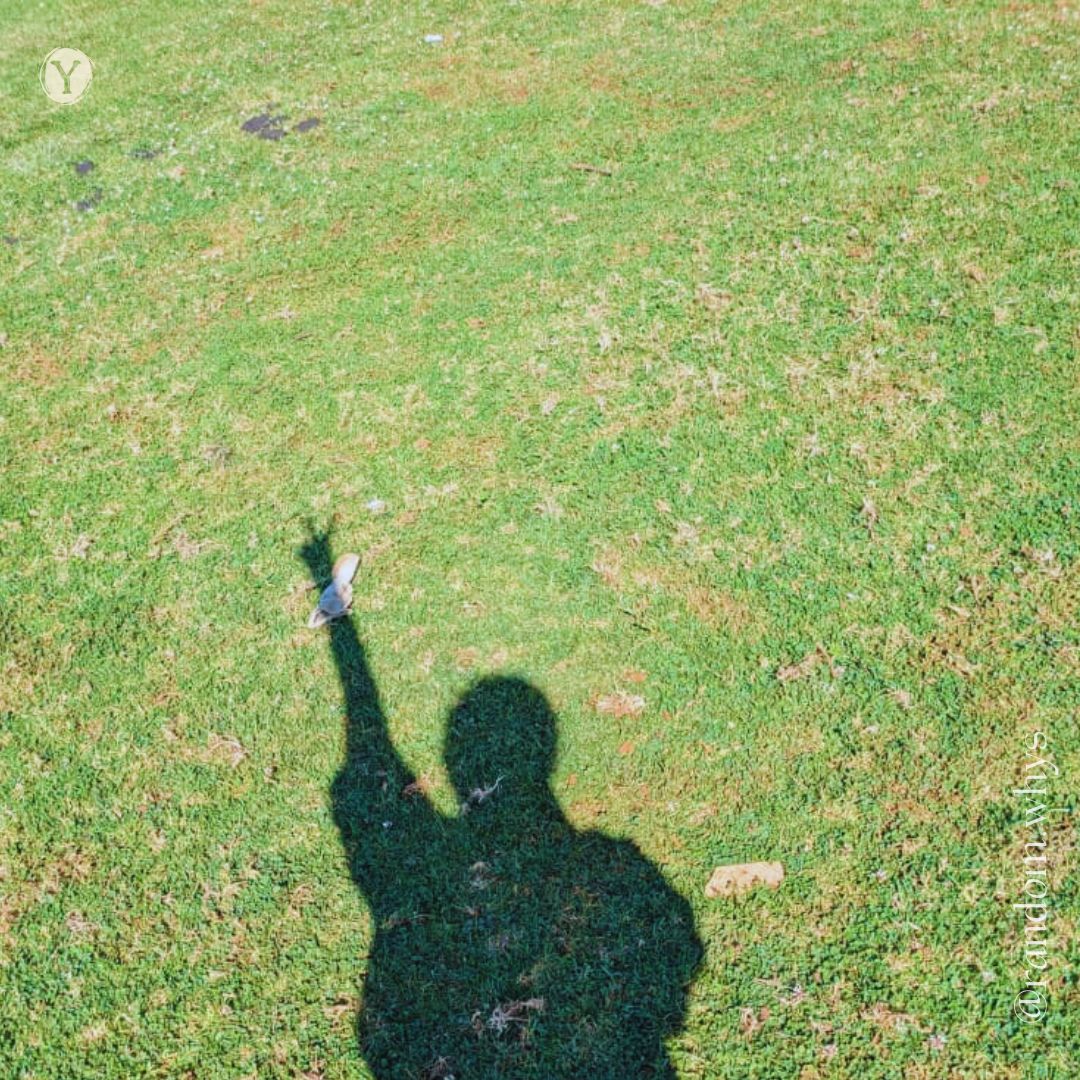
Two years ago, I bought a flip flop. Simple, and comfortable. It fit into almost everything I wore and felt easy to walk in. For a while, it was my go to choice.

But comfort has a way of disguising friction. If you walk too long in the wrong fit, it doesn’t hurt immediately, it dulls your awareness first. This one didn’t tear, my skin did. The material stayed strong, while my legs slowly adjusted to the pain until they couldn’t anymore.

That’s how attachment often works. You stop questioning what you’ve adapted to, mistaking endurance for stability. You only realize the damage when it begins to limit your movement.

Sometimes, the hardest part isn’t letting go but in recognizing what’s quietly hurting you while still appearing functional.

Decluttering isn’t an act of loss. It’s a return to alignment. The flip flop was fine. It just wasn’t right anymore.

Cheers!

Check out the previous post: Do tulips know they’re red?

Follow on IG X for more!

If you like what you see and wish to support my work, then

Share your thoughts/suggestion at the comment section or mail at

randomwhyss[@]gmail[dot]com

Don’t miss out! Get notified about new blog posts straight to your inbox !

(No spam, pinky promise!)

Enter your mail to receive updates

Do tulips know they’re red?

1–2 minutes

I was blending oil pastels yesterday watching colors turn into new colors I didn’t expect. Something about that transformation felt pure. Like beauty appearing out of nothing. it felt nice.

Then the book I’m reading (Three Dialogues between Hylas and Philonous) messed with my peace.

It argued that color doesn’t exist outside the mind. Shape doesn’t either. Not even the tulip we’re so sure is real. What we see is the brain’s version of reality…not reality itself.

I looked at my sketch again. Was the beauty on the paper? Or inside me?

Neuroscience agrees with the philosophers: the world doesn’t arrive fully formed. The brain builds it light into color, vibration into sound, memory into meaning. We think we’re observing the world. Really, we’re constructing it.

Perception is a controlled hallucination – Anil seth

And yet, almost everyone finds a rose beautiful. Maybe because life taught us to notice color that meant food, symmetry that meant safety, softness that meant care. Maybe what we call “beautiful” is evolution and emotion agreeing on the same picture.

The strange part? The brain is both the creator and the admirer, designing the illusion and then falling for it. A blank page becomes a world, if the mind decides so.

Maybe reality isn’t something we find. Maybe it’s something we make color by color, meaning by meaning, right inside the head that wonders about it.

So… what is a tulip’s color really then?

Cheers

PS: Tulips from my collection of pastels

Check out the previous post: Passionate about other People’s Passion!

Follow on IG X for more!

If you like what you see and wish to support my work, then

Share your thoughts/suggestion at the comment section or mail at

randomwhyss[@]gmail[dot]com

Don’t miss out! Get notified about new blog posts straight to your inbox !

(No spam, pinky promise!)

Enter your mail to receive updates