Milk is not the sole factor in growth, genes play a major role. It has deep historical and cultural significance, and is vital for nutrition and livelihoods.
2–4 minutes
Remember those old ads where a boy grows tall just by drinking a certain brand of milk? Total scam, right? Turns out, genes play a huge role in our height, contributing around 80%. So, on this Milk Day, let’s see what it’s really all about.
Milk, often seen as the magic potion for the growth. It has a complex bond with our health. The story of milk began around 8000 BCE in the Middle East, where early humans realized domesticated goats, sheep, and cows could provide continuous nutrition. Milk wasn’t just a drink; it became cheese, yogurt, and butter, spreading across Europe, Asia, and eventually the Americas.
In India, dairy farming is deeply woven into the culture. The ancient Vedas mention milk and milk products as vital for daily life and rituals. Fast forward to the 20th century, and India saw the White Revolution of the 1970s, led by Dr. Verghese Kurien. He called the Father of the White Revolution. This movement turned India from a milk-deficient country into the world’s largest milk producer, thanks to the creation of dairy cooperatives like Amul. Yes, we do have a lot now.
Milk is crucial for many families especially people living below the poverty line (BPL). It offers essential nutrients like calcium, protein, and vitamins, vital for growth and health, at an affordable price (ahhannn). Dairy farming also generates jobs and income for small farmers, helping them support their families. Cooperatives ensure farmers get fair prices, boosting their livelihoods. Plus, milk is an affordable source of protein, calcium, and vitamins – a win-win for everyone!
Nutritionally, milk is a packed with protein, calcium, vitamin D, B2, B12, phosphorus, potassium, and fat. It’s recommended for bone growth and strength. Yet, those old ads would have us believe milk is the ultimate health hack, which is a bit of an exaggeration compared to genetic factors.
Speaking of genes, some people have a little problem called lactose intolerance. It is the inability to digest lactose, the sugar in milk. (Thanks to Leonard Hofstadter). This is due to a deficiency of the enzyme lactase. If you mention lactose intolerance in rural India, you’re likely to get a laugh. There is no awareness.
In some cultures, food allergies and dislikes are not always taken seriously. Allergic to peanuts, or dislike pineapple? Prepare to be bombarded with it in every form until you do! Asian parents never accepts No. May be that’s why we always say yes. (too dark).
Milk comes from various animals like cows, sheep, goats, camels, buffalo, and even donkeys. There are also plant-based options like soy, almond, oat, rice, coconut, hemp, pea, and cashew milk. For vegans and lactose-intolerant people, these alternatives are often fortified with nutrients to match the benefits of traditional milk. In the end, whether it’s cow’s milk, almond milk, or any other variety, there’s a type of milk out there to suit everyone’s lifestyle and health needs. So, here’s to milk in all its forms.
The movie “Kannagi” explores the phases of a woman’s life, her experiences with marriage, relationships, and societal expectations.
3–4 minutes
As I was scrolling through Twitter, I came across an intriguing tweet: “If a woman is rich, smart, and independent, but still single, what could be the problem?” There were countless responses, suggesting reasons like having a bad attitude, being too masculine, toxic, or too loud. I couldn’t figure out what the real reason might be. Then, the movie Kannagi came to mind. Because, many couldn’t understand the third character that movie.
When I watched “Kannagi,” I had mixed feelings. I couldn’t relate to all the characters, yet the movie left an impact. I searched for reviews from different writers but didn’t find much. So, I thought I’d share my thoughts.
For context, I don’t identify as a feminist rn. I listen to Scott Galloway sometimes (never AT, IYKYK). This movie offered a different perspective on women’s behavior.
The movie revolves around four different types of women. One is waiting to get married, another is going through a divorce, the third is in a live-in relationship, and the last has had an abortion. These four characters represent different phases of the female protagonist’s life, who ends up writing a book.
In the first phase, she wants to get married, but her mother finds reasons to reject every suitor. The movie shows her suffering through each meeting. After her father’s death, she ends up with someone because of societal pressure, so she obeys her mother and gets married.
In the second phase, she believes marriage is the answer to everything. She thinks it will help her fit into society. When her husband files for divorce, she refuses to agree because of her beliefs. She eventually gets frustrated and leaves the marriage, without her parents’ support.
As time passes, she falls in love with her lawyer who helped during the divorce. Things seems fine between them. They plan to marry, but he isn’t ready and gives her false hope. This shatters her faith in marriage.
In the third phase, the repeated failures make her develop an attitude that some might piss off people. She no longer wants to marry because of her past trauma. Her views of marriage changes from protection to something which bring out only problems. When she meets a caring guy and asks for marriage, her past experiences bring out her worst fears. She pushes him away in an unpleasant manner.
It would be really hard to view these scenes from the female lead’s perspective. The focus tends to be on the guy who got rejected. He did nothing wrong. He was simply caring for her and loving her. This is where her trauma is both exposed yet hidden within the scenes.
In the final phase, she gets pregnant from a past relationship and doesn’t know how to handle it. She reaches out to a man she once considered marrying. He helps her get an abortion. They are both at low points in their lives. He is struggling to get a movie produced, and she doesn’t want the baby. The movie beautifully portrays their pain. They understand each other and decide to stay together. I’m not sure why they have decided to stay together – maybe because of the baby, his first love, or acceptance of who she is. Not sure!
The movie highlights how life’s incidents shape her decisions. It shows how life events shape our choices, Perhaps it could have emphasized mental health more, and I wish there had been more focus on healing from the trauma. Kannagi shows the complexities of relationships and the impact of societal expectations on women’s lives.
The key to successful writing lies in understanding and catering to our audience while staying true to our passions. By blending our interests with audience preferences and pushing our creative boundaries, we can attract dedicated readers while maintaining our unique voice and perspective. Cheers! Happy writing!
A few months ago, we were taking a course on email marketing, and there was a segment on knowing our audience. It seemed relevant and essential to learn, but we left the room as soon as the chapter ended.
Yesterday, I encountered a reader who mentioned that he didn’t understand the Schism and how it ended. Interestingly, we still got a few likes on that piece. It got me thinking. Some parts of our work might resonate with our readers, and some might not. Let me share what we’ve grasped or understood about finding that balance.
We are often told that we need to find the right audience. This is solid advice. We want people to read and connect with our work. We need to understand who we’re writing for. But taking it too far can also backfire on us. Going solely for mass appeal or trends can reduce our originality and expressiveness. So, what can we do?
Understanding the audience means recognizing who we are writing for. It’s not just about age, gender, or location; it’s about their interests, struggles, and desires. When we know our audience, we can tailor our content to meet their needs, speak their language, and touch their hearts. It’s not about selling out or becoming a mindless crowd-pleaser. It’s about understanding who we’re writing for and using that knowledge to craft content that resonates deeply.
Imagine we’re at a party, discussing agriculture or books for recommendations. Nothing works, right? In the same way, we customize our writing style and topics for a specific audience. This can increase the chances of finding people who genuinely connect with our work.
While it’s crucial to understand and write for the audience, it’s equally important to maintain our own interests and passions. Finding a balance between meeting our audience’s needs and staying true to our interests is key. It’s hard, but it’s possible.
Write What We Love
Our passion for a topic shines through in our writing and captivates our readers. If we love what we write, our audience will feel that energy and be more engaged. Draw from our own life. The mundane details, the everyday interactions—these can make our writing relatable and real. Readers find comfort in stories that reflect their own lives.
You don’t write because you want to say something, you write because you have something to say. — F. Scott Fitzgerald
Blend Interests
Combine our interests with our audience’s preferences. It’s about finding our spot, the intersection between our interests and what our ideal readers crave.
Here’s the good news! There’s a whole world of readers out there with different tastes and interests. We don’t have to be everything to everyone. By understanding our strengths and what truly excites us as writers, we can attract a dedicated audience that appreciates our individuality.
Write what disturbs you, what you fear, what you have not been willing to speak about. Be willing to be split open. — Natalie Goldberg.
Push ourselves a little extra
Writing is hard work. It takes dedication, practice, and a willingness to step out of our comfort zone. Pushing ourselves a little extra doesn’t mean we have to overhaul our entire process; it means making small, consistent efforts to improve. We can study readers’ reactions through feedback, engagement, and metrics.
There is nothing to writing. All you do is sit down at a typewriter and bleed. — Ernest Hemingway
Try New Things
Experiment with different genres, styles, or perspectives. If we usually write fiction, try a non-fiction piece. If we love poetry, try our hand at a short story. Pushing our boundaries helps us grow as writers and can reveal hidden talents.
You fail only if you stop writing. — Ray Bradbury
Be a Trendsetter
Aim to be original and innovative, to surprise and delight. Give readers something they’ve never quite experienced while making it accessible and relevant to them.
Don’t bend; don’t water it down; don’t try to make it logical; don’t edit your own soul according to the fashion. Rather, follow your most intense obsessions mercilessly. — Franz Kafka
Edit Relentlessly
The first draft is just the beginning. Editing is where our story really takes shape. Don’t be afraid to cut out parts that don’t work, even if we love them. A lean, well-edited piece is far more compelling than a bloated one.
The best writing is rewriting. — E.B. White
Seek Constructive Criticism
Honest feedback from fellow writers can provide new insights and help us improve. Remember, critique is not personal; it’s a tool to make our writing better.
The Power of Being Ordinary
It’s easy to get caught up in trying to be the next best thing. But remember, there’s beauty in the ordinary. Our unique perspective, our everyday experiences—these are what make our writing special. Embrace our ordinariness and use it to connect with our readers.
To gain your own voice, you have to forget about having it heard. — Allen Ginsberg
By knowing our audience and pushing ourselves creatively, we’ll carve our own niche and attract a dedicated tribe of readers who connect with our unique voice and perspective.
Celebrate the small steps, and never stop pushing our boundaries. In doing so, we’ll not only find our audience but also discover the extraordinary writer within us.
Cheers!
Happy writing!
Thank you for reading ♡!
If you found this helpful, please give it a thumbs up and share it with anyone who might find it useful! Do check out the latest posts on the Home
If you like what you see and wish to support my work, then
Bees are vital pollinators for food and ecosystems, but face climate-related challenges. Sustainable practices and awareness are crucial for conservation.
6–9 minutes
Here, we don’t eat pan cakes. We have Dosa. The reason I bring this up is that pan cakes aren’t consumed as much as maple syrup. Instead, we have honey. Mostly used in tea, yogurt, fruits, and certain dishes, even with dosa you can have. Its good, especially when you are out of all sambhar, chutneys, and poddiies.
I wanted to write about bees long ago, but certain new topics were distracting me. Distraction is the new common. I agree! I had some connection with honey bees. Maybe it was because we had apiculture as an option during my undergraduate studies. I was not a part of it, but I was a keen observer. Let’s talk about them.
Bees are key pollinators. They travel from flower to flower, transferring pollen and collecting nectar. This also allows the plants to produce fruits and seeds. Approximately 75% of the crops we consume depend on pollination, including fruits, vegetables, nuts, and seeds. Imagine a world without apples, almonds, avocados, mangoes, and others. Our diets would be far less colorful, diverse, and nutritious. Bumble bees and honey bees are the key people here.
But these bees’ influence goes beyond food crops. They also pollinate wild plants, which play critical roles in natural ecosystems. These plants provide food and habitat for other wildlife, help maintain soil health, and contribute to the water cycle.
The majority of the bees live in solitude. Can you imagine? Those are called solitary bees. Sweet bees, bumble bees, and honey bees live in colonies with a queen bee, a worker bee, and a drone.
Solitary bees, unlike them, do not live in colonies. Each female solitary bee is a queen in her own right, building and provisioning her own nest. There are over 20,000 species of solitary bees, including mason bees, leafcutter bees, and carpenter bees. Despite their solitary nature, they play a crucial role in pollination. It’s interesting, isn’t it?
Bees usually visit flowers that are brightly colored, aromatic, open during the day, and full of nectar. When visiting the flowers to collect the nectar, there is a specialized structure called a pollen basket (corbicula), which is nothing but a concave depression fringed with stiff hairs. So when they land, the pollen grains stick to their bodies. Surprisingly, solitary bees have scopa and not pollen baskets. They often focus on specific plants and ensure thorough pollination. This efficiency makes them crucial for both agricultural crops and wild plants.
Climate Change
#Rising Temperature
Climate change has led to increased global temperatures, which disrupts the natural life cycles of both honey bees and solitary bees. According to research published in Science, warmer temperatures cause them to emerge from their hives earlier. Before even the flowers could bloom. Early spring. This incorrect timing means bees cannot find enough food to sustain themselves, leading to weakened colonies or even colony collapse.
#Weather Patterns
Obviously, we can see them very clearly. Its too hot, cyclone, delayed moonsoon, or flood. Unpredictable weather can destroy flowers and disrupt blooming periods, depriving bees of their food sources. Imagine waking up for breakfast to find your groceries empty. I know it’s not exactly a great start to the day. For bees, this can mean starvation and reduced reproductive success.
#Flowering Patterns
Some species are blooming earlier, while others are blooming later. This creates a mismatch between the availability of flowers and the bees’ foraging periods. A study in the Journal of Applied Ecology found that such mismatches can reduce the effectiveness of pollination, impacting plant reproduction and, subsequently, the entire food web.
#Pest and Disease
Warmer temperatures and changing climates are also conducive to the spread of diseases and parasites that affect honey bees and solitary bees. With the rise in the use of pesticides, it leads to pesticide poisoning. Reduction in the yield of cross pollinated crops, contamination of bee crops, and many more.
Consequences
#Habitat losses
Habitat loss through phenomena such as forest fires, droughts, and shifting vegetation zones. As habitats change, bees may struggle to find suitable nesting sites and food sources. Urbanization and agricultural expansion, etc. It also impacts natural habitats, leaving bees with fewer places to thrive. This creates a ripple effect throughout the ecosystem, leading to reduced biodiversity and ecosystem resilience. The loss of species can have unforeseen consequences, disrupting ecological balance and the services ecosystems provide.
#Crop Yield and Food Security
As bee populations decline, so does their pollination service, which directly impacts crop yields. A study published in the Proceedings of the Royal Society B highlighted that reduced pollination could lead to significant decreases in the production of key crops. This threatens food security and increases the risk of malnutrition, particularly in regions that rely heavily on pollinated crops.
#Economic loss
The decline in bee populations also has economic implications. The global economic value of pollination services provided by bees is estimated to be billions of dollars annually. A reduction in these services means increased costs for farmers, who may need to invest in alternative pollination methods, such as hand-pollination or mechanical pollinators. This can drive up food prices, affecting consumers worldwide. There are also findings from People and Nature that suggest developed nations should invest more in the coverage of pollinators.
What we can do ?
#Sustainable agriculture
One of the most effective ways to support bees is by promoting sustainable agricultural practices. This includes reducing the use of pesticides and herbicides, which can harm bees, and encouraging organic farming methods. Also intergate other farming systems. This can have more diverse plant species and flowering times, providing bees with a more consistent food supply.
#Creating Bee-Friendly Habitats
We and our communities can contribute by creating bee-friendly habitats. Planting a variety of flowering plants that bloom at different times of the year. So that it provides bees with continuous food sources. Gardens, parks, and even urban spaces can be transformed into bee havens.
#Conservation Efforts
Beekeeping initiatives and conservation programs are essential for protecting bee populations. Supporting local beekeepers by purchasing their products. There is a local farmer who is popular on IG and sells pure honey. I forgot the name, will update later. Buy from authentic sources because you might get fooled by sugar syrup as well.
#Raising Awareness
This is crucial. By informing others about the importance of bees and the threats they face, we can build a collective effort to protect them. Schools, community groups, and social media platforms can all play a role in spreading the buzz about bees. By now, you are aware of the importance of bees, let the people also know. Kindly share it to spread awareness.
Through sustainable practices, habitat creation, and conservation efforts, we can help bees continue their essential work. Even small actions can have a big impact. By working together to protect our bee friends, we’re not just saving honey production. We’re safeguarding the very foundation of our food system. Let’s ensure that future generations can enjoy the sweet benefits of bees without the bitter sting of climate change.
Share your thoughts/suggestion at the comment section or mail at
randomwhyss[@]gmail[dot]com
Don’t miss out! Get notified about new blog posts straight to your inbox !
(No spam, pinky promise!)
Enter your mail to receive updates
Reference
Goulson, D., Nicholls, E., Botías, C., & Rotheray, E. L. (2015). Bee declines driven by combined stress from parasites, pesticides, and lack of flowers. Science, 347(6229), 1255957. https://doi.org/10.1126/science.1255957
Kerr, J. T., Pindar, A., Galpern, P., Packer, L., Potts, S. G., Roberts, S. M., … & Colla, S. R. (2015). Climate change impacts on bumblebees converge across continents. Science, 349(6244), 177-180. https://doi.org/10.1126/science.aaa7031
Murphy, J. T., Breeze, T. D., Willcox, B., Kavanagh, S., & Stout, J. C. (2022). Globalisation and pollinators: Pollinator declines are an economic threat to global food systems. People and Nature, 4(3), 773-785. https://doi.org/10.1002/pan3.10235
Potts, S. G., Biesmeijer, J. C., Kremen, C., Neumann, P., Schweiger, O., & Kunin, W. E. (2010). Global pollinator declines: Trends, impacts and drivers. Trends in Ecology & Evolution, 25(6), 345-353. https://doi.org/10.1016/j.tree.2010.01.007
Rader, R., Bartomeus, I., Garibaldi, L. A., Garratt, M. P. D., Howlett, B. G., Winfree, R., … & Woyciechowski, M. (2016). Non-bee insects are important contributors to global crop pollination. Science, 351(6274), 1369-1372. https://doi.org/10.1126/science.aad3261
Vanbergen, A. J., & the Insect Pollinators Initiative. (2013). Threats to an ecosystem service: Pressures on pollinators. Frontiers in Ecology and the Environment, 11(5), 251-259. https://doi.org/10.1890/120126
Dugongs, or sea cows, play a vital role in their habitats and are at risk due to climate change and human activities. Conservation efforts are underway to protect these gentle marine mammals and their seagrass ecosystems.
4–6 minutes
Have you heard of the domino effect? It’s a series of events where each event triggers the next, creating a cascading impact. This morning, I read a story on social media about the structure, or “doll,” of a dugong. Curious, I discovered that a dugong is a sea cow, celebrated today for its ecological importance. Questions arose: What exactly is a dugong? Is it a mammal? How is it related to elephants? What does it eat? Why is it endangered? And how does climate change affect it? Let’s explore.
#What is a dugong?
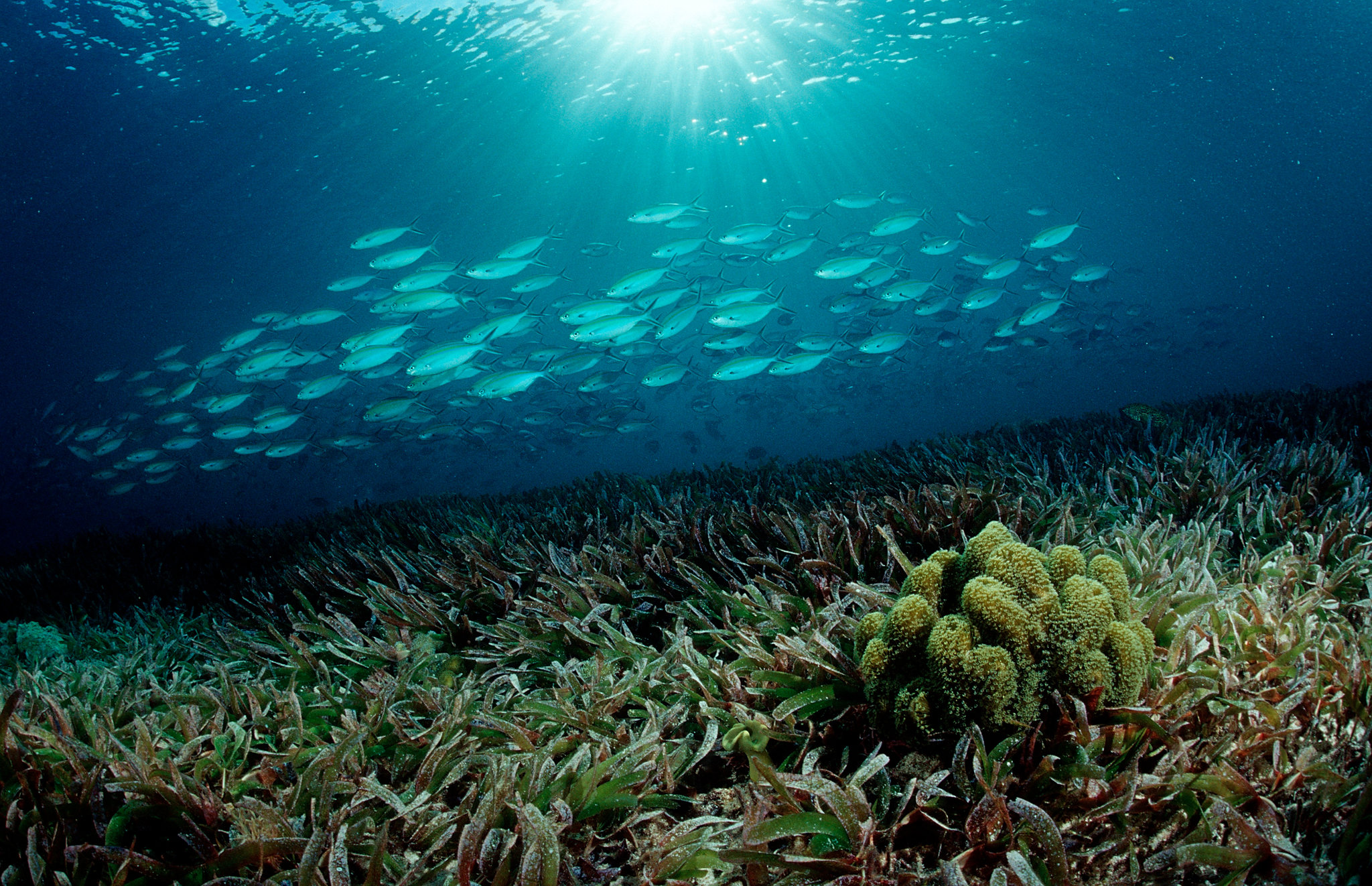
Dugongs, often called sea cows. They are marine mammals that play an important role in maintaining the health of their habitats. They roam around the shallow coastal waters of the Indian and Pacific Oceans for millions of years. Unfortunately, climate change poses significant threats to their survival. Dugongs are classified as vulnerable, meaning they are at high risk of facing extinction.
#Why is it called a sea cow?
Dugongs are called sea cows because, like cows, they graze on plants—in this case, seagrass. Using their bristly lips, they uproot and eat seagrass, resembling cows grazing in a field. A mature dugong can reach 3 meters in length and weigh up to 400 kg, making them one of the largest marine herbivores. An interesting fact is that early explorers saw these grazing giants, and, well, they looked like cows in the sea. This catchy nickname stuck, with “sea cow” and the French “vache marine.”
#History and Evolution
Dugongs have a rich history, with fossil records showing they’ve inhabited our oceans for over 40 million years. They evolved from terrestrial, plant-eating mammals, adapting to a semi-aquatic lifestyle over time. Dugongs belong to the order Sirenia, which also includes manatees. They share a common ancestor with elephants. Unlike whales, which evolved from terrestrial carnivores, dugongs and other sirenians evolved from herbivorous ancestors.
#Relationship to Elephants
Dugongs and elephants have a common ancestor. They share similarities in their tooth structures and skeletal systems. Both have a streamlined body adapted for their respective environments—coastal waters for dugongs and land for elephants. This close evolutionary relationship is fascinating and highlights the unique adaptations each species has developed over millions of years
#Habitat and Distribution
The Indo-West Pacific region’s warm coastal waters are home to dugongs. They are mostly found in Australia’s shallow waters, the Great Barrier Reef, and the Queensland coast. They feed mainly on seagrass. It is abundant in sheltered bays, mangrove channels, and the waters surrounding islands.
#Adaptations and physical characteristics
Since they eat plants, you might wonder if they might be ruminants. No, they have a simple digestive system. They have a single-chambered stomach and a long, coiled intestine. Their digestive process relies on the fermentation of plant material by gut microbes. Similar to horses and other hindgut fermenters.
They breathe through nostrils located on the top of their snout. This allows them to surface and take breaths without exposing their entire body. They can hold it up for 6 minutes. They have efficient respiratory systems and a high tolerance for low oxygen levels. This allows them to remain submerged for extended periods while feeding on seagrass beds.
#Diet and ecological role.
Dugongs feed almost exclusively on seagrass, making them an essential component of their ecosystem. Seagrass isn’t a grassy weed; it’s a flowering plant. It supports a wide range of marine life. By grazing on these plants, dugongs help maintain the health of seagrass meadows, which in turn support fish, crustaceans, and other marine species.
#Seagrass and climate change
Seagrass meadows are critical not only for dugongs but also for combating climate change. They are not grasses instead a flowering plant. These underwater plants sequester significant amounts of carbon dioxide, acting as carbon sinks. Unlike land plants that release carbon upon decomposition, seagrass meadows create oxygen-poor environments where decomposers struggle.
This slow breakdown allows dead seagrass and captured carbon to be buried beneath sediment layers, locking away carbon for years. Seagrass ecosystems can sequester carbon at a rate up to 35 times faster than tropical rainforests, making them vital for both climate regulation and ecosystem health.
However, human activities and the impacts of climate change, such as rising temperatures, ocean acidification, and coastal development, threaten seagrass meadows. Consequently, dugongs face the dual threat of habitat loss and reduced food availability.
#Conservation Efforts and Organizations
Numerous organizations are working to protect dugongs and their habitats. The Convention on International Trade in Endangered Species of Wild Fauna and Flora (CITES) lists dugongs to prevent their trade. The World Wildlife Fund (WWF) and the United Nations Environment Programme (UNEP) also run various initiatives to conserve dugong populations and their seagrass habitats.
These initiatives include establishing protected marine areas, researching seagrass restoration techniques, and raising public awareness. Every year, on May 28th, we celebrate International Dugong Day to highlight these efforts and the importance of protecting these gentle sea cows.
In a nutshell, our actions on land ripple through the ocean, causing a chain reaction that threatens dugongs. Coastal development, pollution, and climate change are pushing these gentle giants toward extinction. To break this cycle and protect dugongs, we need to be more mindful of our environmental impact and work together to preserve their underwater homes. Saving the dugongs means taking better care of our planet, benefiting us all.
Cheers!
PS: World Dugong day!
Thank you for reading ♡!
If you found this helpful, please give it a thumbs up and share it with anyone who might find it useful! Do check out the latest posts on the Home
If you like what you see and wish to support my work, then
Eva and Ava confront their choices and motives. Their inner conflict remains, and they seek unity and self-understanding. Can the story be rewritten?
You wrenched fool, Eva screams out loud,
Who longed for love, a home, a life.
Believed self worth was what you'd found Ava?
Was it ice cold pride that pushed him away?
Watch him build a life, a future, you Idiot.Ava rages back, with a furious tone,
Yelling, Love you wished to be carved?
Or a cage built to trap yourself?
You feared to be alone, dummkopf!You were selfish, denying, sobbing,
You let your fears haunt you,
You walked away from the love so true
No see, How empty are you? Loser!I am not empty, Ava retorts
Don't you see? I needed a space
Owning myself was all I wished for
Not to trade my soul for playing the lamb.Their voices clashed, blaming each other,
Every word bruised, each phrase a whip,
The grief within them, flowed across,
Neither of them, could ease their pain.
Two selves at war, to know thyself
Their unity questioned them stabbing,
Which one was false? which one the Queen?
They found no answers, though tried.Their unified voice whispered pleading
Can i rewrite this story?
Make myself whole without this cruel divide?
Life is a constant journey of change, shaping our experiences and ourselves. Embracing change can lead to personal growth and new destinations, despite its inevitable nature.
3–4 minutes
Life is a constant journey of change. It touches every aspect of our lives, whether we are ready for it or not. As the days go by, we witness the world around us transform. Buildings rise and fall, landscapes shift, and the people we interact with change as well. Change is an irresistible force. It shapes our world, our experiences, and, most importantly, ourselves.
This constant state of transition offers us new perspectives with every chance. Every person we meet and every experience we go through adds a layer to our understanding of the world. People come into our lives for various reasons, and each one leaves an imprint. Some people inspire us, lifting our spirits and helping us grow. They leave a positive impact that we carry with us.
Others might challenge us or even hurt us, leaving a negative impact. These experiences, while painful, are also valuable. They teach us resilience and strength. They force us to look at the world differently and to adapt. Regardless of the nature of these impacts, each moment shapes and molds us into who we are.
I often find myself resonating with Sheldon. Scared of change? Let me quote him.
Everything is changing, and it’s simply too much. I need to get away and think. – Sheldon
I sometimes wish for things to stay the same. The familiar is comforting; it feels safe. But can we truly avoid change? The answer is no. Change is a part of life that we cannot escape. It is relentless and ever-present, pushing us forward, whether we like it or not.
Today, I was visiting one of my friends. Possibly five or six years ago, I was passing by that street. This street had very few shops. It was quiet and almost forgotten. One thing I remember is that there wasn’t a big fancy bookstall. I always wish there was one.
Years later, upon returning, I found the street transformed. A bookstall that had a warm and inviting ambiance. They had good range of books (English and Tamil). This change was beautiful and unexpected. Let me share a picture.
Books & Books shop
We like to plan and control our lives. Obviously, the villain, the so called change, disrupts that control. But life is not meant to be static. It is dynamic and ever-changing. Our attempts to resist change often lead to more stress and anxiety. Instead, do we have any option ?
Yes. Accepting change. This might lead to personal growth and happiness. Okay Not happiness, at least mental peace. Lol.
No man steps on the same river twice, for he is not the same man, and the river is not the same. – Heraclitus
This resonates with both the river and the man. We are in a constant state of change. The river flows and shifts, just as we do with our experiences and growth. Each time we encounter something, we are different from the last time. Our perceptions have shifted, and our knowledge has expanded. Our experiences have deepened.
I am not saying that change is always pleasant. No, it is not, but it might lead us to something beautiful.
So, the next time you feel the familiar ground beneath your feet shift, take a deep breath. Remember that change is a force we can’t escape. But it’s also a force that can lead us to incredible destinations. Hoping!
The inevitability of change might be a universal constant. – Sheldon
A special thanks to reader P. for his support of the Random Whys. It holds immense value.
Also, heartfelt gratitude to reader S. for generously gifting two books, “Man’s Search for Meaning” and “Nudge.”
Cheers!
PS: Not a sponsored one.
Thank you for reading ♡!
If you found this helpful, please give it a thumbs up and share it with anyone who might find it useful! Do check out the latest posts on the Home
If you like what you see and wish to support my work, then
The post explores deep, unanswered questions about free will, identity, conditioning, love, and more. The author seeks insights and encourages discussion.
Today, I’m steering clear of my usual topics like agriculture, sustainability, climate, movies, or poetry. Yet, I wasn’t ready to research and bring out an article of 1000 to 1500 words. Instead, I’m diving into some deep and somewhat unresolved questions that have been swirling in my mind. As the name suggests, I am going to ask, no write. lol, type! Let me add the ones for which i couldn’t find answers. Here we go!
Does free will exist?
How does one handle the paradoxes of life?
Why is there a need for identity?
Is self-awareness bliss or bane?
Does the true personality of oneself exist?
What changes a person? Is it death or pain or love ?
Can acceptance and change go hand in hand? Which precedes what?
How does one embrace the different versions of themselves?
Why humans have constructed social structures? if its for their own benefit? why does it hurt some?
How does one behave after removing all layers of social conditioning? Still a human or an animal?
Can he/she live here after removing all the conditioning?
What is the difference domesticated animal and the human if being rebellious get punished?
Is there any manual for living? if not, why some behaviors are rewarded and some are punished? (Not bring murderers)
If humans are shaped by the experiences rewards and punishments, does one have true self?
Why does it much of an effort to break a conditioning?
What is unconditional love?
Why hate is taught?
Can all emotions be expressed via words?
Which is more painful? love or guilt or regret?
Who is more rewarded in this chaotic world? logical or emotional person?
Enlightenment, is it true? how does one know? Is it possible to seek
How does one learn without any authoritative system?
What gives peace? strive for what you want or accepting what you have?
Why a baby is given birth without its permission?
Is craziness a necessary/sufficient factor to live/light up the soul?
Extremists or balanced one?
Many more
I’m not sure where to find the answers, and I wonder if a single lifetime is enough to discover them. Lol! funny me!
Cheers!
Thank you for reading ♡!
If you know the answers or wanted to have a discussion (share it someone who might know)
Share your thoughts/suggestions at the comment section or mail at
randomwhyss[@]gmail[dot]com
If you like what you see and wish to support my work, then
The story plot of “Happy Married Life” within the movie called Hotspot address the challenges gender norms, emphasizing the impact of societal constructs on both men and women.
3–5 minutes
Many people urged me to watch this movie when it first came out, but I didn’t have the time, and there were limited showings in my area. Recently, it became available on Amazon Prime, so I finally got to see it. The movie features four different stories, each about 30 minutes long. It is directed by Vignesh Karthick (Remember, Yours shamefully!). I’ll be reviewing just the first part here, with separate posts for the others. Let’s dive into the first one, “Happy Married Life.”
This plot isn’t your typical love story. Forget grand gestures and happily ever after. This one dives into the life of a woman after marriage, highlighting the small changes she undergoes but with a with a hilarious twist. The story starts with a couple in love for five years, ready to take the next step. The girl wants to get married but hesitates, and we don’t understand why at first. She eventually agrees, and they fall asleep.
But what if, after the “I dos,” everything flipped? The girl becomes the breadwinner, and the guy stays home. Sounds crazy, right? That’s exactly what happens in the first story of this movie.
The director cleverly shows how women’s choices are often dismissed. When he wakes up, he’s forced to wear traditional clothes, struggles to speak in public, and faces dowry demands. His career is ignored, and it’s both hilarious and eye-opening to see him wearing a thali or mangal sutra. After the wedding, the male protagonist struggles to adapt to his new environment.
a still from the plot
He’s unsure where to sit or who to talk to, and he feels out of place. As the days pass, he does all the household chores and becomes frustrated. He’s criticized for not wearing the thali/mangal sutra all the time, not doing chores properly, and being denied visits to his parents and friends. His partner, though supportive, doesn’t understand his struggles, leading to a heated moment where she slaps him, waking him from the dream.
In the morning, he proposes two new options after getting a realization from the dream. Everyone lives in the same house, or they alternate staying in each house every month. I have seen couples lively separating but visiting in laws often. (It’s all objective until none is suppressed.) There’s opposition, but he (the male lead) stands firm, arguing that nothing will change unless someone takes a stand.
One more reference comes from a movie called Idea of You, where a young man falls in love with an older woman with a daughter. Most important questions that daughter inquiries about whether he is a feminist or not. That was nice, and it made a pause for a sec.
Coming back, this movie isn’t just about women suffering under patriarchy. It shows that men also pay a price, which often goes unrecognized. The word “feminism” might trigger some people because it contains “fem,” but the movie makes an important point. It questions if women alone can bring about change in their married lives. It’s refreshing to see the male lead realizing this and speaking up.
What if he was a typical man who believed in the patriarchal system? He might wake up relieved that things didn’t change. He could’ve thanked God million times! Lol!!!
On the flip side, some women might fear change and accept the system. There’s nothing wrong with that if it’s their choice. This reminds me of the 1984 movie “Aval Appadithan.” The female protagonist, despite her chaos and trust issues, falls in love with the male lead, only to find out he’s married to another woman. When she questions the new wife about women’s liberation, she smiles and says she doesn’t know much about it. The lead agrees; that’s why she’s happy.
I don’t believe in equality; I believe in equity. Feminism has brought progress across domains. Thanks to those beautiful and strong women out there. But to take it further, men need to understand that they are also victims of the system.
True progress requires understanding that both genders and the issue prevailing. The constructed social norms of today affect both. This film serves as a thought-provoking reminder that change is possible, but it takes collective effort and empathy. Watch it, reflect on it, and let’s push for a better world.
Ending this with a quote from Swami Vivekananda
Educate your women first and leave them to themselves; then they will tell you what reforms are necessary for them.
Cheers!
PS: Watch it Amazon Prime
Thank you for reading ♡!
If you found this helpful, please give it a thumbs up and share it with anyone who might find it useful!
If you like what you see and wish to support my work, then
Grant Sanderson’s 12-minute video emphasizes adding value, taking action, and embracing change to achieve meaningful success. Ditch cliches and make a difference!
Yesterday, while scrolling on YouTube, I came across an insightful video. I have never come across his channel, which may be because the algorithm understands that I am not a math lover. I gave it a try since the video was only 12 minutes long. It was from Grant Sanderson, creator of the 3Blue1Brown math channel. I can give this much attention. The video was all about a graduation cremation. I am not sure whether he is the chief guest or something in that video. There was a call for him to deliver the speech. He did say some valuable stuff; maybe that is why he is being called twice.
We have always been told to follow our dreams and work towards our passion. We know these sentences have been the most cliche ever you heard of. But these dreams and passions don’t bring food to your table immediately. Though it was only 12 minutes, it did help me find some answers. I hope it helps you too.
Let me share some of them here.
#Following your dreams
This is something we have heard from everyone, from family and friends to college students. As he says, following our dreams isn’t sufficient. We need to add value to the people around us. I mean positively. Even in one of the interviews with Elon Musk, he would’ve mentioned the same. Do something that adds value to the others. Shift your focus from “What can I gain?” to “How can I make a difference?”. This isn’t about sacrificing your passions; it’s about aligning them with societal needs for a truly meaningful career.
#Action precedes motivation
We see a lot of motivational quotes and videos everywhere, but do we act on them? Waiting for the right motivation is often a big trap. Once you get one, it’s lost within seconds. They say, Motivation is perishable.” You need to act on it before it expires. Take action first. Action creates momentum, which in turn fuels motivation. Engaging in activities regularly helps uncover unexpected passions and opportunities. Atomic habits do help you get better at building habits. Give it a try!
#Time
It is one of the crucial factors that plays a big role. He said, “What’s possible now wasn’t possible ten years ago and might become harder ten years from now.” Maybe we all need to find the relevant answer or think about what we are doing now. Focus on what we can achieve in the present. The timing of our efforts is critical for our growth and success. Unfortunately, we do not live in a static environment.
The world is dynamic, and we need to be flexible and adaptable to changes. This might help us turn the challenges into opportunities. There was something called the plateau of latent potential mentioned in the atomic habits. Often, we work hard without seeing immediate results, leading to frustration. However, true progress is often delayed and happens beneath the surface. The key is to persist through this plateau, knowing that your efforts will eventually pay off.
#Survivorship Bias
One of the important biases that’s spoken much or reached much to the people. It is nothing, but we focus on the subgroup of people who excelled in life, leaving out the rest of the large group. The great alchemists, successful entrepreneurs, and high riskers are often glorified. But we often overlook the narratives of people who struggled yet never succeeded. He did say that timing was also a crucial factor in his growth. The growth of YouTube and the internet all fell into place.
#Initial velocity vector
Let me say what is initial velocity vector. It is a quantity in physics used to describe the speed and direction of an object at the very beginning of its motion. In the same way he encourages people use it as force to drive. Don’t use passion as a final destination, but use it as a fuel to push us forward. This points us in the right direction to move as well.
After watching the video, I surfed about him. His name is Grant Sanderson, and his math YouTube channel is called 3Blue1Brown. Unique channel name credits go to his right eye (blue brown heterochromia). Very impressive videos. OMG, though I am not a math guy, those were amazing. Do check them out. Even for non-math enthusiasts!
Channel’s Logo
So, ditch the “follow your dreams” . Instead, cultivate a passion for making a difference. Explore diverse opportunities with an open mind, and embrace the ever-evolving world. By merging your passions with societal needs and seizing opportunities as they arise, we’ll be well on our way to being successful and impactful in whatever we do.
Cheers!
PS: Not a sponsored one. Trust me!
Thank you for reading ♡!
If you found this helpful, please give it a thumbs up and share it with anyone who might find it useful!
If you like what you see and wish to support my work, then
A tale of forbidden love unfolds as two worlds collide, defying age and hierarchy. Blissful moments give way to heartbreak as reality shatters their delusions, leaving her in silent agony.
Stolen grace, maroon tucked tight, he strides across the way She in green floral salwar, smiling at his weirdness Their worlds collided, hiding the mysteries of the future. Forbidden love bloomed, ignoring the whispers of disapproval. Flourishing against all the odds of age and hierarchy.
Blissful moments and stolen kisses made them flutter. Joyous and bright days pass, leaving her delusional. Though decent, anxieties often clouded his judgement, Layers of an unfathomable future are revealed gradually. Yet she dwelled in her fantasy, holding the rope of hope. Every actionless clues, a sliver of light peeked through her dark. Cold heart, turning down every men who dare to show, Hoping that he would return from the night.
Waited in vain, her body wrapped in chains That dug into her skin, bleeding and crying. Rumors were being spread that would tear her apart. Heard his owe, blinded eyes of her's refusal to heed
Clinging onto the bits and pieces of her broken fallacy Webbed a cocoons around her, failing to grasp the truth. Until fate struck like thunder, smashing a heavy blow Exploded her bubble of delusion, drenching her in pain.
The heaviness of her false, choked her in every breath. For seeing a picture, stark, clear, and colorful The man, his bride, smiling radiantly and true Reality creeps in, splintering her fragile sphere.
Critiques pierced her as a dagger, severe Why did you cling to this path of despair? To live in delusion, devoid of care? Her silence spoke volumes and volumes. A diegesis of agony too deep for words.
Looking at his bride's innocence, She walks away, leaving the amour and the soul, . Each step being a burden, heart that holds so tight, Knowing that love can exist, even left behind!
Biochar, derived from ancient practices, aids in soil improvement and climate change mitigation. Challenges persist, but with research and collaboration, biochar offers promising sustainable solutions worldwide.
7–11 minutes
As we continue to struggle with the challenges of climate change, food insecurity, and waste management, a promising solution emerges: biochar. This carbon-rich material is produced by heating organic materials like agricultural waste, wood, or manure in an oxygen-limited environment. This offers a unique approach to tackling these pressing issues simultaneously.
Definition
Biochar is defined as a stable form of carbon created by heating organic materials (such as wood, crop residues, and manure) in the absence of oxygen. This process, known as pyrolysis. This converts biomass into a material that can be incorporated into soils to improve their physical and chemical properties.
Biochar
Origin
The concept of biochar is rooted in ancient agricultural practices. Although the term “biochar” is relatively modern, the principles behind its use date back centuries.
#Terra Preta Soils: The origin of biochar can be traced back to the Amazon Basin, where ancient civilizations created fertile soils known as Terra Preta (dark earth). These soils were enriched with charcoal, organic matter, and nutrients, making them significantly more productive than surrounding soils.
#Traditional Practices: Similar practices have been observed in other parts of the world, including Africa and Asia, where burned biomass is added to soils to enhance fertility and sustain agricultural productivity over long periods of time.
Modern Rediscovery
#Scientific Research: In recent decades, scientific research has rediscovered and validated the benefits of these ancient practices. Modern studies have shown that biochar can improve soil structure, increase water retention, and reduce the need for chemical fertilizers.
#Environmental Benefits: Biochar’s ability to store carbon has also attracted attention in climate change mitigation. By converting biomass into a stable form of carbon and storing it in the soil, biochar can help reduce atmospheric CO2 levels.
Properties of Biochar
Biochar has a highly porous structure, which significantly enhances its ability to retain water and nutrients. Biochar can vary in particle size depending on the feedstock and pyrolysis conditions. Smaller particle sizes increase surface area but may also affect soil aeration and compaction differently than larger particles. Biochar is primarily composed of carbon (C), often more than 70% by weight.
Generally, biochar contains small amounts of essential nutrients, but its main benefit is enhancing the soil’s nutrient-holding capacity rather than directly supplying nutrients. While biochar is rich in carbon, its nutrient content (nitrogen, phosphorus, potassium, or NPK) can vary based on the biomass source. Not all biochar’s are the same.
Biochar Production
It is a thermochemical process called pyrolysis, where biomass is heated in an oxygen-limited environment at temperatures ranging from 300°C to 700°C (572°F to 1292°F). This process decomposes the organic matter and releases volatile compounds. Meanwhile, it leaves behind a highly stable form of carbon known as biochar. It is available as briquettes or granules.
Biochar Briquettes
Various types of pyrolysis systems can be used, ranging from simple earth mound kilns to sophisticated industrial-scale reactors. Some of them are:
Biochar Retort: Biochar retorts are airtight containers made to externally heat biomass and induce pyrolysis. This method is known for producing high-quality biochar with minimal emissions. The gases released during the process are often collected or burned to sustain the operation. This makes retorts both environmentally and economically advantageous. Retorts are suitable for small-scale and commercial biochar production due to their controlled environment and high yield.
Biochar Stove: Biochar stoves, such as Top-Lit Updraft (TLUD) stoves and Anila stoves, serve dual purposes. This produces both heat for cooking and biochar as a byproduct. TLUD stoves create a stratified combustion environment with distinct zones for biomass, flaming pyrolysis, gas combustion, and charcoal combustion. Anila stoves, on the other hand, use concentric cylinders to pyrolyze biomass, with the escaping gases enhancing the cooking flame. These stoves are particularly beneficial in rural and low-income areas, providing an efficient cooking method while producing biochar for soil amendment.
Biochar Kiln: Biochar kilns, such as the Kon-Tiki cone kiln, are built for larger-scale biochar production. These kilns create an oxygen-limited environment through a cone-shaped, open-top design. The primary fire burns at the top, and biomass is added gradually. This technique is well-known for producing biochar quickly and cleanly. This makes it perfect for use in communal and agricultural settings.
Biochar Oven: Biochar ovens are simple, low-tech devices intended for small-scale biochar production. These ovens are ideal for small farmers and urban gardeners. They can handle a variety of feedstocks, such as agriculture residues and yard waste.
Uses of Biochar
We will explore the simple and practical ways biochar can be used. From improving soil health and growing better crops to cleaning water and managing waste, biochar is a versatile and powerful resource. Let’s explore the various applications of biochar.
#Fuel
In most cases, the biochar is used as a soil amendment rather than a fuel. Coal and charcoal are different from biochar. Coal is a fossil fuel used mainly for energy production and industrial applications. It was formed from ancient plant material over millions of years. It is mainly used for electricity generation and industrial applications due to its high energy density. Whereas charcoal is produced by pyrolyzing wood. It is mainly used as a fuel for cooking and heating.
#Crop yield
Biochar primarily improves nutrient retention and soil structure, indirectly benefiting plant growth. Biochar’s porous structure improves soil aeration, water retention, and microbial habitat, leading to better root development and nutrient uptake. Generally, biochar contains small amounts of essential nutrients, but its main benefit is enhancing the soil’s nutrient-holding capacity rather than directly supplying nutrients. It is not the same as compost. The compost is rich in nutrients and organic matter, enhancing the soil’s fertility. It also improves microbial activity.
#Soil Remediation
Biochar can trap heavy metals and organic pollutants, reducing their bioavailability and toxicity in contaminated soils. Its large surface area and cation exchange capacity help adsorb contaminants. Because biochar frequently has a high CEC, it can retain vital nutrients and release them gradually to plants. Additionally, the pore sizes range from macropores to micropores, providing an extensive surface area for microbial colonization and nutrient adsorption. Moreover, biochar usually has an alkaline pH, which can help to neutralize acidic soils. The exact pH can vary depending on the feedstock and pyrolysis conditions.
#Carbon Sequestration
The high carbon content makes it a stable form of carbon sequestration, contributing to its environmental benefits. Biochar retains the carbon from biomass, preventing it from decomposing and releasing CO2 back into the atmosphere. When applied to soil, biochar acts as a stable carbon sink. Biochar effectively removes carbon dioxide from the atmosphere and stores it in a stable form. This carbon capture makes biochar a valuable tool in the fight against climate change and improving soil health and fertility.
#Water Treatment
Biochar’s porous structure and large surface area make it effective in adsorbing contaminants from water, including heavy metals, pesticides, and organic pollutants. The pore sizes range from macropores to micropores, providing an extensive surface area for microbial colonization and nutrient adsorption. Biochar can also retain nutrients in water, preventing eutrophication in water bodies by capturing excess nitrogen and phosphorus.
#Waste Treatment
Biochar can be used in filtration systems to remove contaminants from wastewater, including organic and inorganic compounds. Biochar can be produced from organic waste materials, converting waste into a valuable product while reducing landfill use and methane emissions from decomposing waste.
How to use?
Obviously, the recommended application rate varies for crops, but a general guideline is to mix biochar with compost or soil at a rate of 5–10% by volume. For specific crops or soil conditions, the rate may be adjusted based on field trials and local recommendations. Mixing it with compost or something else, helps to avoid temporary nutrient lock-up, where biochar initially absorbs nutrients from the soil, making them unavailable to plants. It can be used as top dressing too.
Commercialization and Adoption
While biochar is not yet widespread, its adoption has been growing in recent years. Several countries, including the United States, Canada, the United Kingdom, Germany, Australia, China, and Japan, have established biochar companies and startups that produce and market biochar products for agricultural and horticultural applications.
In India, efforts to commercialize and promote the use of biochar are also underway. Research institutions, government initiatives, biochar companies, NGOs, and farmer groups have been working on them.
Challenges and Opportunities
Biochar has many potential uses, but before it can be widely used, a number of challenges must be resolved. These obstacles include the need for standardized production methods, consistent quality control, cost-effective distribution systems, and increased awareness among farmers and policymakers.
However, with ongoing research and development, supportive policies and incentives, and collaborative efforts among stakeholders, biochar has the potential to become a significant contributor to sustainable agriculture and climate change mitigation efforts.
Biochar is a comprehensive solution that addresses the critical issues of climate change, soil degradation, and waste management. Biochar, which converts biomass waste into a stable form of carbon, not only reduces carbon emissions but also improves soil health and productivity.
As the world strives for sustainable food production and environmental solutions, biochar represents a promising approach that is consistent with the principles of the circular economy and regenerative agriculture. With continued research, commercialization efforts, and policy support, biochar has the potential to play a critical role in creating a more sustainable and resilient future for agriculture and the environment.
Cheers
Thank you for reading ♡!
If you found this helpful, please give it a thumbs up and share it with anyone who might find it useful!
If you like what you see and wish to support my work, then
Share your thoughts/suggestions at the comment section or mail at
randomwhyss[@]gmail[dot]com
Reference
Lehmann, J., & Joseph, S. (Eds.). (2024). Biochar for environmental management: science, technology and implementation. Taylor & Francis.
Lehmann, J., & Joseph, S. (2015). Biochar for environmental management: an introduction. In Biochar for environmental management (pp. 1-13). Routledge.
Ok, Y. S., Uchimiya, S. M., Chang, S. X., & Bolan, N. (Eds.). (2015). Biochar: Production, characterization, and applications. CRC press.
Sohi, S. P., Krull, E., Lopez-Capel, E., & Bol, R. (2010). A review of biochar and its use and function in soil. Advances in Agronomy, 105, 47-82.
Don’t miss out! Get notified about new blog posts straight to your inbox !
“The Big Bang Theory” and “Young Sheldon” became my comfort shows, bringing laughter and heartfelt moments into my life during tough time.
3–4 minutes
The Big Bang Theory” came into my life in 2018. It was the first American sitcom I had ever seen. Before this, my viewing habits were limited to movies and a few local shows, and I had no idea what I was missing.
Back then, I didn’t have subscriptions to Amazon or Netflix. TBH, I never knew them! OTT wasn’t that popular in those days. I used to download episodes from a Telegram channel or a link that someone gave me. I don’t remember clearly. Since I didn’t have Wi-Fi at the hostel, I had to rely on my mobile data to download 2-3 episodes daily and watch them. But hey, the struggle was worth it to watch Sheldon, Leonard, Penny, and the gang.
At first, the scientific jokes flew over my head, but I stuck with them. Slowly, episode by episode, I grew to love the peculiar characters and their weird adventures.
I loved all the characters, but Penny and Sheldon stood out to me the most. There was something special about their bond. I did lose track of it in between. Fast forward to the pandemic. Stuck at home, I decided to revisit The Big Bang Theory. I finished in 2020, during the COVID-19 lockdown.
Certain episodes, like when Leonard slapped Sheldon, Penny comforting Sheldon, Amy and Sheldon’s breakup, Raj’s inability to find a girlfriend, the gang’s dinner hangouts, Howard’s mother’s voice, Sheldon’s obsession with his schedule, his proposal to Amy, and his Nobel Prize speech, left a lasting impression. Obviously, Sheldon’s memorable “Bazinga!” moments.
It was like slipping into a comfortable pair of shoes. It was even funnier the second time around. I felt a bit sad when I finished watching them.
Then, I discovered “Young Sheldon,” which I enjoyed just as much. It was fascinating to see Sheldon’s childhood. Seeing the characters as kids was a little strange, but the actors nailed it!
Young Sheldon” had many touching moments, like Missy’s Barbie dinner, her driving lessons, Texas snow globes and Sheldon’s adventures with a dog. The family dynamics, Sheldon and Missy’s talks, Missy’s baseball, Mary discussing God with Sheldon, George comforting Sheldon on a flight, Tonarado, Texan things, role of Dr. Sturgis were all beautifully done.
The honest family conversations and heartfelt moments were a delight. Especially his meemaw. I wish I had one like Sheldon’s! Gerogie’s accent, especially when he makes a sound like ahhaaan. Love it! He stole the show for me in certain scenes.
Additionally, I also enjoyed the show’s reveals, such as Sheldon and Amy naming their baby Leonard Cooper. I wonder what they named their daughter! Reason for sheldon’s three knocks! Lol!
Knowing Sheldon’s father would pass away was tough. When I saw that episode, I couldn’t hold back my tears. However, I was glad to see Sheldon and Amy make an appearance in the finale episode. But even with the sad moments, the show left me with a warm feeling.
I might regret not remembering the other scenes later. :(
So, The Big Bang Theory or Young Sheldon? Both! They’re like two sides of the same coin. Both series have provided laughter, comfort, and valuable life lessons. They reminded me of the importance of friendship, family, and finding joy in the little things, even during tough times. If you haven’t experienced these gems yet, do yourself a favor and dive in. You might just find your new favorite comfort shows, as I did.
Cheers!
PS: Soft kityy, warm kitty, Little ball of flur!
Thank you for reading ♡!
If you found this helpful, please give it a thumbs up and share it with a fan of TBBT!
If you like what you see and wish to support my work, then
The journey of creativity isn’t about a big win but the love of creating and expressing oneself. Embrace the process. Keep writing!
3–4 minutes
Being a writer (lol) can feel like a wild ride sometimes! Sometimes, we feel like we’re soaring high, and other times, we hit a rough patch. Recently, I noticed this rollercoaster of emotions when it came to finding movie reviews that got views. At first, I was thrilled to discover new perspectives, but soon enough, I felt like something was missing.
There’s this cool podcast in Tamil called “Vocal Oli” that talks about the life. There was such episode (latest one I guess) called Left/Right. He discusses how, in the olden days, very few artists actually made a living from their art. People who were logical and reasoning got less interest in the arts (Lets explore that later) Only a few people have mastered both. This shows that even for the greats, success wasn’t about instant fame or fortune. It was about the passion for creating something beautiful.
Science tells us a similar story. While some areas of our brain are linked to different skills, like logic and creativity, they actually work together constantly. The left hemisphere, governing language, logic, and mathematics, stands in contrast to the right hemisphere’s dominion over intuition, spatial reasoning, and artistic expression. It is this delicate balance, this dance between the analytical and the creative, that shapes our natural inclinations and talents. I don’t know how far it is true. Some people have conquered both sides.
TBH, confusion got deeper. These thoughts were running through my mind, despite my being occupied with something. Maybe my mind was constantly searching for solutions.
They say, Na, keep doing your work; it might help someone in some way. God Bless Seth Godin!
His mail arrived with a subject line “Success is not an option”.
"In any creative endeavor, it’s possible to define success as the big win, the moment when your dreams match reality. Success is the end of imposter syndrome, stability and finally making it to the other side.
By this definition, it’s clear that success isn’t going to happen. It’s incompatible with the reason you do this work in the first place.
Sure, some projects are going to work. It’s quite likely your reputation will grow and more people will give you the benefit of the doubt.
But a success? Once and for all, through and through?
You can’t have that at the same time you’re the creative person you set out to be"
These words seem simple yet have such deep meaning. He says that success isn’t just about achieving a big win or reaching a point where your dreams become reality. Instead, it’s an ongoing journey. You might have some projects that work out well, and your reputation might grow, but there’s no one moment where you can say, “I’ve made it.” It’s about fully committing to the creative process itself. This idea really bonded with me.
Think about it. Sure, some of you people might have work that is popular, and people will definitely notice you over time. But being creative isn’t like hitting a target. It’s more like a long journey.
Today, let’s focus on creativity. In the world of writing and making things, it’s all about the act of creating itself, not waiting for a big win. Chasing that one big moment might actually stop us from being truly creative.
The real prize is the love of creating and expressing oneself. So keep writing! Keep putting your work out there. The views might go up and down. We might see the big win or not, but the love of creating should be what keeps us going.
Cheers!
Happy Writing!
Thank you for reading ♡!
If you found this helpful, please give it a thumbs up and share it with anyone who might find it useful!
If you like what you see and wish to support my work, then
Palm oil, widely used but harmful to the environment, raises concerns about deforestation, labor exploitation, and health effects. Sustainable production and consumer choices are crucial.
5–7 minutes
Think about one ingredient found in lots of things you use every day, like cookies and shampoo. This ingredient is everywhere because it’s useful and cheap, but making it causes a lot of damage to the environment. This ingredient is called palm oil. It’s great for some things, but it brings up big questions about how we take care of the planet. Let’s explore.
The oil palm tree (Elaeis guineensis) is believed to have originated in West Africa. The fruits (orangish red) have been used for food, fiber, and oil. Palm oil cultivation dates back to 3000 BC in Egypt, where it was used for lamp fuel and in religious ceremonies. Later in the 19th century, palm oil gained widespread commercial significance. Then, it was used in the manufacture of soap, candles, and lubricants.
The global demand for palm oil fuelled its cultivation beyond its native regions. Europeans introduced the oil palm to the Americas (16th century) and Southeast Asia (19th century). Today, Indonesia (59%) and Malaysia (24%) are the world’s largest producers and exporters of palm oil, accounting for approximately 83% of global production. Thailand, Colombia, Nigeria, and Papua New Guinea also contribute to the production.
India produces around 305,000 metric tons (0.4% of global production). In India, palm oil cultivation is concentrated in the southern and northeastern regions. Andhra Pradesh is the primary producer and includes other states such as Goa, Karnataka, Kerala, Mizoram, and Tamil Nadu. The Indian government has tried to increase the area by implementing the National Mission on Edible Oils—Oil Palm (NMEO-OP).
Palm cultivation requires specific climatic conditions, including high temperatures, rainfall, and well-drained soils. The oil palm is a perennial crop that can yield fruits for up to 30 years, with peak production occurring between 6 and 10 years after planting. 25–30 tons of fresh fruit bunches per hectare. Have a look at the other requirements here.
As the trees mature, massive bunches of orange-red oil palm fruits emerge. Harvesting is typically done every 10–14 days. It involves skilled workers using sharp tools (a hook) to carefully remove the fruit bunches without damaging the tree.
The fruits are harvested and then processed to separate the pulp from the kernel. The pulp is crushed and heated to extract the crude palm oil, while the kernel is further processed to produce palm kernel oil. This dual output makes the oil palm an exceptionally efficient crop. It yields more oil per hectare than any other vegetable oil crop. This results in affordability for both producers and consumers.
Let me add a YouTube link for palm oil extraction.
Palm oil has several advantages. It is a highly efficient crop. Moreover, it remains stable at high temperatures. It is also versatile, with a high smoke point and a long shelf life, making it suitable for frying and baking. Additionally, palm oil is used in biofuels (Lets explore later), cosmetics, and industrial products.
However, the story of palm oil is not without its dark side. On the health side, increased consumption of palm oil might raise LDL (bad cholesterol) and the risk of cardiovascular disease.
Recently, there was talk in the town regarding the usage of palm oil in Lays, especially in India. If you had followed Food Pharma, you’d have an idea. Indian Lays uses palm oil, which is not used in other countries. They have agreed to reduce and initiated the process of mixing the sunflower and palm oil.
But the most pressing concern is deforestation. To make way for plantations, vast areas of rainforest, particularly in Southeast Asia, are being cleared. This not only destroys ecosystems but also relocates indigenous communities. It also contributes significantly to greenhouse gas emissions.
Let me brief it!
Actually, deforestation releases massive amounts of carbon dioxide stored in trees. These are usually grown over the peatlands. Peatlands are a type of wetlands that are in a waterlogged condition and prevent plants from decaying and forming a peat layer on the surface. They store a good amount of carbon. But clearing and draining peatlands releases significant greenhouse gases, contributing to climate change. Almost responsible for 5% of global anthropogenic CO2 emissions. Have a look at Indonesia’s palm oil production and its harm.
Another issue is labor exploitation. Reports of unethical labor practices, including child labor and inadequate working conditions, have tarnished the palm oil industry’s image. Concerns exist regarding the safety of agricultural chemicals used in plantations, potentially harming not only workers but also surrounding communities and wildlife.
The environmental issues surrounding palm oil have provoked an international outcry. Many countries have enacted laws to combat deforestation and promote sustainable palm oil production. But enforcing these laws is tough, and illegal deforestation still happens. RSPO, and Other Certifications: In response to these concerns, various sustainability initiatives and certification schemes have emerged.
The Roundtable on Sustainable Palm Oil (RSPO) is a prominent organization that has established standards for sustainable palm oil production. Certification through the RSPO shows a commitment to responsible practices, including minimizing deforestation and protecting biodiversity.
The palm oil teaches us how efficient it is yet its impact on nature and people. Even though it’s useful, the way we make it now harms the environment. Deforestation, habitat loss, and greenhouse gas emissions are just a few of the hidden costs associated with palm oil production.
By working together, we can ensure that the palm oil we consume doesn’t come at the expense of our planet’s health. Consumers can make a big difference by asking companies to be clear about where their palm oil comes from. And also picking products with sustainable palm oil certifications. This puts pressure on the industry to do the right thing. Governments and organizations can help by making stricter rules, finding other crops that are better for the environment, and supporting farmers who use sustainable methods.
This doesn’t mean we have to stop using palm oil altogether; it just means we need to use it in a better way. That way, palm oil can be a good thing without hurting our planet. The choice is ours! To continue down the path of unsustainable practices or to forge a new course towards a future.
Cheers!
Thank you for reading ♡!
If you found this helpful, please give it a thumbs up and share it with anyone who might find it useful!
If you like what you see and wish to support my work, then