Blog

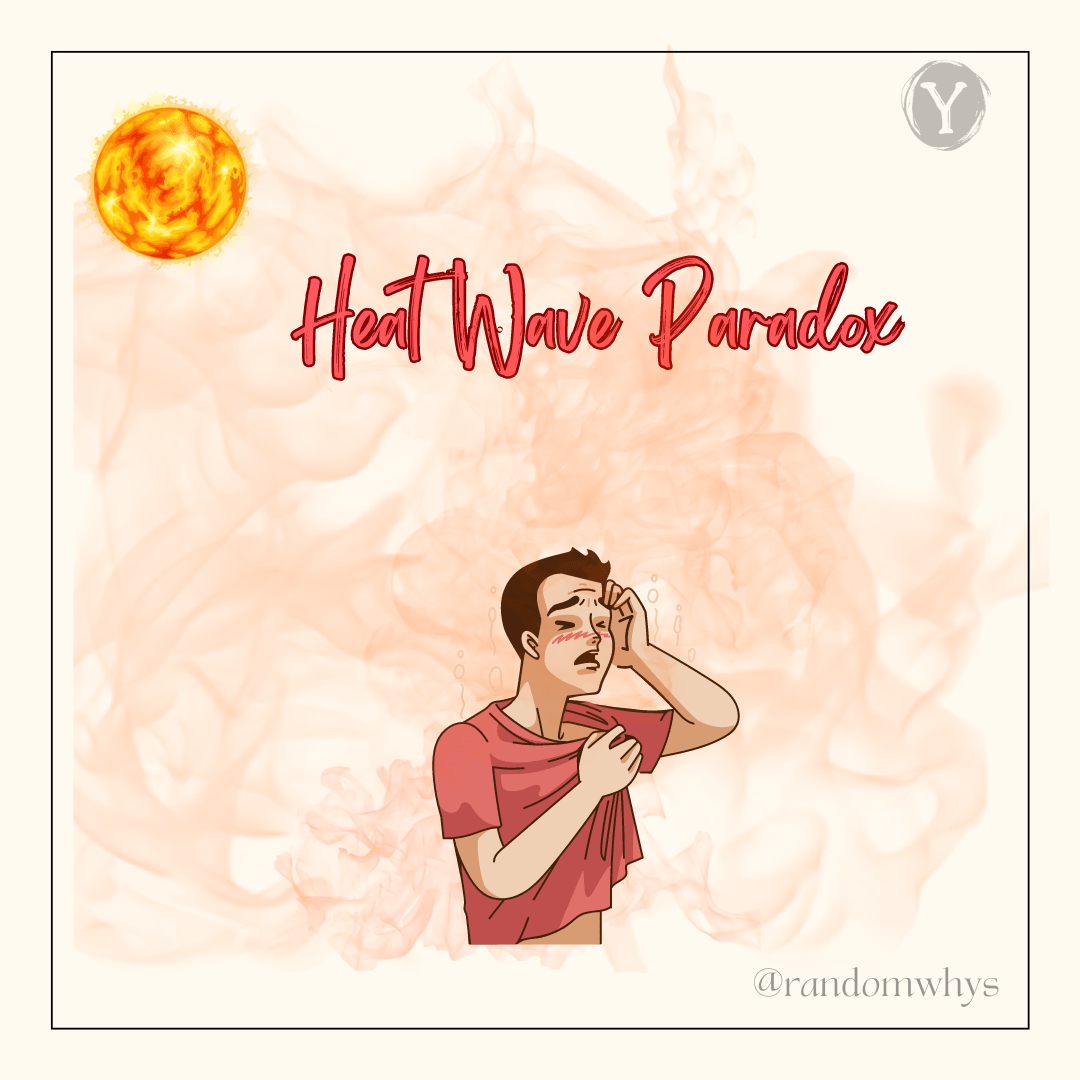
Cooling Down vs. Heating Up: The Heat Wave Paradox!

Photo by Jonathan Borba on Unsplash

Heat waves are periods of abnormally high temperatures that occur when the maximum temperatures of a station reach 40oC or more for the plains, 37oC or more for coastal areas, and 30oC or more for hilly regions, according to Indian Meteorological Department (IMD) .

They typically occur during the summer months, when the sun is high in the sky and the days are longer. Heat waves are a weather phenomenon that is caused by various factors, including atmospheric conditions, humidity levels, and weather patterns. These factors can cause temperatures to rise and persist for an extended period, leading to heat waves.

The buildings are so close to one another, and there are no big windows for proper ventilation. There is discomfort, dehydration, and stress when there is rise in temperature. This could leads to an increased demand for air conditioning units to relieve ourselves from the freaking temperature. AC helps to improve comfort levels, reduce stress, and improve overall well-being and productivity.

The history of air conditioners dates back to ancient civilizations, where people used various methods to cool their living spaces. For example, ancient Egyptians used reeds soaked in water and hung them in windows to cool the air as it blew in (poor man’s A/C till date), while ancient Romans used an aqueduct system to circulate cool water through the walls of their homes.

The modern air conditioner, as we know it today, was invented in 1902 by Willis Carrier, an American engineer. Carrier was working for a printing company in New York City. He was tasked with finding a way to control the humidity in the printing room, which was causing the paper to expand and contract. Carrier’s solution was to create a system that circulated cool air over coils filled with cold water, which would remove the humidity from the air.

The first air conditioning units were large and expensive and were primarily used in commercial and industrial settings. It wasn’t until the 1920s and 30s that air conditioning began to be installed in homes, and it remained a luxury item for many years due to its high cost.

A wall with outdoor of Air conditioners
Photo by Milind Kaduskar on Unsplash

The basic principle of air conditioners has remained the same since Carrier’s invention. Air conditioners use a refrigeration cycle to remove heat from the air inside a room and transfer it outside. The cycle works by compressing a refrigerant gas (R-410A, R-22, R-132A, R-407C, R-32, and R-290), which causes it to become hot, and then allowing it to expand, which makes it cold. This process cools the air passing over the coils, and the warm air is then blown outside through a vent or duct.

Among the refrigerant gases, R-32 and R-410A gases are widely used since they have a lower global warming potential (GWP). When these refrigerants are not handled properly or leaked into the atmosphere, they can trap heat and contribute to global warming. Also, the hot air released from air conditioning can contribute to global warming. The electricity needed to power the AC is generated by burning fossil fuels, thereby releasing carbon dioxide and other greenhouse gases into the atmosphere, which contributes to global warming.

The whole scenario becomes a paradox when usage of air conditioners is high in urban areas and the temperatures are going to be significantly higher than those in surrounding rural areas. This can exacerbate the effects of heatwaves and contributing to higher energy demand as individuals utilize AC for cooling purposes, creating a cycle of increased energy use and greenhouse gas emissions.

In ancient days, the AC was considered a luxury, but now it has become a necessity. It has become a ubiquitous part of modern life in homes, offices, cars, and many other places. It is hard to get rid of air conditioners completely. However, the Bureau of Energy Efficiency (BEE) has issued guidelines on maintaining a range of temperatures (24–26oC) for commercial buildings during the summer months. There are some alternatives, including solid refrigerants instead of gas/liquids, energy-efficient AC equipment, and some other measures such as light-colored paints, shading devices, the use of timers, and proper ventilation.

Cheers!

Stay hydrated!

PS: Chill with Heat waves.


I do send out my posts to very few people. Join my mailing list if you enjoy what you see.


How much is enough?

Though the question looks simple, finding an appropriate answer is the hardest. If the same question is asked in terms of food, it is simple and easy to respond since it’s a quantitative variable. For example, how many dosas, idly, pizzas, or burgers are needed to satisfy the hunger, or how much money is needed for F.I.R.E.? These are quantifiable and can be derived from a particular number. When it’s of qualitative variables like

  • How much rest is enough to bounce back?
  • How much work is enough without getting exhausted?
  • How much progress is enough?
  • How much success is enough?
  • How much introspection is enough to build self awareness?
  • How much sleep is enough to feel fresh?
  • How much love is enough to stay content?
  • How much materialistic goods are enough?
  • How much time spent on social media is enough to stay connected?
  • How much focus on physical appearance is enough without getting obsessives about external validation?
  • How much travel is enough to feel alive?
  • How much exercise is enough without burning out?
  • How much time spent with friends and family is enough for a healthy relationship?
  • How much exposure to different ideas is enough to broadens oneself without losing one’s identity?
  • How much time spent on mediation is enough to foster inner peace?

The answers are subjective and vary from person to person based on their values, beliefs, resources, and priorities. I am not quite sure whether to try to find the answers to these questions or to drop into the deep ocean. There is a famous saying in economics that human wants are unlimited and insatiable. The constant urge to strive for more never stops, even when a goal or target is achieved. May be it’s just rooted in the genes. May it be or may it not!

There may not be a definite or consolidated answer to how much of something is enough. Yet, the act of exploring these questions and aligning one’s own values and goals with them can lead to greater self-awareness and a more fulfilling life. Though human wants are insatiable, searching for a meaning or a purpose in life is within our reach.

Cheers

Therapy!

Therapy is gaining popularity but faces stigma in Asian cultures due to different values, methods, accessibility, and approach to treatment.

2–4 minutes

The most commonly used word in the modern eras. It has become increasingly popular in recent years due to increased awareness and understanding of mental health issues and the importance of seeking help when necessary. Thanks to COVID. Therapy helps us to improve the mental health and well-being and to overcome problems such as anxiety, depression, relationship issues, and other mental health concerns.

Though it is popular, mental health concerns are often not encouraged in Asian households and viewed as a personal failing or a result of moral weakness. There is a strong emphasis on maintaining the social status, which makes it very hard to admit the struggles with mental health or to seek out help. There are significant differences in the perception and treatment of mental health issues between Asian and Western cultures, despite the use of similar terms like ‘therapy’ and ‘healing’. Some of them are

  1. Stigma: There is still stigma that is attached to the mental illness and therapy in many Asian countries. As discussed above, it make it hard for open up with their parents and peers.
  2. Focus/Values: Collectivism, harmony with family, social responsibility, and interdependence are more valued than individualism, self-expression, self-actualization, personal growth, and independence as in Western countries.
  3. Methods: Mediation, mindfulness, Ayurveda, herbal medicines, yoga in Asian countries and cognitive-behavioral therapy, psychodynamic therapy, humanistic therapy, hypnosis, etc.
  4. Accessibility: Due to issues like a lack of mental health resources and cultural stigma, and access to therapy may be more restricted in Asian nations. In contrast, therapy is typically easier to access in Western nations, though some people may still have financial hardships.
  5. Approach: In Western nations, mental illness is frequently seen as a condition that can be handled through therapy and medication. In contrast, mental health issues may be viewed more holistically in many Asian nations, with a focus on the mind-body connection and conventional healing methods.

There are more differences in communication style, emphasis on dealing with emotions, and the role of the therapist. I won’t deny the fact that yoga and meditation are great tools, but their importance is lacking.

One more thing that I realized when I watched movies from different countries I understand that movies can’t relate to all the differences, yet they portray reality. I was fascinated by the roles of Dr. Stan Lipschitz, Dr. Paula Agard (Suits), and Dr. Jehangir (Dear Zindagi), though it is scripted. Very few movies and television series in Asian languages have scenes of therapy, healing, or mental health and some of them are Tamasha, Dear Zindagi, The Great Hypnotist, Kill me, Heal me, It’s Okay to Not Be Okay, It’s Okay, That’s Love.

Leaving movies behind, there are ted talks and podcasts of renowned psychiatrists that help us understand the importance of having a healthy and emotional relationship with oneself and others. For sure, that isn’t equivalent to therapy sessions but its good start. I have been following and listening to talks by Gabor Mate, Nicole LePera, Jordan, and a few other regional psychologists on various platforms lately.

Despite the difference, there has been a rise in awareness of the significance of mental health in recent years, and numerous Asian nations are making efforts to lessen stigma and increase access to mental health services. Social media are playing crucial in this. There are ongoing efforts to improve public education about mental health and lessen stigma following COVID, and more mental health professionals are promoting open and supportive attitudes toward mental health.

Cheers!

To do or To be?

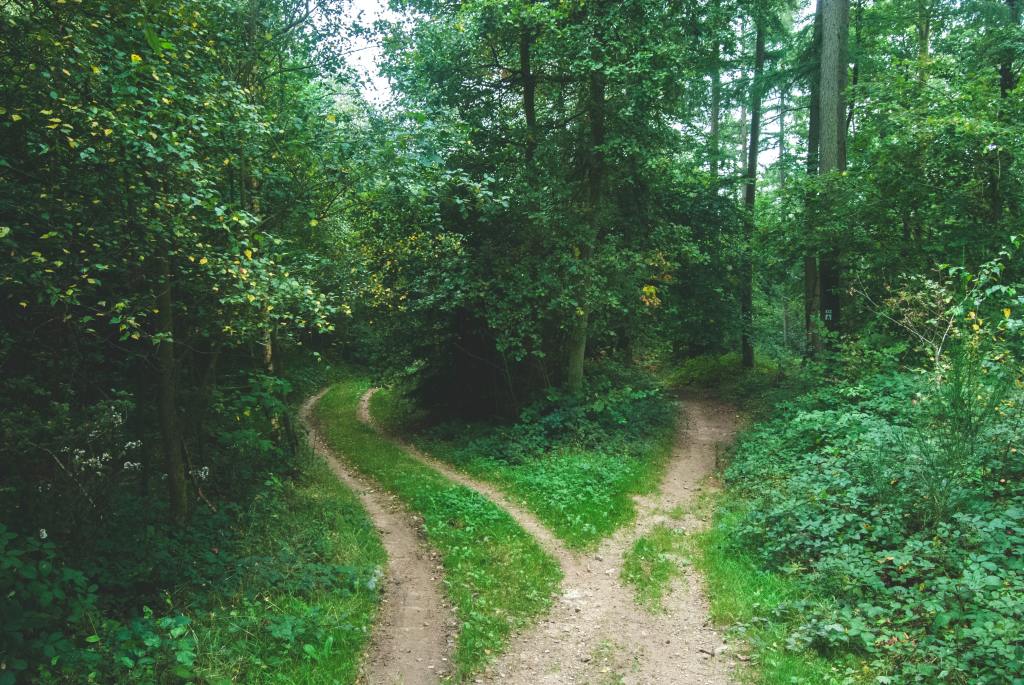
A divided path to different destination
Photo by Jens Lelie on Unsplash

I came across a famous story about John Boyd while reading Ego is the Enemy written by Ryan Holiday. Boyd was a highly accomplished fighter pilot, and military strategist in the United States Air Force, widely considered one of the most influential military theorists of the 20th century. He is particularly well-known for his innovative development of the OODA loop concept, which stands for Observe, Orient, Decide, and Act. This model has been widely adopted across different fields, including the military, business, and sports.

According to the story, Boyd was approached by a young officer who was frustrated with his lack of promotion and asked for advice. Boyd said there will be a fork in the path of life you’re traveling and you’ll have to make a decision on which path to take. Boyd then went on to explain that those who focus on being somebody, such as seeking power, prestige, and promotions, often end up compromising their values and sacrificing their principles to achieve those goals.

On the other hand, those who focus on doing something, such as making a positive impact on the world or pursuing a noble cause, often end up achieving their goals. There is no need for compromises; one can be true to oneself and to others. It is more like developing a personal identity, purpose, or meaning in life.

Boyd reportedly responded by saying, “To be somebody or to do something. In life, there is often a roll call. That’s when you will have to make a decision. To be or to do? Which way will you go?”

Ryan beautifully emphasized the role of ego in the to-do part. The ego can cause us to prioritize goals and activities that do not align with our core values and well-being, simply because they may boost our self-esteem or social status. The ego crosses out what really matters to us and replaces it with what doesn’t.

Maybe it was easy to make a decision before, not knowing what everyone was up to. We want to accomplish things and achieve our goals, on one end whereas, on the other, we want to live a meaningful life and be true to ourselves. This is the classic dilemma of “to do or not to do.”

Finding a balance between ‘to do’ and ‘to be’ is a difficult process that requires conscious effort and self-reflection. It starts with identifying our core values, such as honesty, personal growth or compassion and then prioritizing activities and goals that align with those values. However, the truth is that these two aspects of life are not mutually exclusive, and it might take some time to find out which one you belong in.

Cheers!

PS: I don’t know either, figuring out!

I don’t know!

A picture of saying I don't know

Socrates declared that he knew nothing in Plato’s work, “The Apology.” In this work, Socrates is on trial for corrupting the youth of Athens and for impiety, or not believing in the gods of Athens. During his trial, Socrates was given the opportunity to defend himself and explain his beliefs to the jury..

When asked about his wisdom and knowledge, Socrates responded with the famous declaration, “I know that I am intelligent because I know that I know nothing.” He believed that recognizing one’s own ignorance was the first step to true wisdom and that his method of questioning was meant to encourage others to seek knowledge for themselves. Socrates’ philosophy emphasized humility and a willingness to learn, inspiring generations.

As human beings, we often strive to be knowledgeable and well-informed. We want to have answers to everything and often find it hard to admit when we don’t know something. Yet, saying “I don’t know” can be one of the most important and difficult things we can say, both for ourselves and for others.

Saying “I don’t know” can be a powerful catalyst for curiosity, prompting us to seek out new information and expand our knowledge. However, I understand that saying it out loud makes us feel little, ashamed and our hurts the ego, but at the same time, it can be a great motivator for learning. This can lead to personal growth, intellectual stimulation, and a deeper understanding of the world around us.

“The greatest enemy of knowledge is not ignorance; it is the illusion of knowledge” – Stephen Hawking

Growing up with Asian parents, I had difficulty admitting things that I am not sure were considered inappropriate behavior. They would ask you random questions on a random topic and expect you to give the lengthy answer with the most recent data. Otherwise, you will be accused of your knowledge, degree, and schooling, including your brain. Just kidding, yet true in certain scenarios. In the tech era, all the platforms have been loaded with information and it is quite impossible to know and remember everything at all times.

There was some point in my life when I realized like I didn’t have to pretend about the things that I didn’t know. I was hesitant in the beginning, but I am saying it often these days. This helped me know, learn more, grow personally, and break down barriers between people.

“The more I learn, the more I realize how much I don’t know.” – Albert Einstein.

Admitting that we don’t know can be a liberating experience, freeing us from the pressure to have all the answers and allowing us to be more comfortable with uncertainty. After all, nothing is certain.

Cheers!

Escape FOMO, Embrace JOMO!

FOMO, or fear of missing out, drives anxiety and social pressure, but JOMO, joy of missing out, prioritizes well-being.

FOMO (Fear Of Missing Out) is a strong desire and anxiety to not miss out on opportunities or experiences others may be having, particularly prevalent in today’s social media-driven society. The feeling of being lost in the tribe hurts more when we are missed out on trips, movies, fancy dinners, recent shows, music etc.

This can lead to the feeling of not living life to the fullest or of not fulfilling the standards set by the people on social media platforms. Anxiety, stress, and self-pressure are pushing the people’s limits, and they might go in search of happiness or success like their peers without knowing what they needed or wanted in the first place. Everyone falls into the trap of FOMO.

Social media content can include a variety of experiences, such as traveling, career success, and social events, such as trips to different countries, adventures, starting a business, becoming influencers, excelling in their careers, promotions, going to parties, reunions with colleagues, branded cars, clothes, watches, gadgets, and so on. This might tempt us to fall into the trap. 

I got introduced to the concept of JOMO (Joy of Missing Out) through Ankur Warikoo‘s newsletter. It is the opposite of FOMO. It is feeling of pleasure or contentment that comes from disconnecting from social media, taking a break from activities, or saying no to invitations or events that you don’t want to attend.

Feel the joy of being in this moment, Feel the joy of missing out – Ankur

JOMO prioritizes well-being and happiness over social pressure to constantly connected with others. Instead of feeling guilty or anxious about missing out, people who embrace JOMO recognize that it’s okay to take a step back and focus on their own needs. I still remember making stupid decisions due to FOMO and facing the consequences and it is really good to miss out.

It is quite common and normal to feel left out or missed out when we come across all these things on social media. It is also important to enjoy the present moment of having the people and things that we have around. This may involve setting boundaries and saying no to things that don’t align with your values or interests. JOMO is really great once you realize FOMO doesn’t bring any happiness.

Cheers!

PS: Enjoy JOMO just like kid above!

Don’t miss out! Get notified about new blog posts straight to your inbox !  (No spam, pinky promise!)

Enter your email below to receive updates

Dream: Portals to Another Reality?

The fascination with the world around them and the quest to comprehend its complexities have long existed in human beings. Our capacity to consciously seek out and acquire knowledge about the outside world is what differentiates us from other animals. However, there are still many phenomena that science has yet to explain fully, and one of these is the mystery of dreams. Dreams can be vivid and realistic, and they can often feel like a glimpse into another world or reality.

Dreams happen during the Rapid Eye Movement (REM) stage of sleep, which typically starts about 90 minutes after falling asleep and repeats several times throughout the night, according to Matthew Walker in Why we sleep. The brain is very active during REM sleep, and the body is effectively paralyzed to prevent acting out dreams. One of the main functions of dreaming is to help us process and consolidate memories from our waking life.

Our brain actively replays and incorporates new experiences into our preexisting knowledge structures while we are sleeping during REM, which can help us comprehend and remember what we have learned. In our dreams, we might have more imaginative and creative thoughts because the logical and rational parts of our brain are less active during REM sleep. Dreams can also help us process and work through difficult emotions, such as fear or anxiety, by providing a safe space to confront and process these feelings.

The movie “A Mid-Day Slumber” reminds us how dreams can often leave us perplexed and searching for clarity as to why such dreams occur. The main character, James, behaves like a missing villager named Sundaram after a good afternoon nap. The situation becomes chaotic when James behaves like Sundaram after waking up from his nap and is unable to distinguish his own identity from that of Sundaram’s. This movie left the audience wondering if James had a dream of being Sundaram or if Sundaram left as James to live in a different entity.

A person riding the motorcycle

It made me think of the Butterfly Dream Theory, where the author daydreamed about being a contented butterfly but was unsure whether he was a butterfly in the dream or otherwise. There are many interpretations of this movie, some of which explore spiritual themes.

I’ll wrap this up with a Thirukkal that stayed after watching this movie.

உறங்கு வதுபோலுஞ் சாக்காடு உறங்கி
விழிப்பது போலும் பிறப்பு. (339)

Death is sinking into slumbers deep;
Birth again is waking out of sleep.

Cheers!

PS: Available on Netflix.

Don’t miss out! Get notified about new blog posts straight to your inbox !  (No spam, pinky promise!)

Enter your email below to receive updates

How screens and spaces shape you?

2–3 minutes

Environment plays a crucial role in shaping our behaviors, attitudes, and even identities. Kurt Lewin captured this beautifully in his behavioral equation.

Behavior = F (People, Environment)

In real terms, who we are and what we do is deeply influenced not only by our inner traits/characters but also by the people and settings around us.

From family to society, good grades, respect for elders, faith in God, and prioritizing studies over sports are often celebrated and rewarded. We learn early that certain behaviors earn approval and acceptance. And because acceptance is a fundamental human instinct, we naturally adjust to fit into these norms.

In the long history of humankind (and animal kind, too) those who learned to collaborate and improvise most effectively have prevailed.- Charles Darwin

Belonging has always been survival. Fitting in ensures safety, approval, and status. So, whether it’s norms, social etiquette, or professional behavior, we often mirror what’s around us especially when we’re uncertain.

As we grow, influence shifts to friends, peers, and colleagues. Shared values create bonds, but also transfer habits both positive and negative. Spending time with people who prioritize health, fitness, and learning can push us in that direction, just as easily as being around people who normalize smoking, gossip, or negativity can drag us the other way.

You’re the average of five people whom you spend time with. – Jim Rohn

But today, there’s a twist. Most of us spend more time on our phones than in direct conversation. The five people rule doesn’t stop at family or friends anymore it extends to the content we consume daily.

The influencers we follow, the podcasts we listen to, the videos we binge, the tweets we scroll through they quietly shape our thoughts, desires, and choices. Without realizing it, we start buying what they recommend, chasing the lifestyles they display, and aligning ourselves with their values.

Environment is the invisible hand that shapes human behavior. – James Clear

And in 2025, that environment isn’t just physical it’s also digital!

There’s another layer. The influencers! We imitate leaders, celebrities, or billionaires not just for acceptance, but for some identity or even betterment in life? We copy morning routines, productivity hacks, or investment styles, often forgetting that their journeys also involved luck, privilege, or failures we don’t see.

Habits, mindsets, and even dreams can be contagious, which means the responsibility falls on us to be intentional about who and what we surround ourselves with.

Whether it comes from the people we live with, the friends we spend time with, or the content we consume online, influence is constant. Our environment both physical and digital is always at work, quietly shaping our choices, our habits, and ultimately, the story of our lives. The real power lies in paying attention to what you let surround you.

Cheers!

Similar post: why first things first!

Follow on IG X for more!

If you like what you see and wish to support my work, then

Share your thoughts/suggestion at the comment section or mail at

randomwhyss[@]gmail[dot]com

Don’t miss out! Get notified about new blog posts straight to your inbox !

(No spam, pinky promise!)

Enter your mail to receive updates

Millet Magic: Ancient Grains for a Modern World!

Millets, nutritious and gluten-free, have a rich history tracing back to ancient times, and are slowly regaining popularity worldwide. Cheers!

2–4 minutes
Few grams of Barnyard millet, little millet, Foxtail millet, Finger millet, kodo millet, pearl millet, Jowar
Photo : Prisitine

Millets are small-grained cereal crops that are widely grown around the world, particularly in marginal or low-fertile semi-arid soils. There are many different types of millet, including sorghum, pearl millet, finger millet, foxtail millet, porso millet, barnyard millet, and little and Kodo millet. Millets are highly nutritious, gluten-free, and have a low glycemic index, making them a good choice for people with dietary concerns. Apart from that, they are high in dietary fiber, protein, vitamins, and minerals, including iron, magnesium, phosphorus, and potassium. Millets are called Nutri cereals as they provide nutrients for the normal functioning of the human body. 

The origin of millets is traced back to ancient times, as they were among the first crops to be cultivated by early humans. The millets originated in Asia and Africa, and evidence traces them back to 8000 BCE when foxtail millets were cultivated in China. They were also cultivated in other parts of Asia, including India and the Middle East, and were important sources for many ancient civilizations. 

According to the Food and Agriculture Organization (FAO) of the UN, the global production of millet in 2020 was 30.48 million metric tons, with India being the largest producer followed by Niger and countries like China, Nigeria, Mali, etc.

A Picture of Cumbu
Photo: Business Today

Though India is the largest producer of millets, the share of millets in total food grain production has dropped from 40 to 10 percent, and the area has decreased. The production and consumption of rice and wheat over the years and becomes the staple food. Rice has replaced millet to be eaten directly, while wheat flour has replaced flours made from millet.

In India, millets are primarily cultivated in 21 states over an area of 12.53 million hectares, producing 15.53 million tons at a yield of 1237 kg per ha. The major reasons for the decline in millets over the years in India were found to be high remuneration given to other competing crops, subsidized supply of other cereals through PDS, a lack of subsidies for inputs, and changes in consumer preferences. The green revolution did have mixed effects on the millets.

Ragi
Photo: DownToEarth

However, millet’s popularity is slowly rising again due to its nutritive values, and efforts have been made to increase production through programs such as ODOP, Millet Mission, Millet Village Scheme, Mid-Day Meal, and Nutrihug-TBI. 2023 has been declared the International Year of Millet by the UN to raise awareness and pay attention to the nutritional and health benefits of millet and the indigenous crops.

Millets are versatile, grown with minimum inputs and can be used in a variety of dishes, including bread, porridge, and even beer. In recent times, the value-added products out of millets are increasing tremendously. They are superfood that has the potential to play a significant in addressing the global health and food security issues.

Here are some of the yummy traditional millet recipes: cumbu kool, ragi kali, samai pongal, ragi dosa, foxtail bisibelebath, and many more.

Cheers!

Check out the similar posts: #Decodeagri05: Hidden costs of the rice revolution! & other Agri posts

Follow on IG X for more!

If you like what you see and wish to support my work, then

Share your thoughts/suggestion at the comment section or mail at

randomwhyss[@]gmail[dot]com

Don’t miss out! Get notified about new blog posts straight to your inbox !

(No spam, pinky promise!)

Enter your mail to receive updates

Glow Within: Bioluminescence!

nleash the

Glowing coral
Photo: David Clode

Bioluminescence is derived from both Greek and Latin words, bio meaning “live” and lumen meaning “light.” Bioluminescence is the production and emission of light from living organisms. It is a form of chemiluminescence. It was initially referred to as “animal light” in ancient Chinese poetry, but Aristotle recorded bioluminescence in detail during his study as organisms were capable of self-luminosity.

It is seen in a wide range of living things, including bacteria, fungi, insects, sea invertebrates, fish, octopuses, and other aquatic creatures. Some articles state that certain mammals like platypuses glow under UV light.

Illuminant mushrooms
Photo: Plantsnap

Most organisms emit light because of the chemical reaction, and a few organisms have light organs called photophores. The reaction requires the substrate (luciferin) and the enzyme (luciferase or photoprotein). The substrate is oxidized into the products in an excited state (oxyluciferin) and emits extra energy in the form of light.

bioluminescent
Photo: National Geographic

Some organisms synthesize luciferin on their own. While others absorb it from others in the form of food or through symbiotic relationships. Most of the reactions involve luciferin and luciferase; if not, they are catalyzed by photoprotein.

Bio luminant Mushroom
Photo: Mongabay

The major reasons for the evolution of bioluminescence are

  • Defensive Adaptions: Protection and Survival
  • Offensive Adaptions: Food and Prey
  • Attraction: Potential mates
  • To spread its spores (Fungi)
  • Oxygen-Neutralizing defensive mechanism

It was interesting to read that an article stated that some lower organisms, such as bacteria and fungi, may be an evolutionary holdover from periods when the Earth’s atmosphere contained little oxygen and was toxic to primitive organisms. Even after adapting to an oxygen-rich environment, bioluminescence may represent a defense mechanism that neutralizes oxygen. However, it is still unclear where most bioluminescent systems came from in terms of evolution.

Cheers!

PS: Detailed instructions for photographing sea sparkle.

Don’t miss out! Get notified about new blog posts straight to your inbox !   (No spam, pinky promise!)

Enter your email below to receive updates

A thing!

A white buddha statue
Photo by Mattia Faloretti on Unsplash
Bounded between the four walls of a pitch-dark
room;

She lies, staring at a painting on the wall.

The warm breeze soothed her body yet,

Her mind still wandered around the totality.

Rummaged through her memories in search of the same;

For that thing that would put her at peace;

To her tuck into delectable food than before;

And to put her into a sound and soulful sleep.

Thought it to be delusional, having failed,

Moved her eyes off Buddha and sighed,

Swirling back into her chaotic world!

Check out the latest ones

Curing Writer’s Block: Bestseller Secrets!

The struggle of writer’s block is common, attributed to perfectionism, overwhelming topics, and information overload. There are helpful tips.

1–2 minutes
A Plain notebook empty
Photo by Mike Tinnion on Unsplash

Yes, it’s about writer’s block. I didn’t know even an amateur struggles with writing about a topic and I wasn’t aware of the term. I believe it wasn’t due to the search for new, original ideas but rather to having too many topics to write on and perfectionism. There are many factors to be considered while writing, such as finding an interesting topic,  building a story, keeping the audience engaged, sharing the information, etc.

My biggest mistake was scheduling the writing and wanting it to be perfect. Ideas usually come to me when I’m about to fall asleep or taking my dog for a walk, but when I sit down to write, they vanish. One more reason is that I had too many topics on my mind (the Elephant Whisperers, Dogs, and the Summary of The Obstacle is the Way, Ayali). The Internet and social media fed us with a wide range of information and focus becomes scarce.

Here are a few tips or exact words from my favorite writers that I came across while searching for a solution.

  1. Novelist William Maughan said there are three rules to good writing. “Unfortunately no one knows what they are.”
  2. Writer’s block is a myth. Until you have done fifty thousand words of bad writing, you have no idea if you’re a writer or not.
  3. Write it instead of wanting it to be perfect.
  4. While experimenting with ideas, stay in the middle between the writing style of your favorite writer and your unique style in the beginning and can scale it up.
  5. Good ideas can’t be scheduled. There is no specific time to receive mail from Godin.
  6. Write simply
  7. Sleep on everything before hitting the publish button.
  8. Get feedback from people who a) believe in you b) root for you c) be completely aware that what they’re reading isn’t your max potential but you experimenting, gaining confidence, and trying to figure out your voice.

Cheers!

Don’t miss out! Get notified about new blog posts straight to your inbox !   (No spam, pinky promise!)

Enter your email below to receive updates

Upgrading!

Crowded street
Photo by Shashank Hudkar on Unsplash

India’s population stood at 1.417 billion at the end of 2022, according to estimates from the World Population Review. As of January 23, the population stands at 1.423 billion, and it’s expected to reach the milestone in the latter part of the year. While China’s population is aging quickly and shrank in 2022 for the first time since the final year of the Great Famine in the 1960s, half of India’s population is under the age of 30. India is expected to have a large working population by the year 2100.

Though the population of India is growing, inequality in terms of income and gender also widens. Five percent of Indians own more than 60 percent of the country’s wealth, while the bottom 50 percent of India’s population possess only three percent of the wealth, according to Oxfam India’s latest report.

India ranks 123 and 135 globally according to the world inequality report and the gender gap index, respectively. Along with that, there has been a rise in unemployment over the years.

Report of India's Youth Increasingly out of employment

A few articles say that some younger Indians, aspiring to white-collar work, are deferring employment rather than laboring in a factory. About half of the potential workers under the age of 30 aren’t even looking for jobs. When asked about the differences between the Bay Area and India, Julie Zhuo stated that young people in India prefer a sense of stability and the prospect of working in a prestigious company over working in a startup. 

The Indian business elite is optimistic despite the changes. Startups and unicorns are becoming more common, and both groups are flourishing. According to the report, India is fundamentally doing very well despite the disruption in supply chains, the rise in oil prices, the inflation crisis, and the war crisis. Here is the ranking of the top 25 economies and the reference scenario in 2030, 2050, and 2100.

Countries in 2017, 2030, 2050, 2100
Source: The Lancet

Leaving that behind, there was an interesting podcast on the behavior of Indian consumers. The major highlights discussed are

  • Collective spending over individualistic spending
  • Different Marshall hierarchy of needs (social status)
  • The majority of annual income is spent on weddings, education, and health
  • Less female labor participation compared to other countries like China, the US, South Korea, etc. (the percentage has even dropped after the pandemic).
  • Trust is hyperlocal or hypernational
  • Most of the financial products are held by men
  • Best years for building a tech startup

Cheers!

Don’t miss out! Get notified about new blog posts straight to your inbox !   (No spam, pinky promise!)

Enter your email below to receive updates

Seven Words Wisdom!

Thiruvalluvar, a Tamil poet and philosopher, authored Thirukkural, consisting of 1330 Kurals, each with only seven words. Celebrated on Jan 15 in Tamil Nadu.

2–3 minutes

Thiruvalluvar, known as Valluvar is a Tamil poet and philosopher. He is the author of Thirukkural (திருக்குறள்), a collection of couplets on virtue, wealth, and love. Thirukkural consists of 1330 Kurals and each kural has only seven words. The above picture is a statue of Valluvar standing on an island in Kanyakumari. Thiruvalluvar day is usually celebrated on Jan 15 in the state of Tamil Nadu to honor him and his works on Tamil Literature. Here are a few kurals with English translations.

Thiruvalluvar statue in Kanyakumari
Photo by Raimond Klavins on Unsplash
உடைமையுள் இன்மை விருந்தோம்பல் ஓம்பா 
மடமை மடவார்கண் உண்டு (8)

There are fools who choose to be poor despite possessing wealth, by not being hospitable to guests.
குழலினி தியாழினி தென்பதம் மக்கள் 
மழலைச்சொல் கேளா தவர் (66)

Only those who don't listen to their baby's sweet babble will claim that a flute or yazh sounds melodious.
புகழ்பட வாழாதார் தந்நோவார் தம்மை 
இகழ்வாரை நோவ தெவன் (237)

Why do those, who live no fame, instead of blaming themselves, blame those who revile them
புணர்ச்சி பழகுதல் வேண்டா உணர்ச்சிதான் 
நட்பாங் கிழமை தரும் (785)

Friendship is forged on shared feelings; physical proximity or long association is inconsequential. 
பகைநட்பாக் கொண்டொழுகும் பண்புடை யாளன் 
தகைமைக்கண் தங்கிற் றுலகு (874)

The one with the virtue of turning a foe into a friend, the world shall rest under the sway of his virtuosity.
கள்ளுண்ணாப் போழ்திற் களித்தானைக் காணுங்கால் 
உள்ளான்கொல் உண்டதன் சோர்வு (930)

While sober, will he not think of his crapulence, 
when he sees others sloshed under the influence?
உழுவார் உலகத்தார்க் காணியஃ தாற்றா 
தெழுவாரை எல்லாம் பொறுத்து (1032)

Farmers are the linchpin of the world, 
All others not farming, it does hold.
இன்றும் வருவது கொல்லோ நெருநலும் 
கொன்றது போலும் நிரப்பு (1048)

Did not my privation kill me yesterday?
Does it have to be back again today?
ஏதிலார் போலப் பொதுநோக்கு நோக்குதல் 
காதலார் கண்ணே உள (1099)

We give each other such distant looks, like we're strangers. 
Only Lovers can do that.
கண்டுகேட் டுண்டுயிர்த் துற்றறியும் ஐம்புலனும் 
ஒண்தொடி கண்ணே உள (1101)

The five senses of sight, aural, taste, smell and touch come alive 
only with this girl of gleaming bangles.
மதியும் மடந்தை முகனும் அறியா 
பதியின் கலங்கிய மீன் (1116)

The glistening moon that wanes and waxes is marred by vacant spaces. Is there a single taint on my maiden's face?
உடம்பொ டுயிரிடை என்னமற் றன்ன 
மடந்தையொ டெம்மிடை நட்பு (1122)

What is the soul to the body? 
Such is the bond between me and my lady.

Cheers!

Don’t miss out! Get notified about new blog posts straight to your inbox !   (No spam, pinky promise!)

Enter your email below to receive updates

Stoicism: Hope Amidst the Chaos!

Stoicism, founded by Zeno of Citium, emphasizes virtue, self-control, and acceptance of the present moment for happiness and freedom.

Stoicism is a philosophy that originated in ancient Greece and was founded by the philosopher Zeno of Citium. It is a system of ethics that emphasizes the importance of living by reason and virtue. It also teaches that self-control, wisdom, and acceptance of the present moment are the keys to happiness.

One of the central ideas of Stoicism is that we cannot control external events, but we can control how we react to them. This means that rather than attempting to change the world around us, we should stay focused on changing ourselves and how we respond to the challenges we face.

To achieve freedom and happiness, you need to grasp this basic truth: some things in life are under your control, and others are not.”

– Epictetus

Another important aspect of Stoicism is the concept of virtue. According to Stoicism, virtue is the highest good, and the pursuit of virtue should be the primary goal in life. This includes virtues such as wisdom, justice, courage, and self-control.

Stoicism also emphasizes the importance of living in the present moment and not getting caught up in regrets about the past or anxiety about the future. This is achieved through the practice of mindfulness and the acceptance of whatever comes our way, whether it is good or bad.

This reminds me of a movie called Everything Everywhere all at once. I resonated a lot with Jobu Tupaki. I believe it was a conflict between nihilism and stoicism. Nihilism was of greater help to survive during dark periods. Though, It didn’t give me hope, it did give me something to cling onto.

Mountains

I am not here to argue about which side of the philosophy is better. Both have their own perspectives and approach. In the end, it all comes down to deciding the purpose or meaning of life.

I believe that Stoicism kind of gives hope, a proactive approach, focuses on the present moment, and cherishes the few good moments that happened in life. It could be because I am currently reading the book “The Obstacles in the Way.”

“In life, we can’t control what happens to us, but we can control how we react to it. That is the essence of stoicism.”

– Ryan Holiday

I started exploring Stoicism recently and I would say, I am a newbie in the world of stoicism and trying to practice it. Let’s see what it takes to destroy the bagel. Ending this with a meme.

Cheers!

Don’t miss out! Get notified about new blog posts straight to your inbox !   (No spam, pinky promise!)

Enter your email below to receive updates