
When I was younger, I used to read The Secret. I think it was gifted to my mom. I didn’t really understand the concept in detail, yet I understood something. Or at least I thought I did.
The logic I picked up was simple. If you think about something hard enough, it will happen. I took that idea very seriously. Maybe too seriously. I remember looking at the ceiling fan and thinking, what if it falls on my head? And then panicking about having such thoughts. That was my level of understanding.
Then life happened, as it usually does. Somewhere along the way, I stopped believing that any of my wishful thinking could/would happen at all. Cooked me to the core.
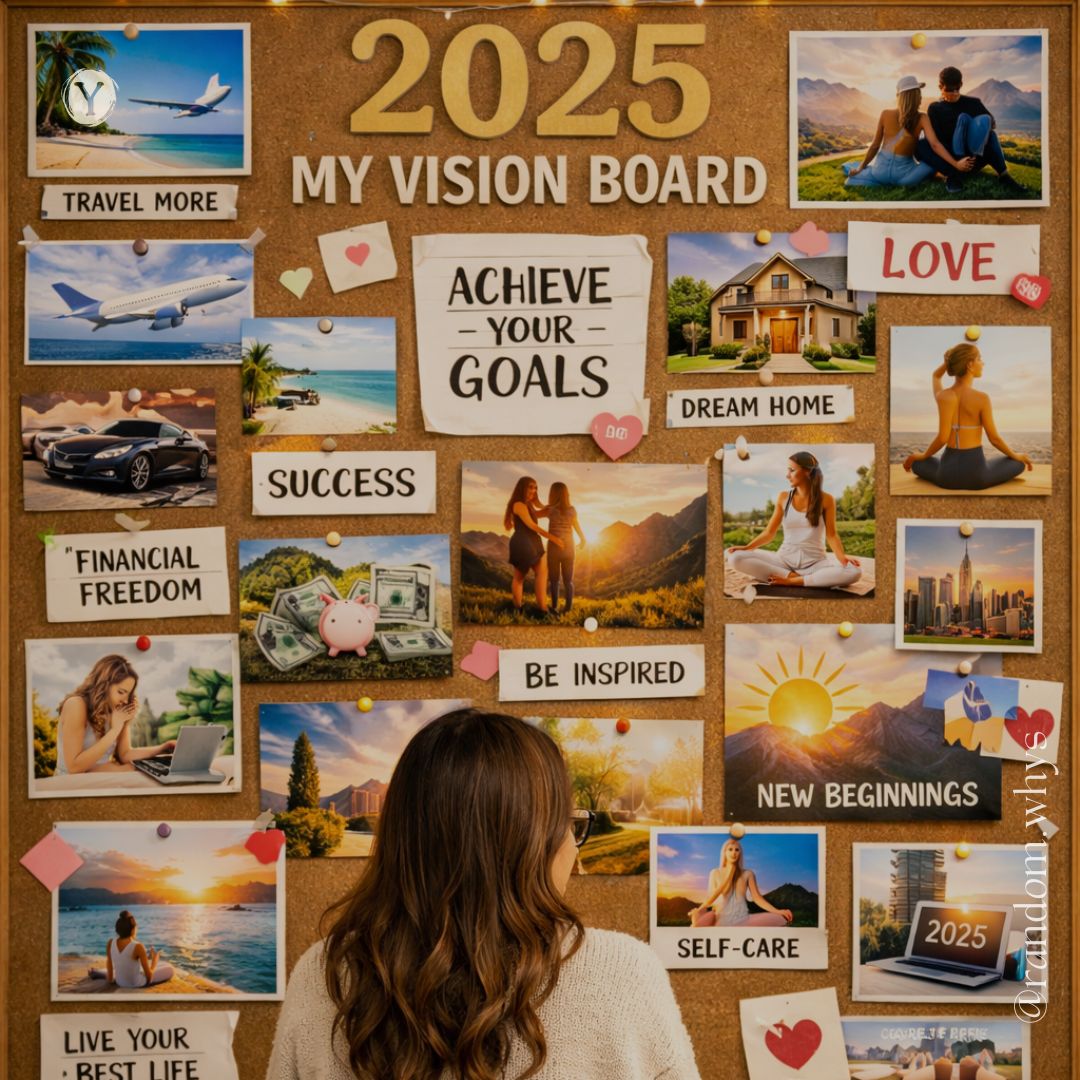
Earlier this year, just after New Year, a friend and I were talking about vision boards. I didn’t know much about them, but I wanted to try. Not because I believed in the process, but because it looked nice and aesthetic.
I wanted Pinterest vibes near my work place. No plan. No structure. No strategy. Just pictures of things I thought I wanted, Thailand, lifting weights, a certain version of life, quotes and bla bla. No deadlines. No numbers. I stuck it near my workspace so I could look at it whenever I felt stuck or bored.
Somehow, I managed to achieve most of it. Some things didn’t happen. Some things, I actively let go of (down the line, I lost the interest on those things).
And then came the uncomfortable realization. There were things on that board I didn’t even like. They weren’t desires, they were references. Borrowed wants. Mimetic desires. Maybe from IG.
Still, the board worked. It did nudge me to an extend. It made me notice what I was moving towards and what I was avoiding.
So this year, my vision board is changing. It’s going to be clearer. Less aesthetic, more honest. With deadlines and numbers. With room for clarity and a few delusional ones (I’m not ready to give up yet).
Not because I think everything I imagine will happen. But because direction helps more than blind hope. Let’s see. Worst case, I learn. Again
Give it try!
Cheers
PS: VB stays btwn me and my delusions :P
Check out the previous post: Choosing Who We Become!
If you like what you see and wish to support my work, then
Share your thoughts/suggestion at the comment section or mail at
randomwhyss[@]gmail[dot]com
Don’t miss out! Get notified about new blog posts straight to your inbox !
(No spam, pinky promise!)
Enter your mail to receive updates






 Random Whys