Why hardest way is the smartest way!

1–2 minutes

The hardest part of problem-solving isn’t the problem itself. It’s resisting the urge to react on autopilot of blaming, fixing in a hurry, or slipping into victim mode.

We cannot solve our problems with the same level of consciousness that created them. – Einstein

Raising your consciousness isn’t an overnight upgrade. It starts with a pause. In that pause, ask: How would someone I deeply admire handle this? It could be a mentor, a parent, or even a figure you’ve never met.

The first time, your brain will resist. The second time, it will hesitate. But keep repeating it, and soon your mind learns a new default. Shifting perspective before reacting.

Cheers

Check out the previous post: Voice Over: Reality Check!

Follow on IG X for more!

If you like what you see and wish to support my work, then

Share your thoughts/suggestion at the comment section or mail at

randomwhyss[@]gmail[dot]com

Don’t miss out! Get notified about new blog posts straight to your inbox !

(No spam, pinky promise!)

Enter your mail to receive updates

Voice Over: Reality Check!

1–2 minutes

Recently I tried giving voice over for a note. I thought my voice was good enough even got compliments before so I assumed one take will be fine. I recorded and sent it, only to realize it sounded flat.

I didn’t understand the jargon people threw at me. I searched courses and YouTube, but they were all one-way. Nobody could point out what my mistake was. Finally, I came back to LLMs, kept recording different versions with different emotions, and even checked spectrograms. Slowly, I saw some changes, maybe 10% improvement.

I’m still learning, and I plan to add recordings to this as well.

The lesson?

Keep a reality check. Whatever lane you go in, stop and reassess. Compliments can be nice, but real growth happens when you see where you’re lacking and work on it.

Cheers!

PS: Might sound flat! IDK lol!

Check out the previous post: Bad Girl (2025) Movie Review

Follow on IG X for more!

If you like what you see and wish to support my work, then

Share your thoughts/suggestion at the comment section or mail at

randomwhyss[@]gmail[dot]com

Don’t miss out! Get notified about new blog posts straight to your inbox !

(No spam, pinky promise!)

Enter your mail to receive updates

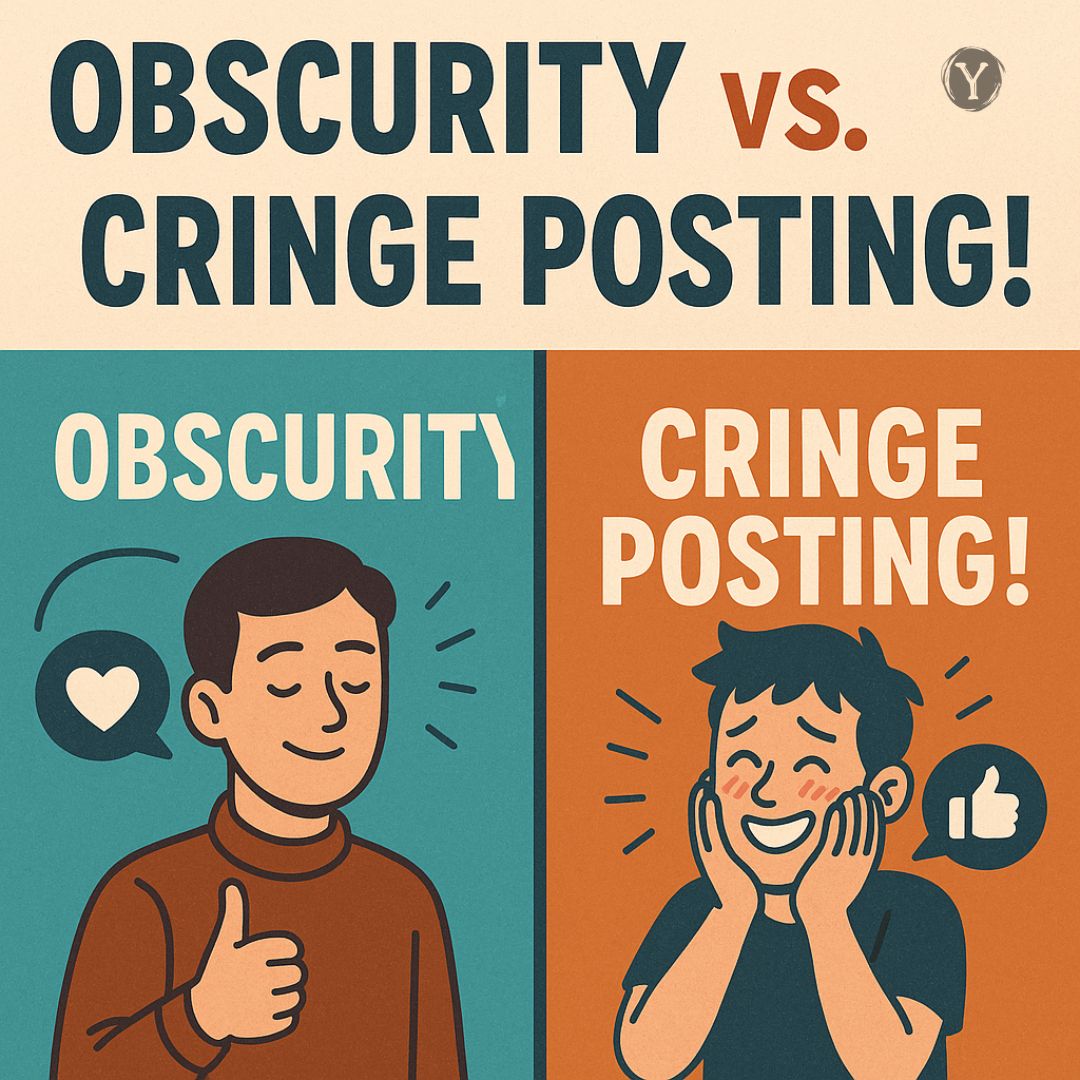
Obscurity vs Cringe Posting!

Fifteen years ago, what happened inside your walls stayed there. Neighbours had to work hard to even guess your new purchases, habits or lifestyle.

Today, obscurity is a luxury. Social media makes everyone visible, and strangers judge based on fragments. You’re either invisible or overexposed.

That leaves us with two real strategies:

1. Obscurity

Grow in Silence. When no one’s watching, you’re free. You can test, fail, rebuild, and nobody cares. It’s how every legendary thing starts, hidden in dorms, or quiet notebooks. Obscurity is freedom disguised as irrelevance.

2. Cringe Posting

Build in Public. The other path is the opposite. Post messy and raw, unpolished, even cringe. Let people mock. That noise makes you bulletproof. Over time, the critics fade, but your authenticity compounds. What starts as “cringe” becomes confidence.

The Only Mistake?

Trying to look polished too soon.

Stay obscure long enough to sharpen your edge. Or stay cringe until nothing can shake you. Each path fits a different lane. Choose the one that serves your goal.

Cheers!

Check out the previous post: Dogs, Humans, AI: What coexistence teaches us!

Follow on IG X for more!

If you like what you see and wish to support my work, then

Share your thoughts/suggestion at the comment section or mail at

randomwhyss[@]gmail[dot]com

Don’t miss out! Get notified about new blog posts straight to your inbox !

(No spam, pinky promise!)

Enter your mail to receive updates

Dogs, Humans, AI: What coexistence teaches us!

3–4 minutes

We think we control dogs. We think we will control AI. History shows coexistence is never one-sided. Yesterday, I watched a debate show on a popular Tamil channel. The topic was the rise of stray dogs, rabies cases, and public safety. At first, it looked like a heated argument, but very quickly I realized the show missed the real point.

Instead of inviting vet doctors to talk about rabies, or municipal officials to explain waste management and sterilization efforts, the stage was filled with two groups: victims of dog attacks and people who love and feed dogs. The media made it look like the problem was a fight between these two sides. In reality, the real issue is limited urban planning, healthcare, municipal responsibility, policies and bigger picture.

We all already know there are too many stray dogs. The real questions should be

  • Why is sterilization not scaled up?
  • Why is waste not controlled, attracting dogs in large numbers?
  • Why is rabies vaccination limited?

Without addressing these, the debate was just noise. Pure noise and diversion.

Why Dogs Are With Us in the First Place?

Thousands of years ago, humans were hunters and gatherers. Wolves began hanging around human camps because of leftover food and waste. Over time, the wolves that were less aggressive and more cooperative stayed closer, got food, and survived better.

Their guts adapted to human food even before their skulls and faces changed. Over time, they evolved into dogs not just serving humans as hunters and guards, but also shaping our emotions and daily lives. In many ways, dogs didn’t just get domesticated by us. They also domesticated us. They trained us to accept companionship (within home), loyalty, and emotional bonding with another species. It was also an extension of existing human social complexity.

Emotion vs Logic

In the debate, I saw major two emotions:

  • Fear and anger from victims.
  • Love and attachment from dog feeders.

Both are valid. But emotions cannot solve rabies. Only logic and policy can. Solutions are clear. Mass sterilization and vaccination programs. Better garbage control. Public awareness on rabies prevention. A humane system like the Dutch model, where strays are sterilized, sheltered, and adopted.

The AI Connection

Later that day, I listened to a podcast about birth rate decline and the rise of AI. A strange thought caught me as that tab was left open in my head. What if humans and AI end up like humans and dogs?

For thousands of years, dogs shifted from hunters and guards to pampered dependents fed, sheltered, and entertained by humans without needing to work. Today, AI is doing to humans what humans once did to dogs, taking over our roles, this time in cognitive work. Even dogs at risk!

The shift is happening at terrifying speed. Dogs had 30,000 years to adapt to dependence, humans may get just 30 years or less. Within a few decades, we could find ourselves in the dog’s position (Assumption or Sci fi or reality) living in comfort of AI-supported lifestyle first. Just as dogs today don’t understand the economic systems that feed them, maybe future humans might live comfortably while remaining fundamentally powerless in an AI-dominated economy.

But here is the difference. Gogs give something AI cannot yet replicate innocence, presence, and living in the moment. AI can fill intellectual gaps and even emotional ones, but it cannot replace the raw life energy of a living being.

The Bigger Lesson

Both stray dogs and AI show us the same truth: coexistence doesn’t happen by accident. It has to be managed. With dogs, poor management created today’s crisis. With AI, poor management could create tomorrow’s. In every case, the weaker side suffers most. Today it is dogs. Tomorrow, it could be us!

Cheers

Check out the previous post: The Bear and the tabs we keep open!

Follow on IG X for more!

If you like what you see and wish to support my work, then

Share your thoughts/suggestion at the comment section or mail at

randomwhyss[@]gmail[dot]com

Don’t miss out! Get notified about new blog posts straight to your inbox !

(No spam, pinky promise!)

Enter your mail to receive updates

The Bear and the tabs we keep open!

1–2 minutes

I just finished The Bear show. Yup, of course the last episode is heavy. Maybe whole show itself. But the real weigh isn’t in the plot. It is in the mirror of paradigm that it holds up.

Carm keeps adding hurdles for himself (dynamic menu). Not because he has to. Because it feels safer to juggle between the chaos rather than to sit with clarity. This show isn’t a fiction but the pattern of many. The character arc of the characters were phenomenal.

The trap is subtle. If we are always wrestling with new obstacles, we never have to face the scarier work of stillness. Of saying, This is enough, Let’s make it great.

The best people I have met aren’t the ones who seek more noise. They are the one who notice the noise they have been creating and turn it down.

Reduce the friction as much as possible. That’s the lesson.

Cheers!

Check out the previous post: Keeping the goose alive! & Movie Reviews

Follow on IG X for more!

If you like what you see and wish to support my work, then

Share your thoughts/suggestion at the comment section or mail at

randomwhyss[@]gmail[dot]com

Don’t miss out! Get notified about new blog posts straight to your inbox !

(No spam, pinky promise!)

Enter your mail to receive updates

Keeping the goose alive!

2–3 minutes

I have always believed that books come to you at the right moment. Some resonate instantly, while others feel irrelevant until a later season of life. A couple of months ago, while staying at a resort, I picked up The 7 Habits of Highly Effective People from their bookshelf. I set aside the book I had carried with me and started reading it instead. I didn’t finish and left it behind, telling myself that I would buy a copy later. Then life happened, and I forgot all about it totally.

Last Sunday, I happened to notice the same book on a friend’s shelf. It felt almost like the book was following me around, waiting for me to finally pay attention. This time, I decided not to ignore the sign. I opened it again, and started reading. I found myself pausing at a concept of the balancing between P and PC. I did understand it but lacked practical knowledge on applying it in day to day activities. Ran to LLMs to understand.

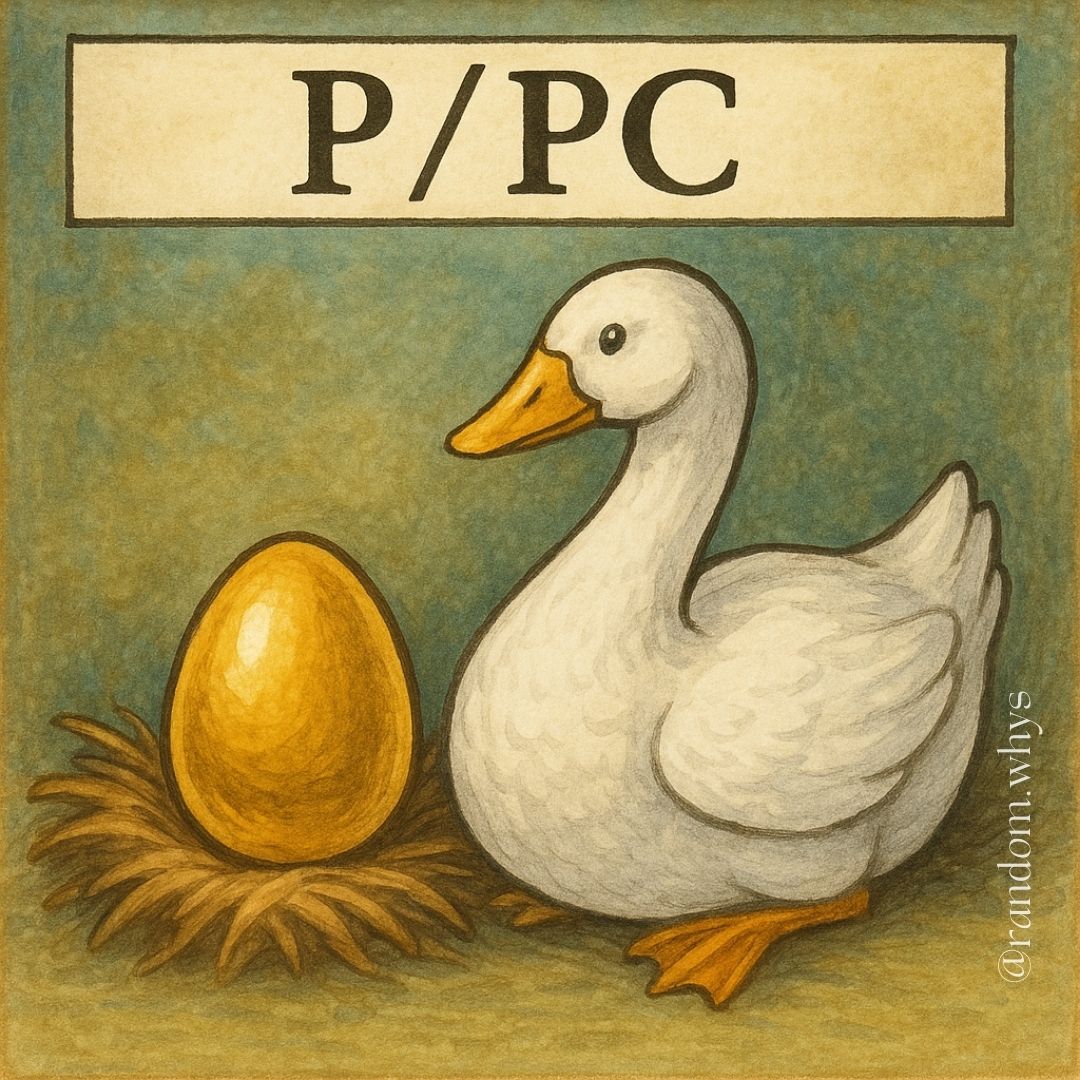
The author explains it through the old story of the goose that lays golden eggs. Same old story. The golden eggs represent production (the outcomes/results) we chase, whether it’s money, recognition, or any form of visible success. The goose represents production capacity (the machine/engine/body) that produces those results in the first place. Our health, our skills, our relationships, and our systems.

If we chase only the eggs, we risk burning out the goose. If we only keep feeding the goose without expecting results, we might never see progress. The challenge is to balance both, because real growth lies in protecting the goose while still collecting the eggs. The body has to stay fit to order to work.

As I was fidgeting with this idea, I realized it tied back to many of the reflections I have thought about. The vicious cycle of health, strength that lasts, why we should rest and work like lions, and how we juggle priorities. Each of those themes circles around the same truth. The goose matters as much as the eggs.

The more I think about it, the more I see that not all outputs/results are created equal. Some are just one-time golden eggs like small wins that feel good for the moment but don’t leave much behind. Others are scalable. They build the goose itself, ensuring bigger and better eggs in the future. Daily yoga/lifting weights for better and healthier body.

On the other hand, scrolling endlessly on the phone or saying yes to draining conversations may give a quick golden egg of distraction or temporary comfort, but they don’t feed the goose.

We keep chasing golden eggs without realizing the goose is starving. Burnout, imbalance, even unhappiness all of it comes from forgetting the goose.

Before your next task, ask yourself. Am I feeding the goose or starving it? Since we often forget the basics.

Cheers!

Check out the previous post: Subjective Nature of Every Solution! & Movie Reviews

Follow on IG X for more!

If you like what you see and wish to support my work, then

Share your thoughts/suggestion at the comment section or mail at

randomwhyss[@]gmail[dot]com

Don’t miss out! Get notified about new blog posts straight to your inbox !

(No spam, pinky promise!)

Enter your mail to receive updates

Subjective Nature of Every Solution!

1–2 minutes

Every book we read, every conversation we have, every podcast we listen to, each carries a story, a lesson, and a key. At first glance, these keys/solutions look universal. They promise to unlock the struggles that all of us, in one form or another face.

But here’s the catch! A key that works for one person doesn’t always fit another’s lock. Why? Because that key was shaped by their story, their circumstances, emotions, and perceptions.

On the surface, solutions often look similar. Wake up early, journal daily, eat healthy, invest consistently. These are the methodologies. But underneath, the variables shift. Our sleep cycle, our inner battles, our health conditions, our financial reality. And those variables mean the outcome is never identical.

This is why I fell in love with the word subjective in recent days. No single prescription fits all. There isn’t one shoe that everyone can wear without blisters. What works is taking the principle, plugging in your own variables, tweaking the method, and then testing it against your life.

In the end, wisdom isn’t about copying solutions, it’s about customizing them.

Cheers!

Check out the previous post: Your Pen, Your Story!

If you like what you see and wish to support my work, then

Share your thoughts/suggestion at the comment section or mail at

randomwhyss[@]gmail[dot]com

Don’t miss out! Get notified about new blog posts straight to your inbox !

(No spam, pinky promise!)

Enter your mail to receive updates

Your Pen, Your Story!

1–2 minutes

When the Industrial Revolution came, people blamed machines. When calculators came, they said we would forget math. When computers came, they said we would stop working with our hands. In reality, the ones who learned to use computers replaced the ones who didn’t.

We used all these to enhance our lives. Now with AI, the same cycle repeats. Yes, people will blame AI and using AI for killing creativity. Lose our voice. That’s not real.

As long as a writer can think clearly and articulate an idea based on their own lived experience, nothing will replace them. LLMs don’t have sensory organs to feel the rain, smell the dust after it, or taste that first cup of black coffee in the morning. They can’t know heartbreak or the weight of silence in a room. They can only remix descriptions of it. LLMs also don’t think like humans. We sometimes get confused, create the complexities.

And hopefully, consciousness can’t be programmed into them. We need stories and human experience to keep our sanity and feel alive.

AI can enhance our work, take us to places we’ve never gone. But if we let AI to write on a topic and publish it without the core us in it, there’s no authenticity. Sometimes, I publish it raw to let the thoughts out. For eg. Routine and drunk ink and sober edits. Work on what best for you and helps you bring out of best you.

We voice can move through an LLMs. But it can’t be born from one.

The pen’s still yours, the blank screen’s still judging, and AI is just makes the stuff glow.

Cheers!

PS: LLM suggested: Authentically Yours: The Pen Is Still Yours

Check out the previous post: Voice notes vs Writer’s Block

If you like what you see and wish to support my work, then

Share your thoughts/suggestion at the comment section or mail at

randomwhyss[@]gmail[dot]com

Don’t miss out! Get notified about new blog posts straight to your inbox !

(No spam, pinky promise!)

Enter your mail to receive updates

Zen Garden, Kyoto

1–2 minutes

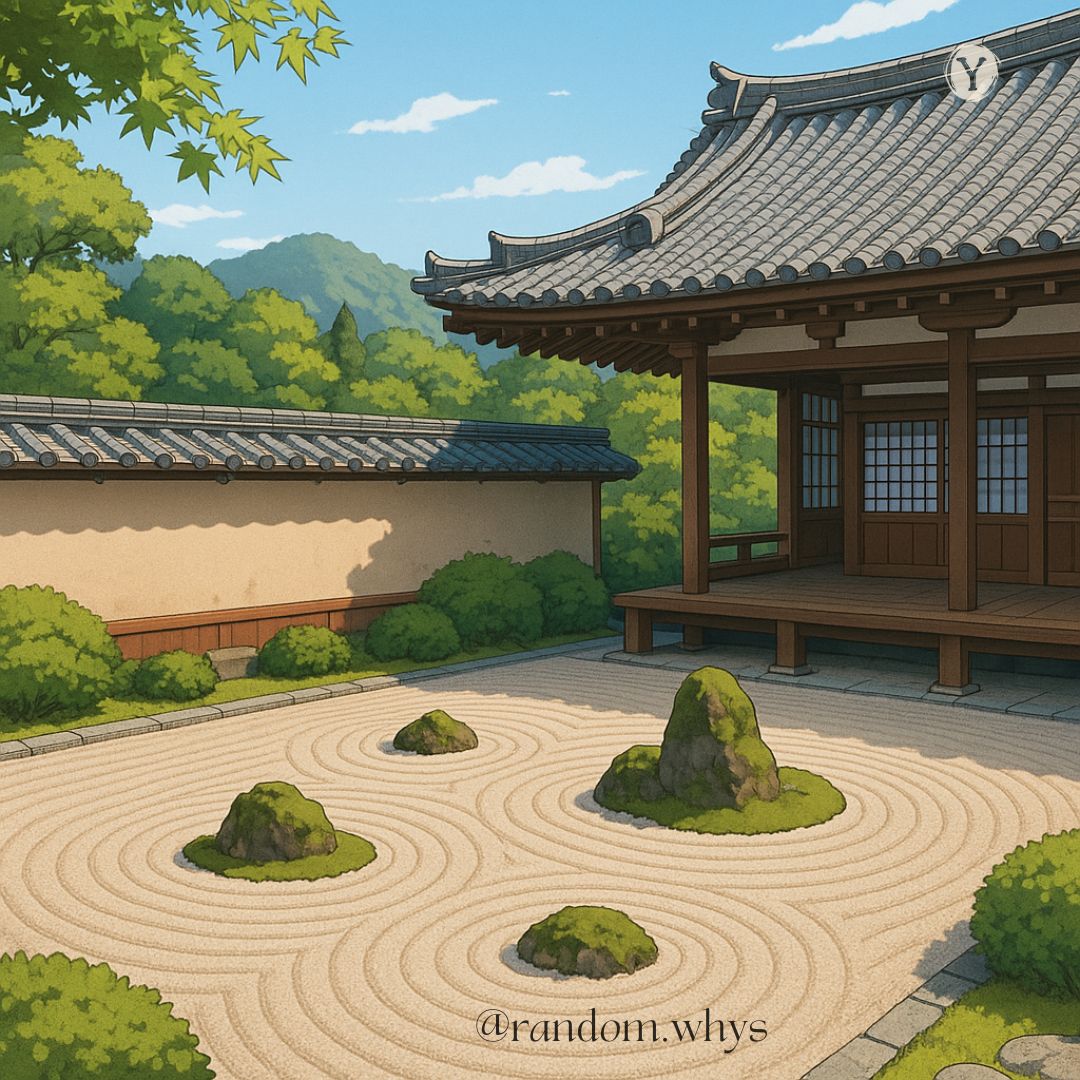
Yesterday, I was watching The Bear. Richie was talking about a photo of a Zen garden (Ryōan-ji in Kyoto). One of his favorite director’s favorite places. Riche made me more on gut and vibrations too.

I went looking for the why. William Friedkin’s version came first. In one of his interview, he said that the stones are like people. We arrive alone, and we die alone. We are alone no matter surrounded by people.

Then the different interpretation started surfacing.

#Islands in a sea of raked gravel. The white lines are waves, the stones are land rising above them.

#Mountains in clouds. A bird’s-eye view of a distant world.

#A tiger carrying her cub across a stream. An old Japanese tale mapped in stone.

#Natural harmony. The placement shows balance without symmetry, the beauty of imperfection.

#Meditation itself. The emptiness is a deliberate removal of distraction. A place to just sit and be.

And then the one that wouldn’t let me go: incomplete truth.

No matter where you stand, you can never see all fifteen stones at once. One is always hidden. Not by accident but by design.

It’s a lesson that’s almost annoying in its simplicity. We will never see the whole picture. We will assume. We will fill in gaps. And those gaps will stay, no matter how far we shift your position. We tend to see things as we are, not as they are. Subjective always!

We’re all standing in our own corner of the world, convinced the view is complete and prefect while the missing stone waits, quietly, out of sight.

Cheers

PS: Bucket List

Check out the previous post: The art of asking questions

Follow on IG X for more!

If you like what you see and wish to support my work, then

Share your thoughts/suggestion at the comment section or mail at

randomwhyss[@]gmail[dot]com

Don’t miss out! Get notified about new blog posts straight to your inbox !

(No spam, pinky promise!)

Enter your mail to receive updates

The Art of Asking Questions!

1–2 minutes

I’ve started to notice something lately. The same person can give completely different answers depending on who is asking the questions. It’s the way the questions are shaped.

Some questions are like keys. They open doors to deep, layered answers. The kind that you can’t fully understand at first. You have to sit with them, turn them over in your mind, decode what they really mean. These are not answers you just listen to/follow up. They’re answers you live with for a while.

Then there are questions that start simple and slowly climb higher. They build a bridge between everyday thinking and high-level thinking. Those questions make the other person explain their complex ideas in a way anyone can follow. It’s not just about getting the answer it’s about watching how they translate their thoughts for different minds.

Sometimes, the smartest way to ask is to make the problem universal. Not like, here’s my specific problem, what should I do? But, here’s a challenge that many people face, how would you solve it? This pulls the other person out of just giving you advice, and into sharing their own battle tested methods. And those methods are often more useful than a ready made solution.

But here’s the thing. We can’t force a conversation like this. When it’s interesting, it flows on its own. When you talk to someone who’s seen a lot, someone with high agency, the goal shouldn’t be to squeeze out one answer for one problem. It should be to understand how they see the world, how they connect the dots, how they think when there’s no ready answer in front of them.

Because once we learn how they think, we start solving problems we didn’t even know were coming.

Cheers

PS: Figuring out & Think School

Check out the previous post: The Real Game!

If you like what you see and wish to support my work, then

Share your thoughts/suggestion at the comment section or mail at

randomwhyss[@]gmail[dot]com

Don’t miss out! Get notified about new blog posts straight to your inbox !

(No spam, pinky promise!)

Enter your mail to receive updates

The Real Game!

2–3 minutes

Every game has levels. And the strange yet thing is that, life also feels the same.

At Level 1, we are just figuring out the rules. We don’t know which feature does what, we don’t even know if we are holding the controller the right way. Every move feels like an experiment. This is the don’t mess up phase. Our first job, Our first relationship, first draft and more. All these are trial runs.

Then comes Level 50. we have played/iterated enough to know the shortcuts. The fear drops, the confidence pops up. We feel like we have got the hang of it. We teach or give out our learnt lessons to people. We might even start believing that we have cracked the code.

Somewhere around Level 70, we run into players who are really good. Suddenly the game we thought that we knew looks bigger, harder, and smarter than imagined. We will start seeing layers that never existed before. This is where the curve moves from I’m good to there’s so much more to learn.

Upon continuing the game anyway, lets say at level 150, we will stop trying to prove that we are the best. Somehow, we will accept that there’s always someone better, faster, sharper. We will start learn to respect the game itself. Slowing down, thinking deeper, and sometimes even smiling when we lose because we will know the loss is just another lesson.

The interesting part that I have observed is that, players at higher level can see us right through. They know the patterns before even a move is made. Players at same level see the other as competition, always measuring where they stand next in the metrics. And players at a much earlier stage might not even understand what the rules, games and players.

And just like life, the game has twists. There are unlocked hidden levels that we can’t see until played for years. Sometimes we have to switch games altogether. We could be Level 80 in one field and drop to Level 1 in another. Not everyone’s playing to win; some are just here for fun, some quit halfway, some doesn’t enter at all. Sometimes they choose to go back and play at Level 10 not because they can’t go higher, but without pressure.

The real goal isn’t to beat everyone or to reach the final level. The real game is staying in it long enough to enjoy it, to learn from it, and to play in a way that makes us want to continue it again tomorrow.

Because in the end, it’s not the number of wins that makes a master/winner. It’s understanding the game itself.

And then there are the rarest players. The ones who stop measuring, stop chasing, and simply become the game itself. They just are rooted in presence, untouched by noise, aware that even the game is temporary.

Cheers

Check out the previous post: Paranthu Poo (2025) Movie Review

If you like what you see and wish to support my work, then

Share your thoughts/suggestion at the comment section or mail at

randomwhyss[@]gmail[dot]com

Don’t miss out! Get notified about new blog posts straight to your inbox !

(No spam, pinky promise!)

Enter your mail to receive updates

Strength that lasts!

1–2 minutes

Not advice. Just an observation worth keeping in mind. Take it or leave it kind of post.

I was never aiming to build muscles. My usual routine was yoga and walks. But a few recent moments made me realize my triceps, biceps, even my right hand felt weak. Maybe from holding the mouse too long, maybe something else.

Around April, I started light with 2 kg to 4kg dumbbells , wall push-ups. But my protein intake wasn’t enough, and also, I was not giving my muscles proper recovery time. Things got worse, I couldn’t even hold my hand in certain positions. Shoulder pain started in.

At the same time, I was starting supplements (once in two weeks). It took me nearly two months to recover. This clicked when I heard my fav psychologist talk about it. I need a health habit I can do for life long.

I don’t know if I can go to the gym forever, but yoga and walking? probably, yes. If time and body allows, I’ll try to lift weights once or twice a week but without overdoing it. My intention is simple flexibility + strength.

Find what works for you, not just what they tell you.

Cheers

Check out the other post: 3BHK (2025) Movie Review

If you like what you see and wish to support my work, then

Share your thoughts/suggestion at the comment section or mail at

randomwhyss[@]gmail[dot]com

Don’t miss out! Get notified about new blog posts straight to your inbox !

(No spam, pinky promise!)

Enter your mail to receive updates

Routine!

1–2 minutes

Disclaimer: Raw content, no editing, no grammar checks, No AI

I just want to get these thoughts out into space. Routines are good. It makes us more productive, stable and a sense of control over the things happening in a day. Obviously, health care routines makes our life healthier and better. These shape our life for good.

But the over the span, there are two possibilities that are likely to happen.

  • Monotonous & Boring: When those routines becomes so monotonous, we need some interesting refreshing, like we might need a vacation or trip or movie. TBH, when these routines are broken, we ate back to square one. We might need few days to months to bring ourselves back to the track.
  • New Chaos : When there are some surprising elements to our life, for example, new friend or a puppy/cat or partner or even new hobby where we have to spend some quite amount of time with them, the usual routine gets messed up. It takes time to adjust and adapt ourselves to the new or the combined routines.

So yeah, routines matter, so do breaks, breakdowns, breakthroughs. Its never this or that. It need both scenarios to keeps us alive.

Cheers

PS: Since no AI, no sora, so featured image!

Check out the other post: #DecodeAgri04: Who will grow the crops in a world obsessed with tech?

If you like what you see and wish to support my work, then

Share your thoughts/suggestion at the comment section or mail at

randomwhyss[@]gmail[dot]com

Don’t miss out! Get notified about new blog posts straight to your inbox !

(No spam, pinky promise!)

Enter your mail to receive updates

Just Start. Finish What You Start!

1–2 minutes

These two phrases show up everywhere. From podcasts to Instagram captions to tweets to wallpapers to ted talks. They sound almost too simple, like generic advice someone throws in when they don’t know what else to say. But they hold more weight then we assume.

Starting looks easy from a distance. We can preach. But when it’s our turn, it hits different. The hesitation creeps in. Overthinking starts. Everything that could go wrong would crash our minds. The longer we wait, the heavier it gets.

Starting doesn’t need clarity. It needs motion or to be precise, action. One move. One line. One step. Starting requires something raw. The willingness to look stupid, to be misunderstood, to not know how it ends and still, to begin. That’s how we could break the loop. It’s not perfect. But it’s honest.

Then comes the real test, Sticking with it and then finishing it.

Finishing doesn’t come with energy drinks and hype songs. It comes with boredom, setbacks, self doubts, silence. It demands consistency without applause. Discipline when no one is watching.

That’s where the real self-trust is built. It’s about keeping your word to yourself. These two decisions to begin, and to follow through are something important and foundational.

Start. Then finish. Everything else is noise.

Cheers

Check out the other post: Who will read the research papers?

If you like what you see and wish to support my work, then

Share your thoughts/suggestion at the comment section or mail at

randomwhyss[@]gmail[dot]com

Don’t miss out! Get notified about new blog posts straight to your inbox !

(No spam, pinky promise!)

Enter your mail to receive updates

What school never taught us!

1–2 minutes

But life will, brutally. They taught us how to solve quadratic equations and drew labeled diagrams of mitochondria. But, life skills aren’t on the syllabus. No one prepares you for the mind games, identity crises or the weight of daily decisions. We need to pick these things up between breakdown, bad bosses, betrayals and 3 AM clarity.

These are the high agency, real life skills are the ones that decide how peacefully and powerfully you live. Here, the raw list.

  • Resilience
  • Composure under pressure
  • Moving in silence
  • Negotiation
  • Selling yourself and your ideas
  • Articulation
  • Diplomacy
  • Tolerance for uncertainty
  • Managing bandwidth (emotional and cognitive)
  • Boundaries / Selective ignorance
  • Internal validation over external validation
  • Responding > Reacting
  • Self – discipline
  • Recognizing patterns
  • Accountability
  • Second order thinking
  • Exit planning
  • Systems thinking
  • Optimism

Nobody give us a certificate for those. But these are the skills that build your core. Keep collecting them. Let me know if I have missed out anything.

Cheers

Check out the other post: When Life Pulls You Sideways

If you like what you see and wish to support my work, then

Share your thoughts/suggestion at the comment section or mail at

randomwhyss[@]gmail[dot]com

Don’t miss out! Get notified about new blog posts straight to your inbox !

(No spam, pinky promise!)

Enter your mail to receive updates