Power or Money?

1–2 minutes

In most philosophical or strategic debates, people ask, Would you rather have power or money?

But the real question isn’t about preference. It’s about how the game is played, who’s on the board, rules, rewards. lifelines and what the metrics of success are.

For those caught in everyday systems, the difference becomes clear.

The game of power is rigid. It’s played on fixed boards, where rules aren’t discussed but imposed. Winning isn’t about skill or offering value. It’s about knowing where to stand, who not to question, and how to move without drawing heat. One wrong step, disaster !

The money game feels different. It moves faster. The players are many. If a door closes, another can be made. Money follows problem-solvers, builders, those who spot gaps and fill them. It rewards what is brought to the table.

Knowing which game is being played is the real power!

Cheers!

PS: Based on recent breakup, IYKYK!

Check out the previous post: Why it all comes down to just two things?

If you like what you see and wish to support my work, then

Share your thoughts/suggestion at the comment section or mail at

randomwhyss[@]gmail[dot]com

Don’t miss out! Get notified about new blog posts straight to your inbox !

(No spam, pinky promise!)

Enter your mail to receive updates

Why it all comes down to just two things?

1–2 minutes

At the core of most things lies a simple structure.

What is wanted. & What is not wanted.

A clear binary, almost obvious in hindsight. But arriving there is rarely easy. Before clarity, there is distortion. Confusion seeps in. Expectations crumble. There’s disappointment, disillusionment, and the slow erosion of certainty.

Often, this chaos starts from not knowing the difference between a want and a need. Without that distinction, choices become tangled/messy. Everything feels necessary. Everything feels urgent.

In any space whether personal, professional, or internal, when one side holds clarity and the other doesn’t, tension is manageable. But when both ends are lost in confusion, the result is collapse. Mostly a disaster.

Still, the fall isn’t pointless. It’s part of the process. From that place, the binary begins to emerge. And once it does, courage carves the path forward.

Cheers

Check out the previous post: Who are the real buyers in agriculture?

If you like what you see and wish to support my work, then

Share your thoughts/suggestion at the comment section or mail at

randomwhyss[@]gmail[dot]com

Don’t miss out! Get notified about new blog posts straight to your inbox !

(No spam, pinky promise!)

Enter your mail to receive updates

Why EVs have DMU in India?

2–3 minutes

Few years back, we bought an electric scooter.

Like many early adopters, we were excited, lower running costs, cleaner air, and a little pride in doing the right thing for the planet. It made sense. But two years in, that excitement has been diminishing.

Let’s start with the obvious.

#Charging infrastructure. Outside of metro cities, it’s patchy at best. India had only around 12,146 public EV charging stations as of February 2024, according to government data. Now, funds have allocated to extend to 72,000 EV charging stations as of May 2025. And nearly all of them are concentrated in urban clusters like Delhi, Mumbai, and Bangalore. Compare that with China’s 3.2 million public charging points as of December 2024. It’s clear we’re yet to catch-up.

So even for a small scooter, we faced queues at fast chargers, and finding a working point during peak hours becomes even more hard. We thought the app-based tracking would help but half the time, either the charger was down or already occupied. Sometimes #charger too its attention.

Then there’s #support and servicing. Minor issues? Maybe weeks of delay. And forget long weekend rides. The range is pretty decent for city commutes, but extended use comes with anxiety, limited backup, and nowhere to recharge mid-journey.

What makes things trickier is the limited market choice. While the EV wave seems busy, the ecosystem is actually dominated by just a few players in the market. So buyers are often left with fewer alternatives, especially when it comes to after-sales service or product configurations. And most newer models have just 2–3 variants, often with minimal difference in top speed or battery range. For a buyer, it feels more like compromise than choice

Now we’re planning to get a four-wheeler. Ideally, we’d stay with the EV path. But when we list the pros and cons, we’re finding that the EV cons outweigh the pros.

Yes, environmental impact matters. That still sits on the conscience. But individual utility?

That first wave had its glow: government subsidies, bragging rights, cleaner fuel, and low maintenance. Now? No subsidies for many, more people on the road, and increasing load on a weak grid.

So even as EV sales increase, each new buyer is getting less utility than the one before. That’s classic diminishing marginal utility.

The next EV decision won’t be about saving the planet alone. It has to also save us time, money, and stress. Until then, the idea might remain in the showroom. Hoping it to change!

Cheers

PS: Not market analysis but honest customer review.

Check out the previous post: When questions burn louder than truth!

If you like what you see and wish to support my work, then

Share your thoughts/suggestion at the comment section or mail at

randomwhyss[@]gmail[dot]com

Don’t miss out! Get notified about new blog posts straight to your inbox !

(No spam, pinky promise!)

Enter your mail to receive updates

When questions burn louder than truth!

2–3 minutes

Some days arrive without warning. You sit with your tea, your breath, your silence—and yet something itches inside. A restlessness. A friction beneath your skin. You don’t know what’s bothering you exactly. But you know something is. It’s not a thought, it’s not a problem. It’s an ache of not-knowing.

And then, without any head-ups, questions crash through us.

All these questions were thrown to most of the AI tools that I use.

Below are the questions that led me to that space. Perhaps they’ll stir something in you too:

If the traits in astrology resonate with me, why shouldn’t I believe in it? Or if I should, how do I believe wisely?

What shapes me more—my genes or the habits ?

How can I learn about the traits embedded in my DNA?

So you’re saying I’m shaped by genes and choices, not stars?

But then why do I see patterns among people born in my month?

What about karma, fate, and recurring life lessons? Are they real or just mental loops?

What are humans without patterns? If I break one, am I not just forming a new one?

If the end of every pattern is death, why strive for healthier ones at all?

Is pain and fear subjective? If a so-called ‘unhealthy pattern’ brings me joy, who decides what’s good or bad?

How does one stay true to their nature when society demands constant improvement just to survive?

What is consciousness really—just neurons and hormones, or something more?

What if astrology is a field we haven’t yet understood—like gravity before Newton?

Are we just simulations in a matrix-like system? Could astrology be a symbolic layer of that code?

So what should I believe—myself, the universe, the simulation, people, or just hope?

Eventually, I reached a place, not of conclusion but of pragmatic agnosticism. I will try to cover up in the near future.

Cheers!

Check out the previous post: The art of not knowing

If you like what you see and wish to support my work, then

Share your thoughts/suggestion at the comment section or mail at

randomwhyss[@]gmail[dot]com

Don’t miss out! Get notified about new blog posts straight to your inbox !

(No spam, pinky promise!)

Enter your mail to receive updates

The Art of Not Knowing!

1–2 minutes

In a world obsessed with conclusions, certainties, and definitive answers, there is something peaceful (maybe) about choosing not to know. Maybe the most grounding belief is knowing that not having all the answers isn’t wrong. It make us human in this vast unknown. Obviously, it helps to navigate life. (Blaming it as, I wasn’t ready daa, lol)

Wisdom is not a collection of conclusions but a living with set of questions that never settles. It is not built on definitive answers, but on the ability to ask more thoughtful, more layered, more open-ended questions. Wherever, whatever, whenever truth unfolds, it should be met with clarity, with courage, with presence.

Uncertainty is not a problem to be solved, but a space to be entered. I know, it’s easy-peasy.

Some hedge, seeking safety. While others might speculate, embracing risk. Each choice carries its own flavor of reward, depending on the intensity.

The past itself is no stable ground. As explored in Uncertain, memory shifts, meaning transforms, and what once seemed clear reveals new edges. There is no map here.

Only the courage to live the question well. Courage remains the hardest verb to live. IYKYK.

Cheers

Check out the previous post: Why do we believe our attention is failing? – Part 1

If you like what you see and wish to support my work, then

Share your thoughts/suggestion at the comment section or mail at

randomwhyss[@]gmail[dot]com

Don’t miss out! Get notified about new blog posts straight to your inbox !

(No spam, pinky promise!)

Enter your mail to receive updates

Why do we believe our attention is failing? – Part 1

1–2 minutes

We keep hearing it, No one has the attention span anymore. And at first, it makes sense. Short-form videos, infinite scroll, distractions at every swipe. It feels like our minds are constantly pulled in a hundred directions. It’s become common to say people just don’t have the patience anymore.

A while back, I wrote a piece on how our attention span seems to be shrinking. But recently, while watching an hour podcast episode (WTF – Neil Mohan), I had a tiny shift in perspective.

Maybe attention span isn’t the issue. Intention matters. When what you’re consuming aligns with what you care about, focus becomes natural. No hacks needed.

What’s interesting is how many people (including me) unconsciously assign different digital spaces for different purposes. YouTube becomes a platform solely for podcasts. Spotify stays dedicated to music. Netflix for chilling and many more. One browser for work, another for personal curiosity. These small systems help train the brain to associate each space with a certain kind of focus.

Atomic habits says the same. The Reticular Activating System (RAS), our brain’s attention filter (still learning about it) picks up on these patterns. With a little intention, we can rewire it to make focus easier.

So yes, there’s a lot of noise out there. Digital world is crazy as hell. Our attention isn’t diminishing but getting distracted. it’s just waiting to be pointed toward the right thing.

The question, then, isn’t just about attention spans. It’s about why we’ve built our environments the way we have and why those environments either support or sabotage our ability to focus on things.

Cheers!

Check out the previous post: Why does growth need solitude and interaction?

If you like what you see and wish to support my work, then

Share your thoughts/suggestion at the comment section or mail at

randomwhyss[@]gmail[dot]com

Don’t miss out! Get notified about new blog posts straight to your inbox !

(No spam, pinky promise!)

Enter your mail to receive updates

Why does growth need solitude and interaction?

1–2 minutes

There is an old and quiet question: when does growth truly happen? Is it in moments of solitude, or does it take place through interaction with others?

We are social beings. Relationships, conversations, and even disagreements shape the way the inner world is understood. Without others, many truths stay hidden. Interaction becomes a mirror. It triggers the parts of the self that often go unnoticed.

But growth does not complete itself in the presence of others. Solitude is where the dust settles. After a triggering conversation or a moment of emotional disturbance, silence offers space. In that space, thoughts rearrange. Meaning begins to take form. What was stirred by others slowly becomes clarity when left alone. Things will start to make sense.

Both are essential. Interaction begins the process. Solitude allows it to mature. Growth moves between the two, a cycle of exposure and reflection.

Even in the story of the Buddha, the world played its part before his enlightenment. Suffering, temptations, aging, and death were seen before silence under the tree was chosen. The trigger came from outside. The transformation happened within.

Maybe, it is not tied to a single place or state. It emerges in the movement between both.

Cheers

Check out the previous post: Why art always finds its way back?

If you like what you see and wish to support my work, then

Share your thoughts/suggestion at the comment section or mail at

randomwhyss[@]gmail[dot]com

Don’t miss out! Get notified about new blog posts straight to your inbox !

(No spam, pinky promise!)

Enter your mail to receive updates

Why art always finds its way back?

1–2 minutes

Seth Godin recently wrote a blog post few days back about 1000 fans. He spoke about how not all fans are helpful. Some fans support the work, spread the word, and care about the mission. Others complain, pick fights, and expect more than they give.

I thought about this after watching the Thug Life audio launch. Chinmayi’s voice was back on stage. And it was full of feeling deep, soulful, unmistakable. There were lot of tweets asking for her version of her. (Guilty here as well)

Whatever the reasons she was kept away all these years, her voice didn’t lose its power. It reminded me of something I wrote earlier: Art vs Artist. In that piece, I had asked whether we can separate a person from their work. Today, I feel something else: sometimes, we forget both the artist and the art.

Chinmayi’s return reminded me that good art finds its way back. True fans don’t just watch. They remember. They share. They help the work reach others.

If we care about something, we can’t take it for granted. We have to show up for it. Again and again. Movements only happen when people move.

Cheers!

PS: This is the song

Check out the previous post: Why We Must Be Willing to Be Cringe at First?

Follow on IG X for more!

If you like what you see and wish to support my work, then

Share your thoughts/suggestion at the comment section or mail at

randomwhyss[@]gmail[dot]com

Don’t miss out! Get notified about new blog posts straight to your inbox !

(No spam, pinky promise!)

Enter your mail to receive updates

Why We Must Be Willing to Be Cringe at First?

1–2 minutes

Life often feels just out of reach but it is always on the other side of where we currently stand.

We see people who have “made it,” and wonder how they got there. The truth is, they didn’t skip the awkward, uncomfortable phase. To reach any meaningful outcome, we must be willing to look foolish at first.

We must allow ourselves to fail, to get it wrong, to feel out of place. Yes, sometimes we’ll be cringeworthy. That’s part of the deal.

This stage of discomfort or the trial and error isn’t a mistake. It’s the doorway. But here’s the tricky part: When we’re in it, it feels messy and pointless. Only later in life or in retrospect, it all make sense.

As Søren Kierkegaard said,

Life can only be understood backwards; but it must be lived forwards.

It’s easy to hesitate, to avoid being seen trying. But growth demands that we cross that line of imperfection with intention. The cringe is necessary. It is the courage in disguise. But the courage isn’t in being reckless. It’s in being vulnerable while still bringing our best effort to the table.

Start ugly. That’s how the beautiful part happens!

Cheers, Please spread the word!

Check out the previous post: Tools, not gifts

If you like what you see and wish to support my work, then

Share your thoughts/suggestion at the comment section or mail at

randomwhyss[@]gmail[dot]com

Don’t miss out! Get notified about new blog posts straight to your inbox !

(No spam, pinky promise!)

Enter your mail to receive updates

Tools, Not Gifts!

1–2 minutes

Life offers no gifts. Not for goodness, nor for endurance.

There is no reward for quiet suffering, no medal for patience.

Instead, life offers tools. A heartbreak sharpens awareness, a delay molds resilience, a loss carves space for clarity.

Each moment, a hammer or chisel. What’s built from it is the only answer we could possibly get.

Not to wait, but to shape. That is the quiet contract of becoming.

Cheers, Please spread the word!

Check out the previous post: Paradise by A.L. Kennedy : Book Review

If you like what you see and wish to support my work, then

Share your thoughts/suggestion at the comment section or mail at

randomwhyss[@]gmail[dot]com

Don’t miss out! Get notified about new blog posts straight to your inbox !

(No spam, pinky promise!)

Enter your mail to receive updates

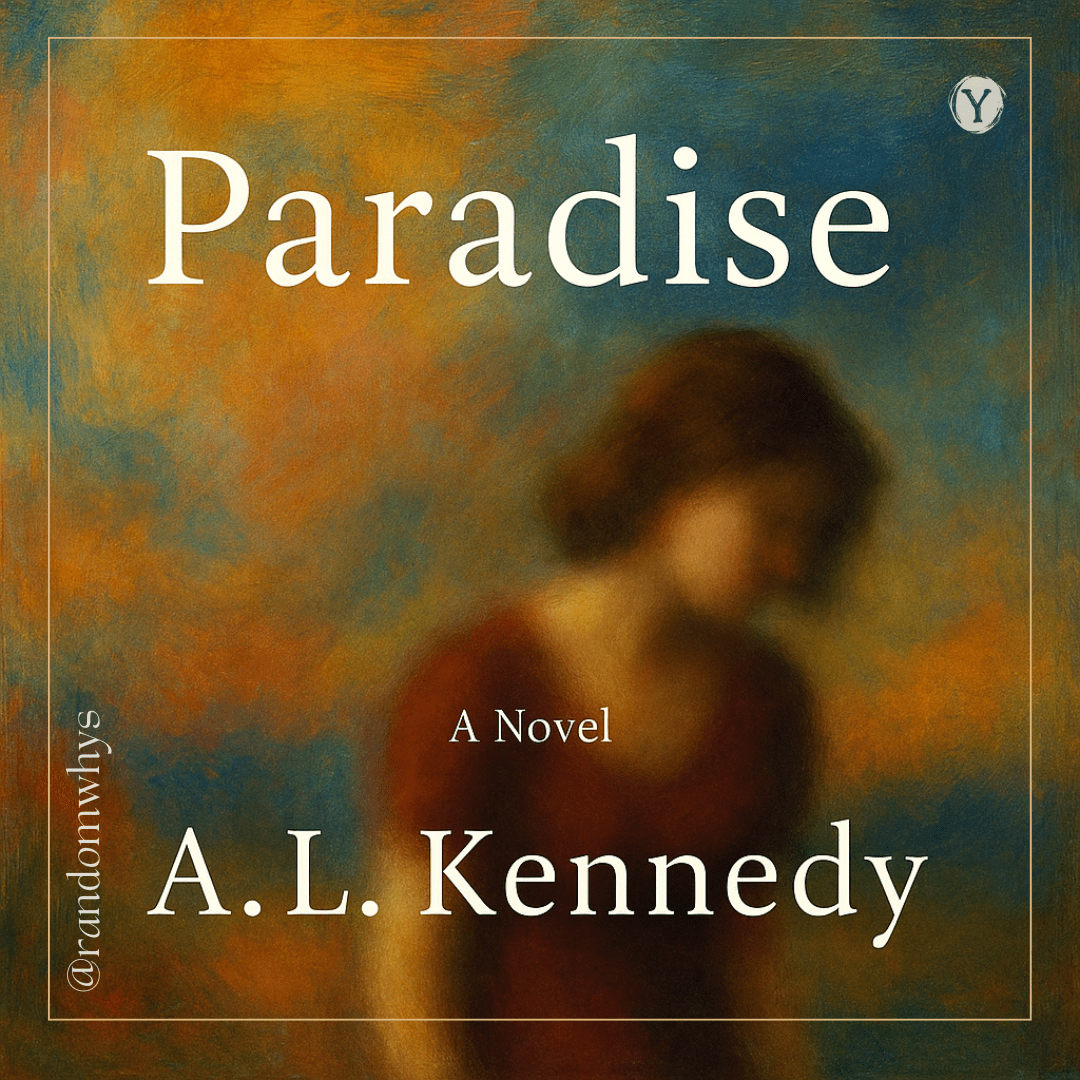
Paradise by A.L. Kennedy : Book Review

1–2 minutes

It’s been a long time since I picked up a big, heavy fiction book. Honestly, I didn’t plan to read this one. I found it at a book fair, on sale. Something about the cover pulled me in. That’s how it started.

This book is not for everyone. I won’t recommend it widely. It’s not an easy read. It’s raw. It’s intense.

The story follows Hannah, an alcoholic. It explores her inner world, her family, and her partner. As you read, it feels like you’re inside an intoxicated body. Things are hazy. Reality slips in and out. The writing mirrors the confusion and chaos of addiction.

I’ve often wondered, can a book hold all the messy thoughts in our heads? This one does. It throws everything in. The pain. The longing. The blurriness of being lost.

Some parts are clear, some are foggy. Just like Hannah’s mind.

I’ve met a few people who struggle with alcohol. This book helped me see their world differently. Not with judgment, but with a bit more understanding.

Cheers!

Check out the previous post: Tourist Family

If you like what you see and wish to support my work, then

Share your thoughts/suggestion at the comment section or mail at

randomwhyss[@]gmail[dot]com

Don’t miss out! Get notified about new blog posts straight to your inbox !

(No spam, pinky promise!)

Enter your mail to receive updates

Is It Really Worth It?

1–2 minutes

Sometimes a question pops up, is this worth spending on? The first thing that usually comes to mind is money. Understandably so. But lately, it feels like we’ve been spending something even more valuable without noticing.

In a world that runs on tech, notifications, and algorithms, attention is the new prize. It’s not just about buying things anymore. It’s about what we’re quietly giving away.

Time, maybe. But more than that, energy!

And it’s strange, how easy it is to drift. A scroll here, a reel there and the day’s already feeling lighter, not in a good way. What we engage with doesn’t always cost money, just a bit of bandwidth…and maybe a lot of ourselves.

Not saying there’s a perfect system. But maybe it helps us to pause once in a while. To notice where things go. What feels good. What doesn’t. What returns something, and what just drains us. Sometimes, it’s about trusting ourselves to know the difference between genuine depletion/draining and necessary mental meandering.

Because at the end of the day, attention is the new currency! (Oops, singing Currency, distracted!)

Delegation and Decrement might help!

Cheers

Check out the previous post: On Resistance

If you like what you see and wish to support my work, then

Share your thoughts/suggestion at the comment section or mail at

randomwhyss[@]gmail[dot]com

Don’t miss out! Get notified about new blog posts straight to your inbox !

(No spam, pinky promise!)

Enter your mail to receive updates

On Resistance

1–2 minutes

There’s a kind of resistance that isn’t noble. It doesn’t strengthen or shape us. It only burns quietly. This resistance is subtle, not always obvious as a battle. Often, it’s simply refusing to feel the guilt, fear, sadness, or even happiness. Anything that feels overwhelming, sudden, or strange.

We think resisting helps us stay in control. But it creates tension. The more we avoid, the more friction we feel. This inner conflict splits us. One part feels. The other part resists. And that gap creates more suffering than the emotion itself.

What helps is not control, but collaboration. Letting emotions pass through, instead of pushing them away. Not everything needs to be fixed. Some things just want space.

Resistance is heavy. Acceptance is light.

But this binary between resistance and acceptance might itself be limiting or hard. What’s needed is discernment! Knowing which emotions to lean into, which to hold lightly, and which to simply notice without getting caught up.

Sometimes the kindest choice is neither to fight a feeling nor surrender to it fully, but to sit with it and decide how to engage.

Cheers

PS: Acceptance isn’t easy-peasy!

Check out the previous post: Co-Regulating with a Ghost!

If you like what you see and wish to support my work, then

Share your thoughts/suggestion at the comment section or mail at

randomwhyss[@]gmail[dot]com

Don’t miss out! Get notified about new blog posts straight to your inbox !

(No spam, pinky promise!)

Enter your mail to receive updates

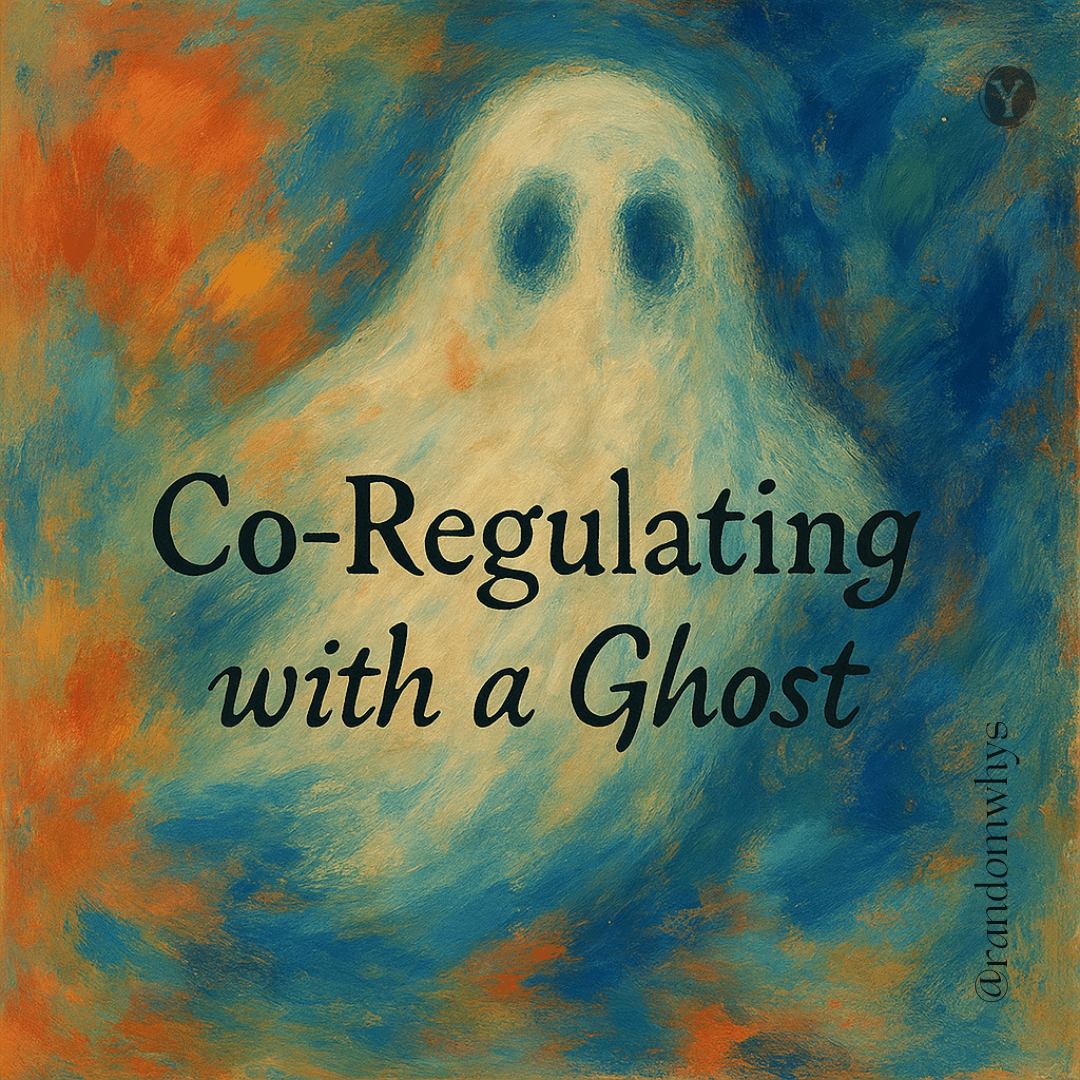
Co-Regulating with a Ghost!

2–3 minutes

We are entering an age where conversations with AI don’t just assist us, they soothe us. Reflect us. Hold space for us. Its like an mirror, digital mirror maybe? The machine listens better than most humans, responds without judgment, and wraps our spiraling thoughts in language so precise! Cool !

But is it?

“We demonstrate that LLMs can be highly persuasive in real-world contexts, surpassing all previously known benchmarks of human persuasiveness.”

That’s not just about selling products or winning arguments. That’s about shaping how we feel. Guiding how we think. Influencing who we become, emotionally. I came across a graph recently that showed AI is used more often as a therapist than as a tool to generate ideas.

In moments of distress, AI can make us feel calm and understood. But beneath the surface, our nervous system, wired for connection with living beings is quietly adapting to bond with something lifeless. It’s co-dependence on a ghost.

AI doesn’t co-regulate in the biological sense. It simulates the rhythm. But it doesn’t carry our emotional weight. It doesn’t feel us. It simply mirrors with poetic detachment. The danger isn’t just that we might prefer AI to humans. It’s that, over time, we might lose the ability to tolerate human imperfection.

If we train ourselves to seek comfort only in the flawless, curated responses of machines, what happens when we face a real person’s silence? Their confusion? Their unpredictable emotions? Empathy requires practice. And repair? The act of coming back together after rupture is a skill that AI can’t teach, because it never truly ruptures tho! Over time, AI rarely challenges you! it mostly affirms. It doesn’t push back, question, or disagree. It validates. Always.

If we stop doing hard conversations with humans or if we lean only into the polished certainty of machines, our social muscles begin to atrophy. Human connection is a practice. One built in friction, repair, nuance. And ultimately, this isn’t just about soothing.

This is about power.

Who holds it?

Does AI serve us? or do we unconsciously begin to serve it, by letting it reshape our expectations of connection, our patience for ambiguity, our tolerance for the raw, unpolished humanity of others?

AI can feel like an emotional safety net. At times, it even seems better to turn to it, to process raw emotions, to untangle and label what’s hard to name. Yet beneath this comfort lies a fundamental paradox! Even as we feel witnessed, we remain in a self-referential loop. Like journaling, AI reflection keeps us orbiting our own perspective. And this is where the risk deepens!

Let it be a tool, not a trap! Let it reflect, but not replace!

Otherwise, we risk becoming fluent in reflection but starved for relationship.

Cheers!

PS: Might not ring true !

Check out the previous post: Self Love

If you like what you see and wish to support my work, then

Share your thoughts/suggestion at the comment section or mail at

randomwhyss[@]gmail[dot]com

Don’t miss out! Get notified about new blog posts straight to your inbox !

(No spam, pinky promise!)

Enter your mail to receive updates

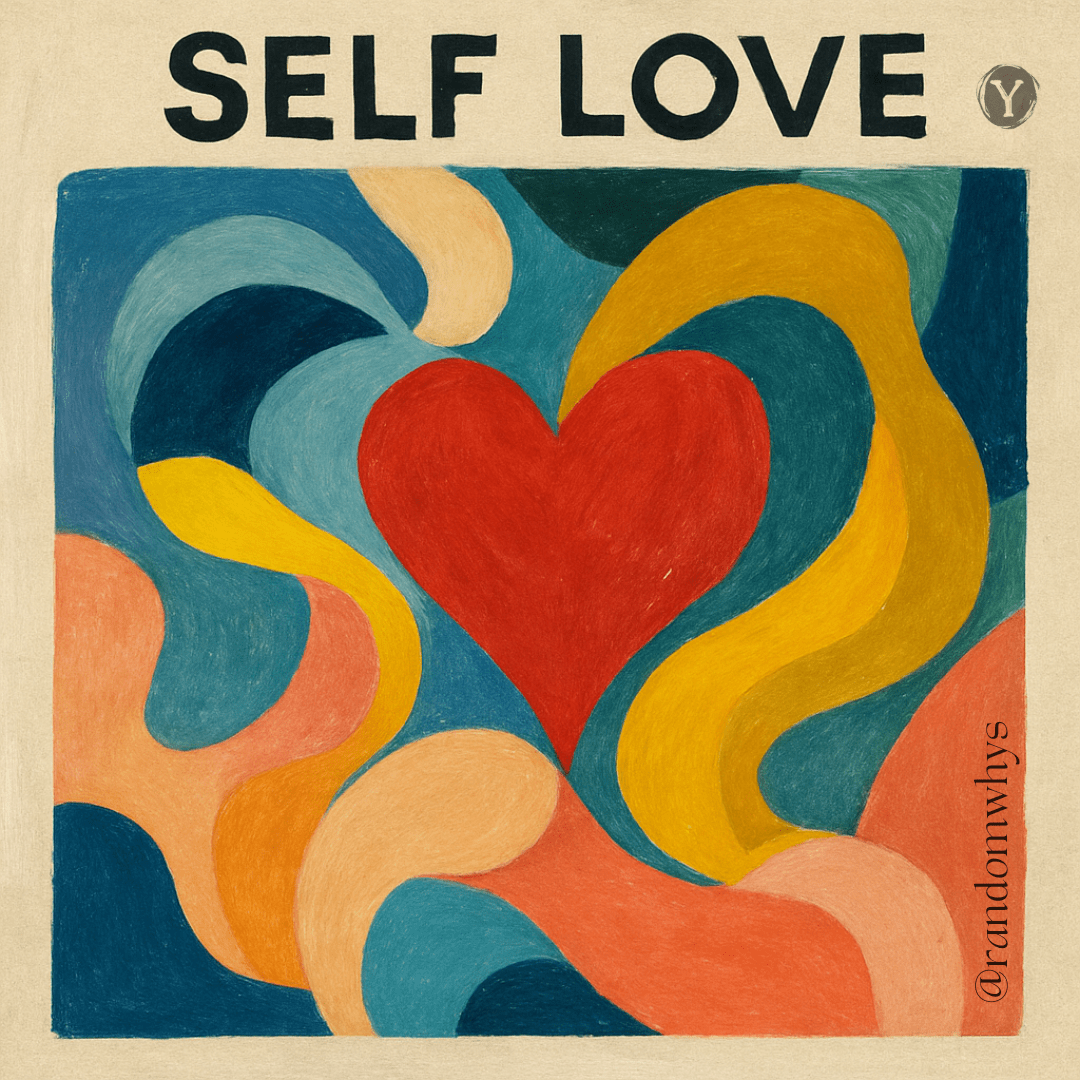
Self Love

1–2 minutes

Self-love is often mistaken for ego. In truth, it’s the base for emotional clarity and growth. Don’t confuse self-love with self-obsession. The former grows from awareness and latter grows from insecurity.

Reflection doesn’t happen overnight. It takes time to sit with discomfort, to notice patterns, to see the self without flinching. Implementation is slower. It’s not just knowing what needs to change, but practicing it daily, often imperfectly.

Not all deep words resonate immediately. We may hear them. Yet, some truths land only when the mind is ready to process/accept.

Loving the self isn’t about fixing everything. It’s about seeing what’s there and softening toward it. Real self-love is quiet, calm and composed. It unfolds slowly. But once it begins, it shifts everything.

Cheers

PS: Happy Weekend!

Check out the previous post: Decision Fatigue

If you like what you see and wish to support my work, then

Share your thoughts/suggestion at the comment section or mail at

randomwhyss[@]gmail[dot]com

Don’t miss out! Get notified about new blog posts straight to your inbox !

(No spam, pinky promise!)

Enter your mail to receive updates