3–5 minutes
A while back, I wrote about resistance.
That post was about the invisible walls we hit, physically, mentally, and emotionally. But there was one form of resistance that didn’t make it in. The biological rhythm of the menstrual cycle. This post is focused on basic science, how our cycle affects energy, mood, and stress, and how we can work with it rather than against it.
While talking with a few friends, it became clear that many of us live through the cycle without fully understanding it. I have thought these chapters to kids yet I didn’t give attention to the hormones and energy associated with each phase.
Not in a biology textbook way, but in a way that connects daily energy, mood, focus, and decision-making to what’s happening hormonally. We notice the bad days and call it PMS. We notice the high-energy days and assume it’s random. But the pattern is real.
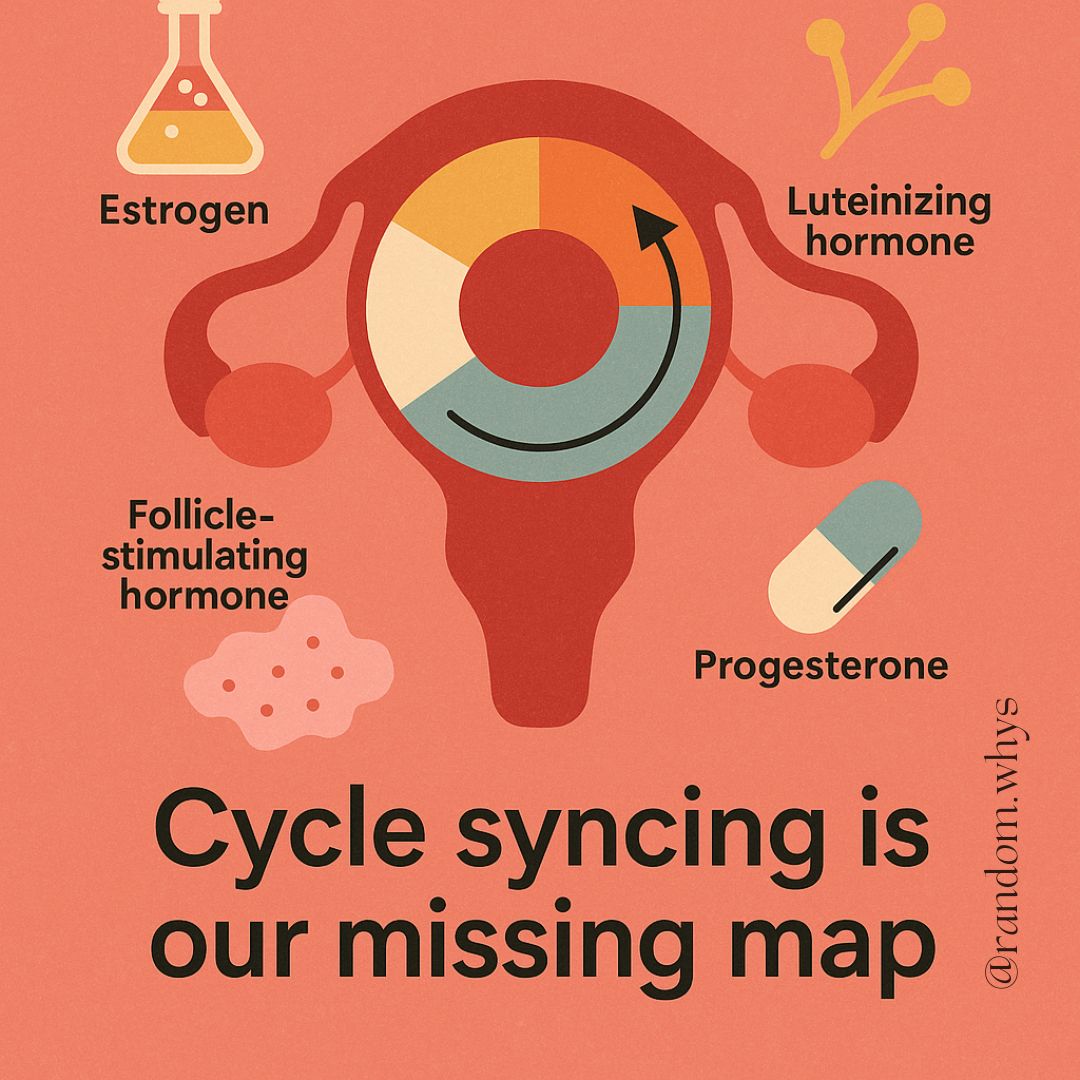
The menstrual cycle is roughly 28 days on average, but can range from 21 to 35 days depending upon individual body type. Variability is normal. It is a finely tuned hormonal cycle mainly between estrogen, follicle-stimulating hormone (FSH), luteinizing hormone (LH) and progesterone. These aren’t just reproductive hormones. They influence brain chemistry, metabolism, muscle recovery, and even how social or risk-taking we feel. Yet I wander, how the crime rate of women is less. Maybe because they act like brakes? Lol! Jk!
The four phases,
Menstrual Phase (Day 1–5)
- Ideal focus: Rest, gentle movement, reflection.
- Hormones: Estrogen and progesterone are at their lowest.
- Physiology: The uterine lining is shed. Inflammation markers rise.
- Stress: Many feel more sensitive or drained during bleeding; this is common, but individual
- Impact: Energy dips, many feel lower energy and more discomfort.
Follicular Phase (Day 6–13)
- Hormones: Estrogen rises, FSH stimulates follicle growth.
- Physiology: Brain-derived neurotrophic factor (BDNF) increases supporting learning and memory.
- Impact: Energy and motivation rise, mood stabilizes, creativity peaks.
- Stress: Basal cortisol tends to be higher than in the luteal phase on average, but stress reactivity and recovery vary by person and task.
- Ideal focus: Starting new projects, strength training, learning-intensive work.
Ovulation (Around Day 14)
- Hormones: LH surges, triggering the release of an egg; estrogen peaks.
- Physiology: Metabolism slightly increases, senses sharpen, social behavior heightens.
- Impact: Confidence, verbal fluency, attraction, and social energy peak.
- Stress: No consistent cortisol pattern is established here; some feel more alert or socially engaged.
- Ideal focus: Networking, presentations, collaborative work.
Luteal Phase (Day 15–28)
- Hormones: Progesterone rises to prepare the body for possible pregnancy; estrogen dips and then rises slightly.
- Physiology: Body temperature rises slightly, recovery time may lengthen.
- Impact: Energy is steady but slower; if stress (cortisol) is high, PMS symptoms appear mood dips, irritability, cravings.
- Stress: Basal cortisol is generally lower than in the follicular phase. Some studies suggest greater stress reactivity for some people in late luteal, but findings are mixed. PMS/PMDD responses can differ.
- Ideal focus: Wrapping up projects, detailed work, routines that comfort.
Objective cognitive-performance differences across phases are small or inconsistent and may vary with people. Emotional/stress-related shifts are more consistently especially late luteal are common.
When we ignore this rhythm and expect identical performance every day, it feels like pushing against an invisible wall. When we plan in sync with it, the same wall becomes easy for our to handle. It’s about removing friction and working with what the body is already doing.
Research, including podcast mentioned by Andrew Huberman, shows that even skin texture, immune response, and scent perception shift through these phases. I couldn’t recall the exact episode. I will attach it once I find. Even the episode on cycle syncing on Take 20 was good. Give it watch.
Instead of asking, Why is this a bad day? we can start asking, Which phase are we in? The answer often explains the mood, the energy, and even the craving for brownie at midnight.
Nature is not the obstacle and its hard to win against. She is the clock. And the more we read her, the less resistance we meet. Light late tho!
Cheers!
PS: Happy Periods ladies!
Check out the previous post: Zen Garden, Kyoto
If you like what you see and wish to support my work, then
Share your thoughts/suggestion at the comment section or mail at
randomwhyss[@]gmail[dot]com
Don’t miss out! Get notified about new blog posts straight to your inbox !
(No spam, pinky promise!)
Enter your mail to receive updates
turtles all the way down!
Sunandhini R




 Random Whys