Blog

Feel Good Ones!

The author shares movie recommendations, including “8 AM Metro,” “Tune in for Love,” “Turtles all the way down,” and “Drawing closer,” each with unique themes.

2–3 minutes

I haven’t watched any movies that make you think lately. I’ve gotten a lot of recommendations, but I haven’t made much progress. It’s been almost ten days since I talked about movies. So, I picked three good ones to share (you might like them, or you might not). These movies are from different languages and aren’t recent releases, but I watched them recently.

#8 AM Metro

This is a Hindi movie from India. I think we’ve all met people who come into our lives unexpectedly, do something good for us, and then either stay or leave. It’s hard to put labels on those relationships. Maybe this movie taught me that not all relationships need labels. From society’s perspective, it might seem like infidelity, but if you see it from the male lead’s view, it’s about hope for survival, and for her, it helped her rediscover her love for poetry. I highly recommend watching it

#Tune in for love

This is a Korean movie about people trying to live a decent life and move on from their past. The male lead has just been released from prison on probation for pushing his friend off a building (which he didn’t). He starts working at a bakery, where he meets the female lead, who is struggling to run the place. Fate is so complicated that they barely get to meet. I liked a few moments in the movie, especially when he captures life’s rare moments. I won’t say much more, but sometimes, life is just about trust and having someone to rely on.

#Turtles all the way down

This is an American movie that I chose to watch because of its title. It’s about a female lead who wants to be a good daughter, friend, and student but can’t stop obsessing thoughts of bacteria. Disclaimer: if you have OCD, you might want to skip this one. The movie is about how she navigates life with these struggles. There isn’t much of a story, but the script, questions raised, conversations, and science make you think. The idea of ‘turtles all the way down’ is explained well, and I think scenes from Young Sheldon fit this idea perfectly.

Dubito, ergo cogito, ergo sum – Rene Descartes

#Drawing closer

This is a Japanese movie (not anime) about two young people who are both diagnosed with cancer and share a passion for drawing. They find hope to live longer and endure the pain by being there for each other. The movie touches on relationships, desires, pain, and dreams. It might even make you fall in love with gerbera flower

Apart from these, I’d recommend Purple Hearts and The Hating Game for binge-watching. Once I watch Inside Out 2, I’ll come up with another post.

Cheers

PS: FI is based on Drawing Closer. If I missed anything, I’ll add it in later.

Check out the other movies reviews

If you like what you see and wish to support my work, then

Share your thoughts/suggestion at the comment section or mail at

randomwhyss[@]gmail[dot]com

Don’t miss out! Get notified about new blog posts straight to your inbox !

(No spam, pinky promise!)

Enter your mail to receive updates

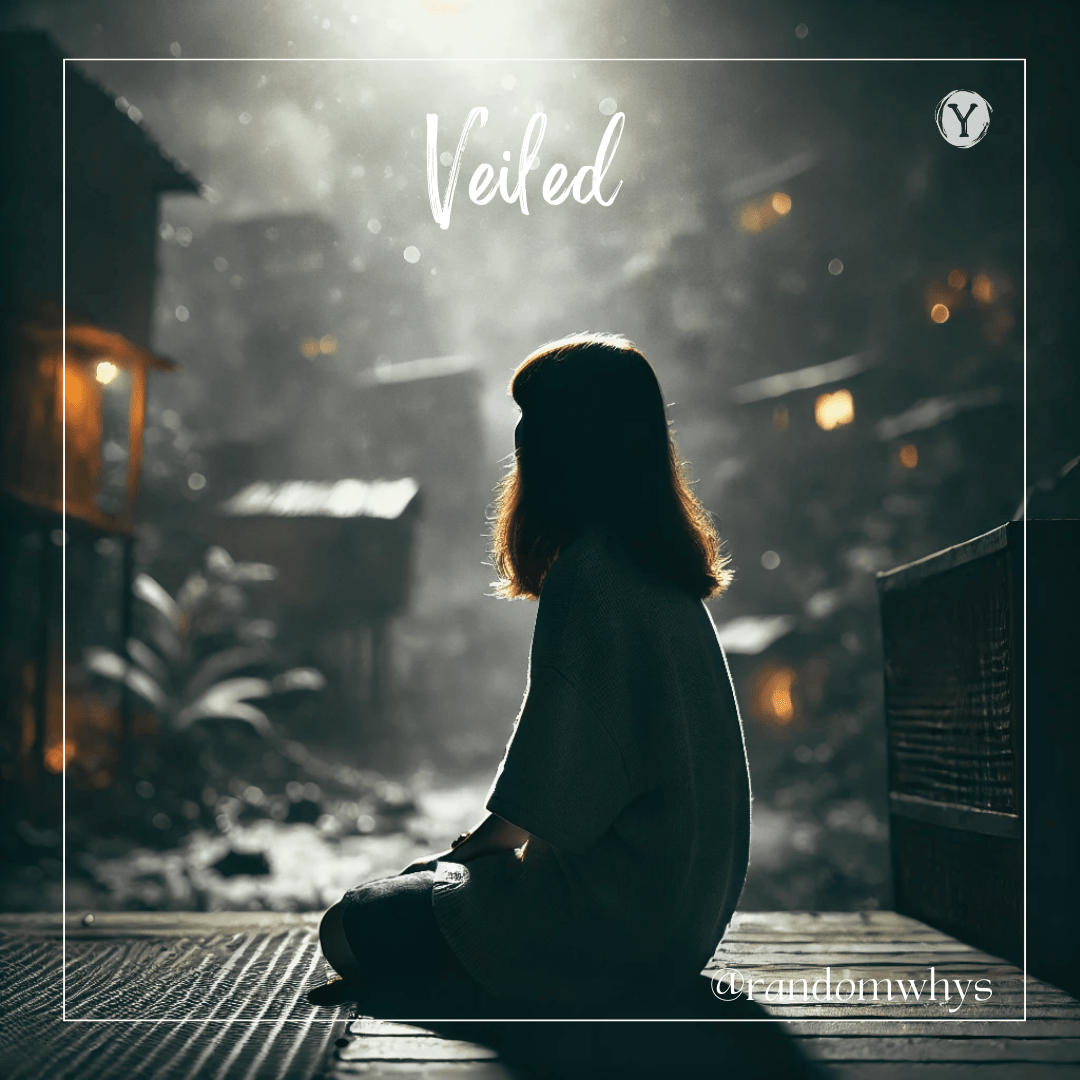
Veiled

A woman conceals fear behind a façade, questioning others’ perceptions. Despite affection, she’s unsettled and seeks love’s true meaning amidst anxiety and inner turmoil.

She smiles, she nods, she plays along.

Deep down, there's creeping fright.

A paradox of thoughts wavers, she wonders.

Querying their graze, what do they see?

A hidden flaw or a charm of delight ?

Oceans of anxiety haunt her.

Their eyes weigh her every move.

Why does this feel like a heavenly hell?

When it is supposed to be blissful,

Is the mystery beneath refusing to unfold?

For every cheer, she remains untouched,

Disturbed, solicitous, lost in thoughts

Her breath held, she smiled nervously.

Though, their affection wraps her around.

She seeks herself through all the darkness.

A chalice of love, both void and full

To let their hearts pierce the wall of her.

Cheers

Check out Poem for more

Raghu Thatha (2024) Movie Review

The movie discuss the cultural and language diversity of India, the protagonist’s struggle against patriarchy. While acknowledging the strong message, but questions its impact due to a mix of humor and seriousness.

3–5 minutes

I hadn’t planned on watching this movie this weekend. I was thinking of ‘It Ends with Us,’ but my friend, who already read it, advised against it because the characters didn’t meet their expectations. It’s been a long time since I read any fiction, but maybe I should give it a try again.

Back to the movie, I expected one thing but got something else when I came of this movie. Before I review it for my general audience who don’t speak Tamil, let me give you a heads-up. As we know, India is diverse in culture and languages. I won’t get into politics, but there’s an issue, or what I believed it to be, where Hindi, being one of the Indian languages, has been imposed on others to learn. There’s a common phrase often used as a joke to show someone when they are questioned in Hindi: ‘Ek gaon mein ek kisan Raghu Thatha..

In the movie, they used ‘Raghu Thatha’ as the title. It is Tamil movie directed by Suman Kumar. The story centers around a female protagonist named Kayalvizhi Pandian, a banker at a nationalized bank. She also writes inspiring short stories under the male name “Ka Pa” and because she believes people won’t read stories written by women. From what I saw, the story seems to be set in the 1970s, but I might have missed that detail. Kayalvizhi is an activist against the imposed learning of Hindi in Valluvanpettai but is open to it as a language if there is a need. She’s also against cultural rules that limit women (patriarchy). She speaks out against forced marriages, wearing traditional clothing at home, and how women lose their dreams after marriage.

But things change when her supportive grandfather is diagnosed with stomach cancer. She’s emotionally pressured into agreeing to the marriage because it’s one of his wishes. Tamil Selvan, an engineer working for the government on village electrification, meets Kayal on her way to work. He impresses her by reading books and appearing progressive. Due to family pressure and the limited choices offered to her, she sees him as the better companion, believing that he would understand her choices and principles. 

As the story progresses, Kayal is initially charmed by Tamil Selvan’s actions but later discovers that he’s a misogynistic manipulator out to take revenge on her once the wedding gets over. This reminds me of a scene from the movie Jaya Jaya Jaya Jaya Hey, where the female lead falls in love with a professor who seems progressive but isn’t. Back to the movie, Kayal finds a way out of the marriage by passing her promotion exam (in Hindi), allowing her to move to Calcutta and continue her writing. She also does other mischievous things to escape this marriage. 

Here are my thoughts. Kayal was the stole the show. Throughout the movie, there was a constant push for Kayal to be a role model for many young people, which she had to maintain as it could influence them. The movie’s explanation and comparison of Hindi and its impact on patriarchy were well done, but it didn’t leave a lasting impact because of the mix of mild humor and seriousness. I am sure how far will it reach the audience.

The movie showed how Kayal was losing her principles to escape the marriage but struggled to explain the situation to her grandfather. It was surprising that her progressive grandfather didn’t notice Tamil Selvan’s misogynistic behavior and was willing to sacrifice principles for the marriage. The supporting roles, like Alamelu, the bank manager, and Suneel, were well done. Especially, Kayal’s sister-in-law stands out, even though she was in just a few scenes. She kept suggesting using a lorry driver to solve problems by killing people (LOL). There was one really nice scene where Tamil Selvan’s mom stood up against the marriage and helped Kayal get away. Maybe, the role of Rangu could have been stronger.

I expected Kayal to end up in Calcutta as she wanted to be a writer, but the movie ended showing her at the same bus stop in the same town. The songs were good. The movie had a strong message, but I’m not sure if people will have the patience to sit through it. It might have been better if they focused on either a serious tone or full comedy. Give it try as it running across the theatre.

Cheers

Check out the other movies reviews

If you like what you see and wish to support my work, then

Share your thoughts/suggestion at the comment section or mail at

randomwhyss[@]gmail[dot]com

Don’t miss out! Get notified about new blog posts straight to your inbox !

(No spam, pinky promise!)

Enter your mail to receive updates

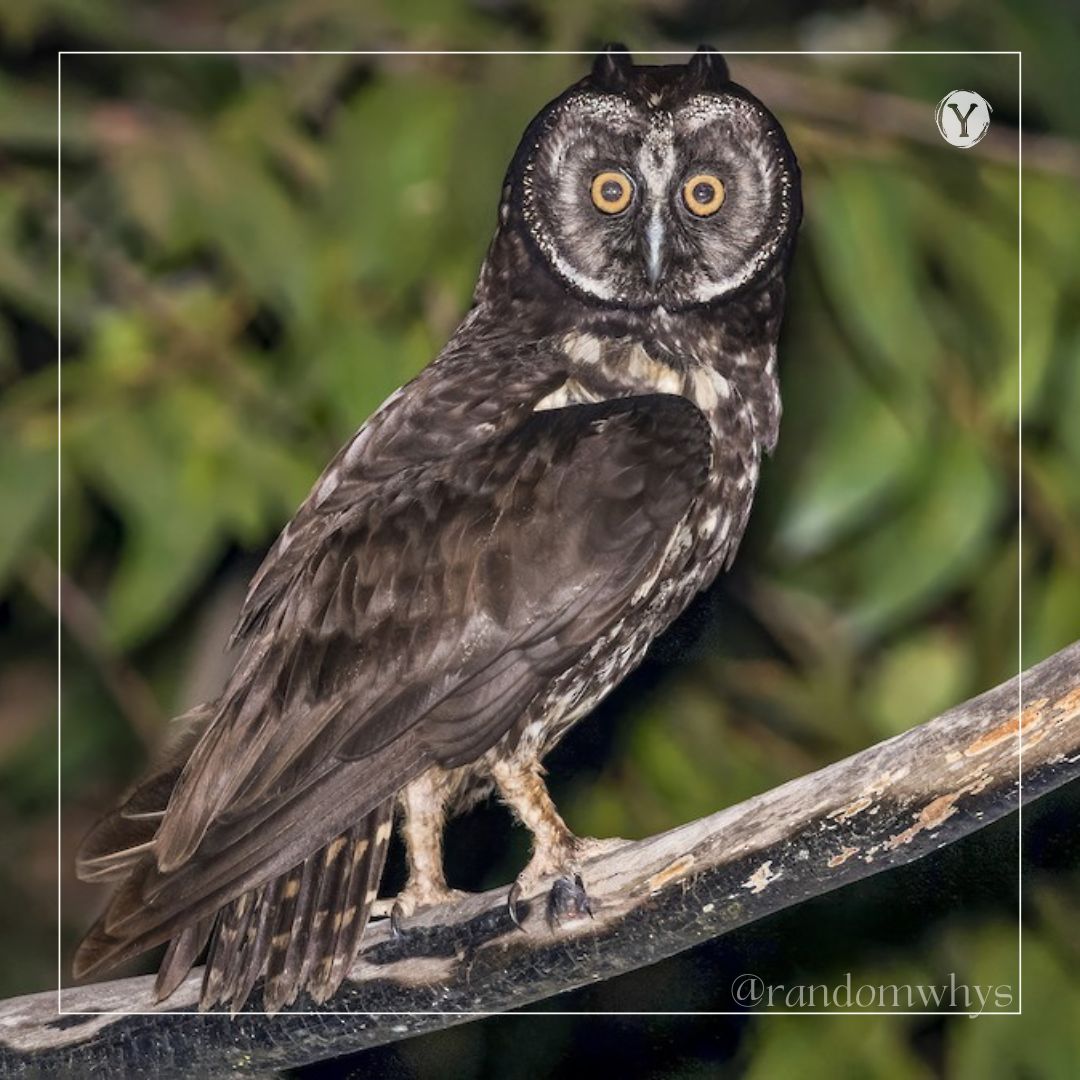
A Wise Old Owl!

The popular 19th-century rhyme about a wise owl emphasizes the importance of listening and observing over speaking. It encourages reflection in our busy, opinionated world.

2–3 minutes

I came across this beautiful rhyme which was published in the year 1875. I couldn’t find the author but it gained the popularity later the 19th century during the world war. Some sources say as Parrot magazine and some as The Oxford Dictionary of Nursery Rhymes by Iona and Peter Opie. While we don’t know exactly where it came from, the owl has always been a symbol of wisdom in many cultures. This is been known when John D. Rockefeller quoted this one.

Let me quote all the versions that I have

#Version 1

There was an owl liv'd in an oak
The more he heard, the less he spoke
The less he spoke, the more he heard.
O, if men were all like that wise bird

#Version 2

A wise old owl lived in an oak,
The more he saw, the less he spoke
The less he spoke, the more he heard,
Now, wasn't he a wise old bird?

#Version 3

A wise old owl lived in an oak,
The more he saw, the less he spoke;
The less he spoke, the more he heard;
Why can't we all be like that wise old bird?

Irrespective of versions, they convey the same meaning.

As the owl observes the world around him, he chose to speak less.

By speaking less, the owl was able to listen more carefully and take in more information. The more we understand, there is less need for speaking or offering opinions.

But, the wisdom comes from choosing the choice to observe and listen rather than speaking. Even, in the case of last version, a questioned is raised. Why don’t reflect on us and choose to listen than to speak.

In our busy world, where everyone has strong opinions, this old rhyme’s message is more important than ever. It teaches us that we often understand things better by watching and listening carefully, rather than by talking all the time.

Try this next time, you might be amazed at how much you learn by listening more and speaking less.

Cheers

Happy Weekend ahead!

PS: You can replace listen with read and speak with write.

If you like what you see and wish to support my work, then

Share your thoughts/suggestion at the comment section or mail at

randomwhyss[@]gmail[dot]com

Don’t miss out! Get notified about new blog posts straight to your inbox !

(No spam, pinky promise!)

Enter your mail to receive updates
#DecodeAgri08: Korean Natural Farming (KNF)

Korean Natural Farming (KNF) emerged as a response to environmental degradation caused by industrial agriculture. It emphasizes natural farming techniques, indigenous microorganisms, and diverse practices to enhance soil fertility and ecological balance.

3–5 minutes

The widespread adoption of industrial agriculture has led to environmental degradation, soil erosion, and decreased crop diversity. In response, we are moving towards holistic approach that mimics nature’s cycles, promoting ecological balance and soil fertility through natural means. We have lot of natural farming techniques that are used widely. For instance, Natural farming, Organic farming, Zero budget farming and more. Since, I can’t keep myself preaching about Korean, (I had to stop somehow), I explored the Korean Natural Farming system.

Origin

Korean Natural Farming began with Master Han Kyu Cho, a Korean farmer and spiritual leader who started exploring natural farming methods in the 1960s. His journey was a response to the environmental degradation and soil depletion caused by chemical-based agriculture. By the 1980s, the core principles of KNF were developed, emphasizing the use of natural materials, indigenous microorganisms, and fermentation to enhance soil fertility and plant growth. KNF started gaining popularity among Korean farmers, who saw improvements in soil health, crop yields, and environmental sustainability. Some articles says that he was in Japan and learnt some. Not sure.

In the 1990s, Cho established the Korean Natural Farming Association (KNFA) to promote KNF practices, provide training, and support farmers. KNF training programs and workshops spread throughout Korea, attracting international attention and interest. Cho also authored several books on KNF, including “Korean Natural Farming: Indigenous Microorganisms and Fermented Solutions” (2003). I couldn’t get the exact links of it. Maybe because, they have it all in Korean.

Techniques and Practices

Composting and Mulching: KNF emphasizes enhancing soil structure and increasing organic matter through composting and mulching. Organic waste is turned into nutrient-rich compost that improves soil health. Applying organic materials like straw or leaves to the soil surface retains moisture, reduces erosion, and suppresses weeds.

Indigenous Microorganisms (IMO): A key component is the use of indigenous microorganisms. These native microbes, including bacteria, fungi, and protozoa, help decompose organic matter, solubilize minerals, and produce plant growth promoters. Farmers collect soil samples from undisturbed natural areas to harness beneficial native microbes, which are then introduced to the soil and crops.

Specific Microbes:

  1. Lactic Acid Bacteria (LAB): Utilized to ferment organic materials and enhance soil fertility.
  2. Photosynthetic Bacteria (PSB): Used to improve soil structure and nutrient availability.
  3. Yeast: Employed in fermentation processes to produce beneficial enzymes and nutrients.
  4. Fungi: Applied to decompose organic matter and enhance nutrient cycling.
  5. Actinomycetes: Utilized for their ability to decompose complex organic materials and suppress soil-borne disease.

Fermented Plant Extracts: KNF practitioners create various fermented solutions to enrich the soil and support plant health. These include Fermented Plant Juice (FPJ) Fermented Fruit Juice (FFJ) Lactic Acid Bacteria (LAB) Oriental Herbal Nutrient (OHN).

No-Till Farming: Avoiding or minimizing soil disturbance is another crucial aspect of KNF, preserving soil structure and organic matter. This practice helps maintain soil health, supports beneficial microorganisms, and reduces erosion and runoff.

Cover Cropping and Biodiversity: Planting cover crops such as legumes (green manures and green leaf manures) during off-seasons protects and enriches the soil. KNF also focuses on biodiversity, promoting the coexistence of diverse plant and animal species. This enhances ecosystem resilience and adaptability, encourages natural pest control through beneficial insects and predators, and reduces the need for chemical pesticides.

Nutrient Cycling and Water Conservation: Utilize the plant and animal residues and recycle them to get nutrients within the farm system, maintaining soil fertility. Techniques such as contour planting and rainwater harvesting helps to optimize the water use, reducing the dependency on external sources of water.

Implementation Tips:

  1. Local Adaptation: Use local, native microbes adapted to your environment.
  2. Environmental Conditions: Maintain proper moisture, temperature, and pH conditions for microbial growth.
  3. Microbial Diversity: Avoid over-reliance on a single microbe, promote diversity. That’s the core of this.
  4. Monitoring: Regularly observe the system and analyze the microbial community.

Korean Natural Farming offers a scientifically grounded approach to sustainable agriculture, using the power of natural processes to maintain the ecological balance and soil fertility. By emphasizing the use of natural materials, indigenous microorganisms, and diverse farming techniques, KNF presents a viable alternative to conventional chemical-based agriculture. May be I should stop talking about Korean and Korean culture. But this, offers a holistic approach, focusing on the IMOs. More information can be availed from published works as well. The valuable insights into creating more resilient and ecologically balanced farming practices. Challenges might raise while implementation.

Cheers.

Follow on IG X for more!

If you like what you see and wish to support my work, then

Share your thoughts/suggestion at the comment section or mail at

Don’t miss out! Get notified about new blog posts straight to your inbox !

(No spam, pinky promise!)

Enter your mail to receive updates

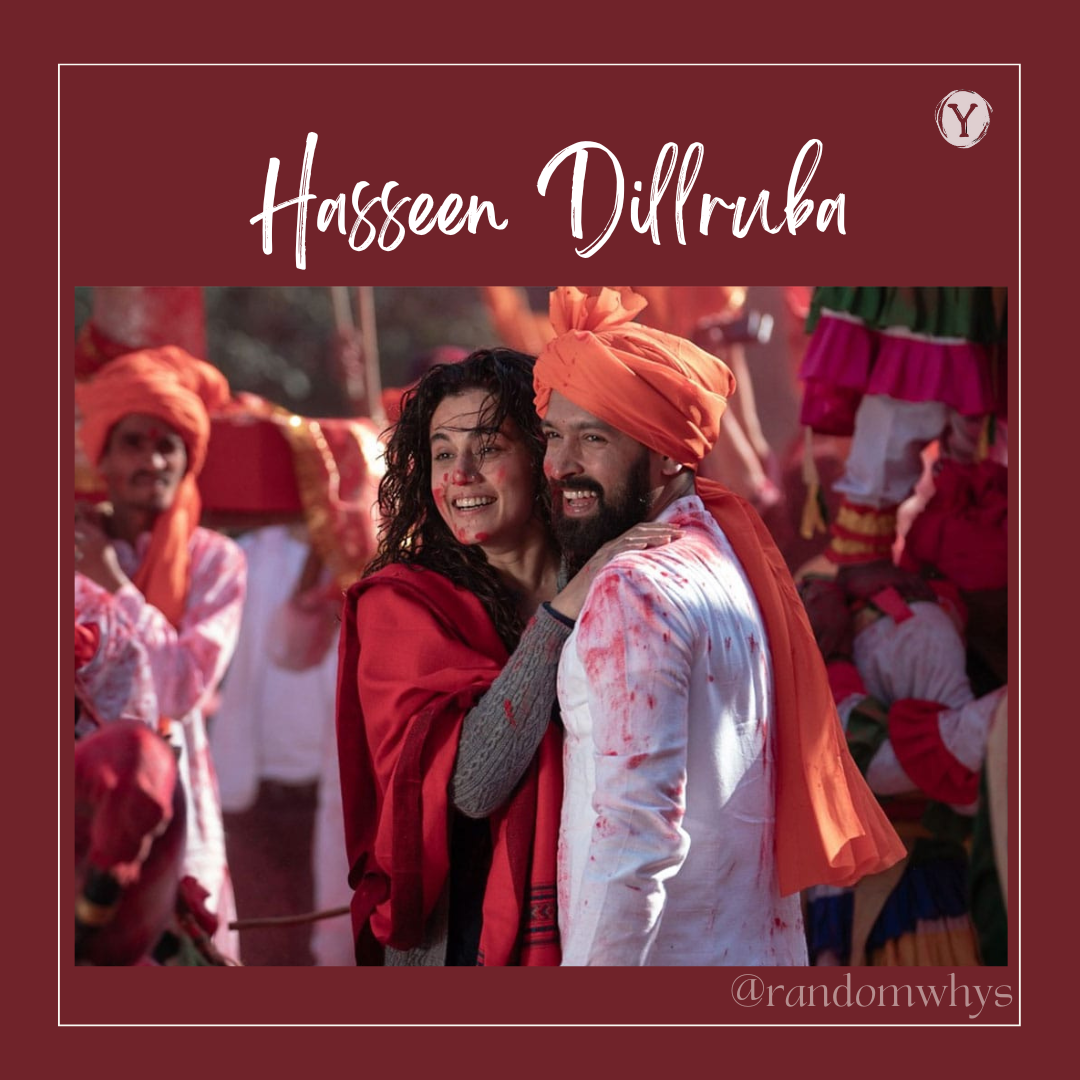
Hasseen Dillruba (2023 & 24): Movie review

A mix of thriller, romance, and drama, the movie revolves around Rani and Rishu’s tumultuous relationship, filled with deception and attempts to start anew.

2–3 minutes

I found it hard to pin this movie down—it’s a mix of thriller, romance, and drama. I enjoyed it, though I’m unsure how many others will. My initial interest was sparked by Taapsee’s performance in Thappad, but by the end, I became a fan of Vikrant too.

The movie begins with Rani at a police station, reporting that her husband is dead. She recounts their story, often quoting her favorite author, Dinesh Pandit.The story runs around Rani and Rishu, who enter into an arranged marriage. They start off on shaky ground—Rishu is reserved, while Rani is outspoken.

Their relationship is strained, and things take a turn when Rishu’s cousin Neel enters the picture. Rani is drawn to him and eventually falls in love, only to realize she’s been deceived, making her life even more complicated. Vikrant took the screen over with this anger, plots to take revenge. Seeking forgiveness from Rishu, they decide to start over, but just as they do, Neel reappears.

The first part ends with them enacting a plot straight out of a Dinesh Pandit crime novel, aiming to escape their current troubles and start anew. It closes with the quote.

If love doesn't push you to the brink of insanity, it's not true love. Only the meek seek refuge in passionless relationships.

The second part picks up with Rani working as a beautician and Rishu, now in disguise, doing odd jobs to save money for a fresh start in Thailand. Their love seems renewed, but life isn’t as simple as they’d hoped. Neel’s uncle, a cop, starts digging into their past, and to avoid prison, Rani marries a dangerous, psychiatric local man named Abhimanyu. He justified the role. The movie follows their attempts to escape from all and start over.

The characters are beautifully written, consistent in both parts—even down to Rani’s hairstyle and nail polish, and Rishu’s mannerism. The film portrays love, anger, lust, fear, betrayal, trust and more with great depth. It may feel a bit psychotic, overly dramatic, and unrealistic at times, but it’s well-crafted with plenty of twists and turns. After all, it’s a movie. The Dinesh Pandit quotes are a highlight, making you want to read his books. Indeed, I miss the beautiful songs the first part had. The second part of the movie ends with

Relationships thrive within the boundaries of right and wrong. True love, however, begins where these boundaries end.

It’s available on Netflix. Give it a try!

Cheers

PS: Lakeeran

Check out the other movies reviews

If you like what you see and wish to support my work, then

Share your thoughts/suggestion at the comment section or mail at

randomwhyss[@]gmail[dot]com

Don’t miss out! Get notified about new blog posts straight to your inbox !

(No spam, pinky promise!)

Enter your mail to receive updates
Guest Post #101

From Reader S. This marks our first Tamil publication, and we hope you enjoy the evocative imagery and deep emotions captured in this piece. I will try to translate this in the near future.

சூரியன் எனக்கு விடை சொல்லிக்கொண்டிருந்த 
நேரத்தில் தான் அவளை பார்த்தேன்.
நான் வலது பக்கமாய் அணையின் தண்ணீரை வேடிக்கை பார்த்துக்கொண்டிருக்கையில் இடதுபுறமாய் ஒரு தோழியுடன் வந்து புன்னகையாய் 'ஹாய்' சொன்னாள்...
அவளை நான் சந்திப்பது இதுதான் முதல்முறையாய் இருந்தாலும் பல காலமாக பழகியவள் போல இயல்பாக பேசினாள்...
எல்லோராலும் முடிந்த ஒன்றல்ல அது...

ஆனால் எனக்கு அவளிடம் சில விதிமுறைகள் இருந்தன...
ஏனென்றால் அவள் எனக்கு ஒரு தோழி மூலமாக அறிமுகமானவள்...
தோழிகளின் தோழிகளிடத்தில் அத்தனை எளிதாக உரிமை எடுத்துக்கொள்ள கூடாது...
அத்தனை எளிதாக நெருக்கமாக கூடாது என்று எழுதப்படாத விதி இருக்கிறது...
இதுதான் முதல்முறையாய் இந்த இடத்திற்கு வந்தது போலவே இல்லாமல் அத்தனை இயல்பாய் இருந்தாள்...
ஒரு காட்டு வழியே செல்லும் நீர்வீழ்ச்சிக்கு அவளை அழைத்து சென்றேன்...
கொஞ்சம் ஆசையுடனும் அதிக யோசனைகளுடனும் அவள் அந்த தண்ணீருக்குள் மிதக்க ஆரம்பித்தாள்...
தலைக்கு மேலிருந்து தாலாட்டு போல கொட்டிக்கொண்டிருந்த அந்த நீருக்கு அடியில் பெரும் தயக்கத்துடன் நின்றாள்...

அவளின் கூந்தல் தொட்டு தண்ணீர் கீழே விழுகையில் அவளை பார்த்தேன்...
இந்த உலகத்தில் எதுவும் பார்க்க கூடாதென்று முடிவு செய்தவள் போல கண்களை இறுக்கமாக மூடி இருந்தாள்...

போர்வை இல்லாத குளிர்காலம் போல அவளது உதடுகள் நடுங்கிக் கொண்டிருந்தது...
அவள் முகத்தில் ஒரு பயம் தெரிந்தது...
அது தண்ணீருக்குள் மூழ்கிவிடுவோம் என்று பயப்படுகிறாள் என்று நினைத்தேன்....
ஆனால் அவள் மனதிற்குள் ஏதோ ஒன்று அவளை மூழ்கடித்துக் கொண்டிருக்கிறது என்று புரிந்தது...
அவளுக்கு இந்த இடத்தை விட்டு உடனே விலகி செல்ல தோன்றவில்லை...

இருந்தாலும் போய்தானே ஆக வேண்டும்...
பறவைகளின் வாழ்க்கை பறந்துக்கொண்டே இருப்பதுதானே...
அடுத்த நாளில் என் ஞாபகங்களில் அவள் பறந்துக்கொண்டிருந்தாள்...
'மிஸ் யூ' என்று குறுஞ்செய்தி அனுப்பினேன்...

'நான் இன்னும் செத்துப்போகல' என்றாள்...
அந்த பதிலுக்கு பிறகு இப்போதெல்லாம் நான் யாரிடமும் 'மிஸ் யூ' சொல்வதில்லை...!

Ullozhukku (2024) Movie Review

The movie is a slow-paced, visually modest drama set in a Kerala village during monsoon. It explores complex relationships and societal pressures.

3–4 minutes

I was really looking forward to watching this movie when it first came out. It wasn’t showing up in my area, so I had to wait for it to be available on a streaming platform. I found out on Twitter that it was playing on Simply South, which was a new OTT service for me. Later, I discovered it was also on Prime.

I’m not sure how well this movie will reach its audience. The visuals aren’t heavy, but the concept is deep. It’s a slow-paced film that requires patience, so you might even fall asleep. The story revolves around two female leads: Leelama (mother-in-law) and Anju (daughter-in-law). Anju, who works as a salesgirl, is in love with Rajeev, but her parents don’t accept their intercaste relationship. They force her to marry Thomas Kutty, Leelama’s son. The setting is a small village in Kerala during the monsoon season, with characters traveling by ferry.

Anju is unhappy with her sick husband and spends time with her ex-lover. After her husband dies, she discovers she’s pregnant. The family assumes it’s Thomas’s child until they uncover her infidelity. Anju also learns that Thomas had cancer before their marriage, making her feel deceived. The story is about two people coming to terms with each other.

The mature conversations between the two women are beautifully portrayed. Without this nuance, the same kind of interactions in the common households could have been chaotic, messy and even uglier. Leelama, who wanted to be a doctor but was forced into marriage, accepts her fate and dedicates herself to her family. Anju, on the other hand, refuses to accept her situation quietly. There’s a clear evolution in their characters: Leelama speaks a lot initially but becomes quieter, while Anju, initially submissive, finds her voice.

Each character is flawed but justified in their actions from their own perspectives.

  1. Leelama wants her son to marry despite his health issues.
  2. Anju is forced into marriage with Thomas due to her father’s wishes, despite loving Rajeev.
  3. Rajeev loves Anju but is also motivated by the desire for property.
  4. Thomas focuses on his own needs without understanding his role as a husband.
  5. Anju’s father prioritizes his wealth and reputation over his children’s happiness.
  6. Anju’s mother knew about Thomas’s cancer but hoped Anju would be happy in a wealthy family.

The conversations between Leelama and Anju are calm and filled with mutual care and understanding. Initially, Leelama seems to be emotionally manipulating Anju to stay, but her actions, like delaying the funeral and her interactions with Anju’s parents, reveal her true intentions. She chooses to give the property to Anju instead of her daughter.

Leelama’s conversation with her sister is particularly praiseworthy. Anju, although emotional, is also logical. Her decision to leave the house was present from the beginning. However, her final choice to stay feels unhurried. It could possibly be influenced by her last conversation with Rajeev.

One surprising aspect was how casually the other characters lived in a house filled with water. Urvashi and Parvathy did justice to the role yet Leelama outstood Anju. I am not sure how leelama would’ve done if Thomaskutty was alive.

This movie isn’t for those who prefer straightforward, fast-paced narratives. For some, it might not even make sense. However, if you’re interested, give it a try on Amazon Prime.

Cheers

Check out the other movies reviews

If you like what you see and wish to support my work, then

Share your thoughts/suggestion at the comment section or mail at

randomwhyss[@]gmail[dot]com

Don’t miss out! Get notified about new blog posts straight to your inbox !

(No spam, pinky promise!)

Enter your mail to receive updates

Burning Together

A solitary blue-flamed beauty lures moths seeking warmth, but only a powerful phoenix can match her intensity and create eternal love.

In the abyss, she burns fierce and vibrant
A solitary flame with a core of blue
Her graze, a blade that cuts the night
Moth flocks to her, seeking to tame
Mesmerized by the warmth she brings
But she’s no fleeting flame, easily blown.
Alone she blazes, true and strong
The moth approaches with paper wings
Hoping to bask in what burning brings
But can’t withstand her flaming hot
For she knows the game, hollow chase
That the moths won’t linger along
Then, from the shadows, a phoenix appears.
Born of fire, where the dark ends,
Ignites her soul, a brand-new, fiery start.
Two flames merging, in the vast skies
No weak moth he is, with wings to burn
But an equal fire, with much to learn.
No flickering pretense, no games of light
Just an eruption of intense burning
No longer must she guard her glow.
For his warmth, she finds her peace.
An eternal love, born of light.

Cheers

PS: பூவை வரைந்து அதிலே மீசை வரையமாட்டேன்

Check out Poem for more

Chutney/Sambhar TV Series (2024) Review

A heartfelt Tamil series follows the reunion of a long-lost son with his family in Ooty, exploring love, betrayal, and acceptance. The well-developed characters and picturesque village setting make it a delightful watch.

3–4 minutes

I recently watched a feel-good Tamil series that I loved. It’s a limited series with only 6 episodes, but it’s really good. The story is about accepting a son born out of wedlock into a current family.

The series starts at Amudha Cafe, famous for its special sambar. The cafe owner, Rathinasamy, falls ill and tells his son that he had another son before this marriage. He asks him to find and bring this son back before he dies.

Karthi, the son from Rathinasamy’s marriage, goes searching for Yogi Babu. He happens to have different physical features, making it hard to believe. Yogi Babu runs a street shop in Chennai, also named Amudha Hotel, known for its chutney. Even the MLA stands in line for it! He lives a decent life with around 5 lakhs in savings. Karthi requests him to visit him once, but he is reluctant to come back to Ooty. Karthi kidnaps Yogi Babu back to Ooty to fulfill his promise to his father.

Once there, Yogi Babu sees that everything is named after his mother, Amudha. He agrees to perform all the rituals, and the series portrays the events from death to the last ritual, spanning about 13 days. The series captures beautiful scenes from a village in Ooty, though I’m not sure where it is. It’s not the main town but somewhere far, and they really capture the essence of it.

The series might seem simple, but the characters are well-developed and beautifully portrayed. Here are my thoughts on some key characters.

#Yogi Babu: He grows up hating his father because he never knew him. His mother, who taught him life skills, is his whole world. She was supportive, even when he didn’t do well in school. She taught him to earn through hard work. After coming to Ooty, he understands that his mother wasn’t the one to face the struggles. It happens to almost to every women. The character evolves as he sees many around people and their stories. His straightforward nature is brilliant, especially in his conversations with Karthi’s father-in-law and Sophie.

#Sophie: Although she isn’t the main character, she has her own principles. She stands up for her choices and has honest communications with others. Her hatred for her father, even after his death. I was surprised yet realistic.

#Karthi and Yogi Babu: Their conversations reveal the pure love between Rathinasamy and Amudha. Something requires understanding, right? There’s a mystery about why Rathinasamy married another woman. The healthy fight for better Chutney and Sambar. It was fun.

#Supporting Characters: Characters like Myna, Peter, Nithin and appu added charm to the story. It’s a pleasant series, suitable for watching with family. It has some comedy scenes and makes for a lovely weekend watch. The character of Karthi’s mother, who struggles to accept Yogi Babu, is also well-played. She finds it hard to accept Yogi Babu because she spent many solid years with Rathinasamy, and there was no way he would have cheated. His physical appearance also made it hard for her to believe the affair. With Rathinasamy no longer alive to answer her questions, doubts about all those years together start to surface. The anger and struggles was clear.

One scene I thought could be avoided is Yogi Babu fighting 5-6 men. Though he makes a sarcastic comment about it, I felt unnecessary. Overall, it’s a heartwarming series worth watching. Give it a try! It is available on Disney plus Hot star.

Cheers

Check out the other movies reviews

If you like what you see and wish to support my work, then

Share your thoughts/suggestion at the comment section or mail at

randomwhyss[@]gmail[dot]com

Don’t miss out! Get notified about new blog posts straight to your inbox !

(No spam, pinky promise!)

Enter your mail to receive updates
Is the Paper cup Plastic free?

The paper cup raises sustainability and health concerns due to microplastic release, challenging the need for alternatives.

2–4 minutes

In our fast-paced world focusing on sustainability, the paper cup has become an indispensable part of our daily lives. The tea, coffee are usually served in this and even it is used for drinking purposes in events and more. With the ban on the single use plastics across countries, the paper cup got its hype. The paper cup isn’t fully made up of paper but has a thin lining of plastic in it.

#The Anatomy of a Paper Cup

They have two things.

  1. The paper body: Made from paperboard, a thick paper-based material
  2. A thin plastic lining: Usually made of polyethylene (PE).

So the paperboard gives the structure and strength whereas the plastic lining (0.5 mm thick) is usually low density polyethylene (LDPE) making it waterproof and prevents leaks. They are mostly used since it is of  hydrophobic nature and repels water and creates a barrier between the liquid and paper fibers. It also  keeps hot beverages warm and cold drinks cool.

Recent study found that microplastics can be found in the beverages served in these paper cups. It stated that around 25,000 micron-sized (10 µm to 1000 µm) microplastic particles are released into 100 ml of hot liquid (85 – 90 °C) when left in a paper cup for 15 minutes. The plastic film was separated from the paper and exposed to hot water to examine changes in its properties. But the paper also indicated that most of the people consume their beverages within this timeframe. (Not me! I’ve to be extra careful)

#Environmental Concerns

Since they are a combination of paper and plastic, it will be difficult to recycle. As we know, plastic lining takes years to decompose. The paper can be left for decomposition and the thin plastic lining can be decomposed through pyrolysis, catalytic degradation or through microorganisms like fungi and bacteria. We have advanced research on producing plant based plastic lining, nanocellulose or enzyme based decomposition.

#Health concerns

We have seen it across the platform that plastics are everywhere and the microplastics are found in body, blood and even in the mother’s milk. It reminds me of a meme, let me share below. This also includes bioaccumulation. The microplastics can act as carriers for various contaminants such as toxic heavy metals ((e.g., Palladium, Chromium, Cadmium) and organic compounds with hydrophobic properties. 

A cartoon depicting a waiter asking a couple at a restaurant table, "Tap, sparkling, or microplastic-free?"
Source: IG

#Alternatives

The first can be done, it is to reduce its usage and opt for alternative solutions like earthen products. Recently, Starbucks announced their new design features with several improvements with a concern to sustainability. They redesigned the tall cups so that the same lid can be shared with grande and venti cups. Plus, the customers in the US and Canada can use their own clean cups for all orders. Yes, they get discounts and bonus stars if they bring their own cups. Let me know if any company has done the same.

The paper cup, it turns out, is not so humble after all. Be cautious on drinking it after 15 minutes. As science continues to advance and innovate, we can look forward to a future where our morning coffee comes in a cup that’s not just a convenience.

Cheers

Check out the others post on Home

Refernce

Ranjan, V. P., Joseph, A., & Goel, S. (2021). Microplastics and other harmful substances released from disposable paper cups into hot water. Journal of Hazardous Materials, 404, 124118. https://doi.org/10.1016/j.jhazmat.2020.124118

Don’t miss out! Get notified about new blog posts straight to your inbox !

(No spam, pinky promise!)

Enter your mail to receive updates

Regen

A woman finds solace in nature’s embrace, cleansing her soul in the rain. From despair to renewal, she embraces life once more.

Alone, as blackness creeps through the sky.
Staring at the gaze of the greeny woods
Sitting at the end of a slippery cliff,
With wet moss and ferns, she could leap.

All of it felt awful, even her thoughts.
A scent of decay and dirt on her skin
That would never go away, haunting
Gentle hands were coarse and rough.


Broken nails with earthy stains and trembling
Being skeptical of her worth and existence
As if they had no control, salty rivulets crossed cheeks.
Hiding herself out in the dark, but


Lightning intended to expose her to the world,
Thunder urged her to dive from the edge.
Looked up as raindrops fell on her cheeks.
Time lapsed, and droplets became furious.

Hitting her hard, but she felt no pain.
Believing it would dust into her nature.
Instead, it danced on solace skin.
Raindrops, soft as downy quills,


Soothing her heart's bruises clean
Caressed her brow, her cheeks, her eyes.
Melting sorrow and sweeping her chaos
Hair, once tangled, seems gentle and smooth.


The cold stream rinsed the ugliness away.
Her soul was refreshed, shedding her fear.
Cleared skies, clouds parting away,
Heavens stretched, serene, and vast,


Staring at the gaze of the greeny woods
Smiling at the end of a slippery cliff,
With wet moss and ferns at her feet,
Feeling whole, she held the world close.

Cheers

PS: Penned, as requested

Check out Fur’ever & others

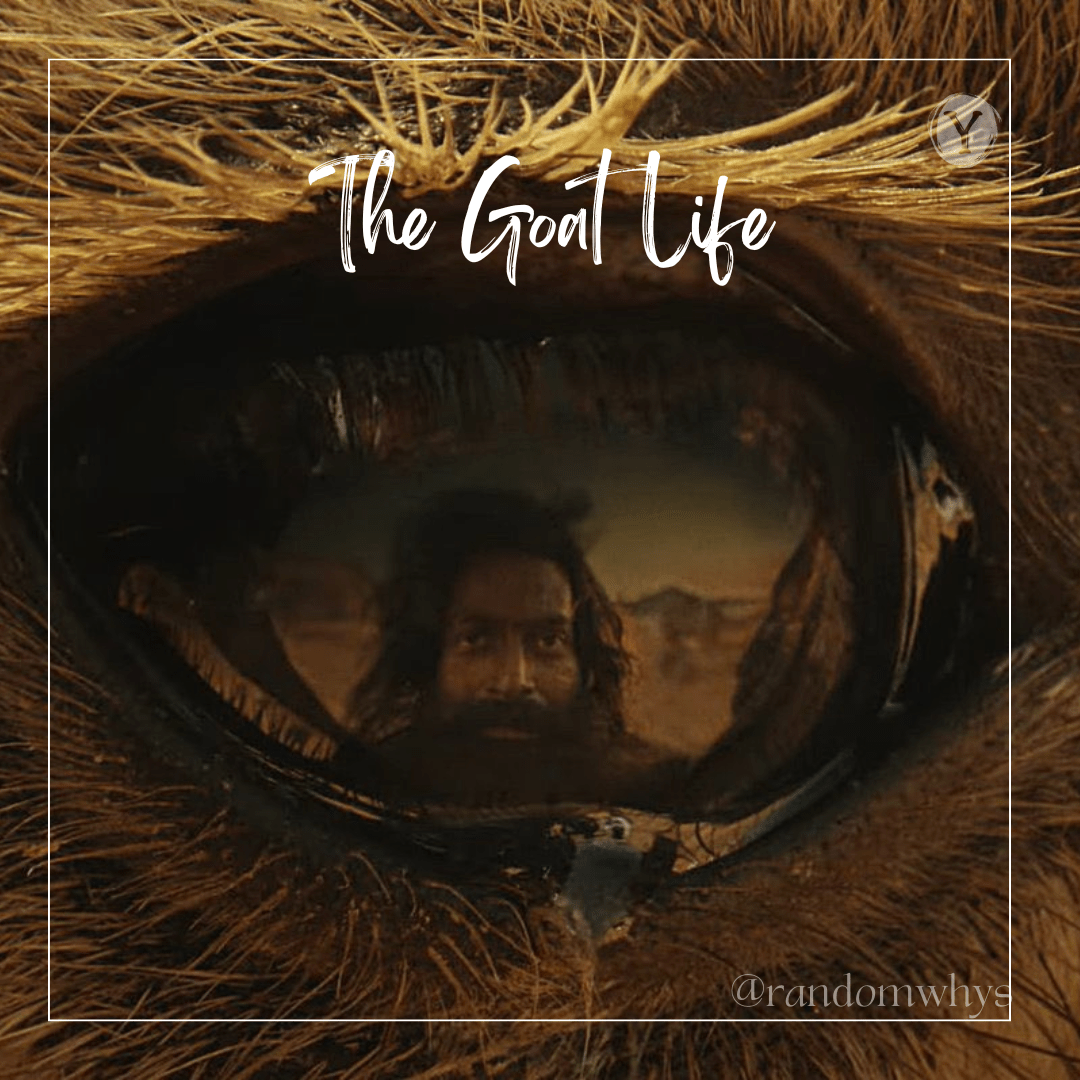
Aadujeevitham/The Goat Life (2024): Movie Review 

A man’s unexpected desert journey unfolds in stages, showcasing resilience, emotional growth, and the power of hope.

3–5 minutes

I was very reluctant to watch this movie. I first heard about it through a book review and knew it would be heart wrenching since it’s based on a true story.

The story revolves around a man, who by mistake ends up in desert. He was told that it was for an office job but ends up looking after sheep. This all happened a few years ago, in a time without phones. The narrative is beyond critique. It’s raw and real.

Prithviraj did an amazing job, clearly portraying the protagonist’s struggles. The supporting roles particularly Hakkim and Ibrahim were phenomenal. The movie really captures one key element, the presence of water. The old scenes had water (either as rain or river), while the present scenes are barren and dry.

The journey unfolds in four stages as per my observation.

#Inital Innocence: He arrives in an unfamiliar place, struggling with the language and weather, surrounded by strangers.

#Resentment: He begins to hate everything. The harsh climate, his boss, scare of water for daily activities and even the old man’s sayings.

#Tolerance: He gets used to his harsh surroundings, forming a bond with the sheep, the weather, and even the scarce water. There was a scene where he drinks water with the animals, as if he is one among them. He loses track of time, hope fading as he adopts the local attire and even forgets his own language.

#Renewed Hope: Once he meets Hakkim, things begin to change. Yet, you can see his bonds with the sheep and camels. The tears on the camel’s eyes when he was about leave. The presence of water, family and the sounds of vehicles, pushed him to move forward. When he finally reaches the city, a fellow people helps him.

There was a scene where he was not allowed to drink water by Ibrahim after finding a oasis. When I googled, it showed various risks of Hyponatremia, Gastrointestinal issues, Rehydration syndrome, Cardiovascular stress and more. This is mainly because of the imbalance in electrolytes in the body (Sodium and Potassium). It is advised to wet the lips first and then drink slowly so that the body utilizes the time to readjust itself from a dehydrated state to a hydrated one.

At the end, the trauma of meeting the cruel owner and the fear in him were very well shown even after escaping. The movie ends with him entering the flight with a smile. After the movie, I did watch the interviews given by real Najeeb and his family. His words had pain. His wife had dreams of him asking for water while he was away. His wife was still waiting for him.

This reminds me of a passage in the book “The Alchemist by Paul Coelho,” where the protagonist finds a girl and leaves for work. There was a line saying she was born to wait for him. He also mentioned having thoughts of killing the owner but worried he would end up in jail, or if he committed suicide, what would happen to his wife and kids. This gave him hope to survive.

Reading “Man’s Search for Meaning” by Viktor Frankl, I found similarities in how cruelty affects people. The hell they went through. Everyone had their family in mind, which kept them going. Man’s Search for Meaning” by Viktor Frankl, I found similarities in how cruelty affects people. Everyone had their family in mind, which kept them going. It’s nice to know that we take care of and protect our families. The problem arises when we exploit others.

The movie doesn’t just focus on the physical survival but also on emotional journey, resilience and adaptation. This may be a story for us but he has lived through it. Sometimes, the best gift you can give your loved one is just to be alive. The movie is available on Netflix, give it a watch!

Ending it with

All the lives we have never experienced are just the stories to be shared.

Cheers

Check out the other movies

If you like what you see and wish to support my work, then

Share your thoughts/suggestion at the comment section or mail at

randomwhyss[@]gmail[dot]com

Don’t miss out! Get notified about new blog posts straight to your inbox !

(No spam, pinky promise!)

Enter your mail to receive updates

Art vs Artist?

The debate about separating art from the artist is complex. Should we judge an artist’s work based on their personal life? It’s a personal decision.

2–3 minutes

Recently, I found myself confused about a tricky question. Should we separate the art from the artist? Do we need to think about an artist’s personal life or just enjoy their work without worrying about where it came from? or just celebrate things as it is?

Art, be it music, painting, a book, a song, a poem or a movie has a big impact on us. They bring a drastic changes in us and make us feel emotionally strong. With the rise of technology, we see many artists are famous for their talent and creativity.

But the question is, when we find out that some of the artists have done bad things in their personal lives, then how do we feel about their work? Does it change the lens or still the same?

I read mixed suggestions across the platforms. Some people believe that art should be viewed as art separately from the artist. We can enjoy and appreciate the art without supporting the behavior or the beliefs of the artist. I don’t want quote an example. Someone would’ve popped in your mind while reading this

On the other hand, people think that we should the artist’s personal life when we look at their work. Since art often reflects the artist’s thoughts and feelings and knowing more about them can help us understand their work better. Also, if we celebrate their art, then does it mean we are okay with their actions? Are we also supporting the artist’s bad behavior? Can we still watch movies who has hurt others? or Is it okay to listen to music by an artist who has been abusive?

I feel like there isn’t a simple answer to these questions. Maybe, it is too subjective to decide and to figure out what feels right for you whether to support or not.

I am not sure whether I have arrived at a conclusion. I am just trying to find a balance. It is hard to ignore a good piece of art but it is also important to recognize those mistakes. We can try to understand the whole picture, seeing the good in art and acknowledging the bad in the artist.

In the end, it is a personal choice whether we continue to celebrate the art, or the artist or find a middle ground. This process of thinking and questioning helps us to reevaluate our values and experience the art richer.

What’s your thoughts? Let me know in the comments!

Cheers

PS: Gemini created this image!

Happy Weekend, Check out related posts : Subjective vs. Objective Art, Why art always finds its way back?

Follow on IG X for more!

If you like what you see and wish to support my work, then

Share your thoughts/suggestion at the comment section or mail at

randomwhyss[@]gmail[dot]com

Don’t miss out! Get notified about new blog posts straight to your inbox !

(No spam, pinky promise!)

Enter your mail to receive updates