Blog

Maximizer or Satisficer?

1–2 minutes

In a world full of choices, the pressure to take the best decision is constant. From careers to relationships to the smallest daily decisions, the chase for the best never really ends.

Some tend to maximize. Research deeply, compare endlessly, and wait for the perfect option. Others satisfice and choose what feels enough and move forward, trusting that every decision need not be flawless.

A question beneath the both patterns is that “what is being optimized for?

Growth often demands us work. Peace leans toward stability. Freedom avoids anything that feels like a trap. What appears as indecision or quick one on the surface often reflects something more personal beneath it. The core value system.

Decision making is not always about one’s personality. It is about context, capacity, and clarity. Some decisions requires more time and weight of a maximizer’s mind while later doesn’t. It is not always one or the other and and it is rarely helpful to define oneself within a fixed box.

A fast choice is not always reckless. At the same time, slow one is not always wise. Every decision, at its core, reveals what feels most important in that moment. Whether it means striving for more or settling into enough, both are valid as long as the compass is honest. Unless it is optimized for what we think others might think.

Cheers

Check out the other post: Not every fall is a fault!

If you like what you see and wish to support my work, then

Share your thoughts/suggestion at the comment section or mail at

randomwhyss[@]gmail[dot]com

Don’t miss out! Get notified about new blog posts straight to your inbox !

(No spam, pinky promise!)

Enter your mail to receive updates

Not every fall is a fault!

1–2 minutes

Decisions are often made with the information that is available at that time. Sometimes, the result is good. Sometimes, it is not. That does not mean the decision was wrong.

After making a decision, new information/clues may come. It may feel like the choice could have been better with the new insights. But that is only clear in hindsight. The result was not in full control. So, the outcome may be bad but the decision is not.

When every bad outcome is called a bad decision, confidence starts to break. It becomes harder to make choices in the near future.

Some careful decisions still fail. Some fast decisions works well. That’s why the process is what matters not just the result.

Not all good decisions will bring good results. Not all bad outcomes mean a mistake was made.

At the end, We have agency over our choices, not the results.

Cheers

Check out the other post: Two Minute Reads, Two Hour Echoes!

If you like what you see and wish to support my work, then

Share your thoughts/suggestion at the comment section or mail at

randomwhyss[@]gmail[dot]com

Don’t miss out! Get notified about new blog posts straight to your inbox !

(No spam, pinky promise!)

Enter your mail to receive updates

Two Minute Reads, Two Hour Echoes!

2–3 minutes

There’s something oddly satisfying about writing that does both delivers quick clarity and leaves room for longer echoes.

Some days, I want to keep it crisp. Say what I mean and move on. No decoration, no detour. It feels sharp and clean, like wiping a mirror and seeing one honest thing. Those pieces are for the ones scrolling in-between tasks, looking for a sentence that sticks. Not sure of the readers tho.

But on other days, the writing wants to take its time. It stays with the question, turns it over, lets the thought unfold. Not for the reader, but because I haven’t fully understood it yet or some clarity on it. Like an oyster that hasn’t revealed its pearl.

This isn’t about pleasing the algorithm or trying to sound smart. It’s just a way to speak to both parts of me, the one that’s tired, and the one that’s still trying. There’s comfort in layering. A top layer for when the readers need clarity fast. A deeper one for when they are willing to stay with it.

Maybe it’s because attention is fractured. Maybe it’s because not all meaning needs long form. Some truths arrive fully formed. Others take their time. I prefer writing that allows for both.

Attempting to write something that can be read in two minutes. But also, letting it echo for two hours or two days or not at all. Not everyone will stay with a piece. But if someone does, I want the writing to meet them halfway.

It’s still something I’m figuring out. I’m not sure how well I’m doing it yet but this direction feels honest. Something in it makes me want to keep going.

I’m curious how this lands for other writers!

Cheers

PS: Inspired by Seth Godin

Check out the other post: Why build the ground first?

If you like what you see and wish to support my work, then

Share your thoughts/suggestion at the comment section or mail at

randomwhyss[@]gmail[dot]com

Don’t miss out! Get notified about new blog posts straight to your inbox !

(No spam, pinky promise!)

Enter your mail to receive updates
Why build the ground first?

1–2 minutes

Some storms don’t come from outside. They start quietly inside houses, inside expectations, inside silence of oneself. And often, it’s not the shouting that breaks a person. It’s the emptiness around them when support should have been there.

Strength doesn’t always need a loud voice. Sometimes, it’s just knowing what’s right. Learning rights. Understanding what systems are built to protect, and which traditions are meant to control. Not all beliefs deserve to be carried forward especially the ones that don’t hold space for a full or happy or even peaceful life.

When a life is asked to shrink, just to fit someone else’s story, it’s okay to walk away from that version of life. Not everyone will understand. Some will say too much strength is arrogance. That’s alright. Approval isn’t the goal. Stability is. Staying alive is.

Support is not a favour. It’s a necessity. A few good friends, a safe circle, one person who listens that can change everything. And if no one shows up? Begin the work alone or start to find. Bit by bit, the right people appear.

Courage doesn’t come easy. Some days, even breathing feels like a battle. But still choosing life, even with all its weight, is the braver thing to do. Sometimes, it comes from finding different ways to fight, or different battles worth fighting, or moments of rest between the fighting.

Some systems do favour safety. Even strangers (use AI too) willing to speak up, they exist. The first step is knowing they do. The second is knowing this that no one else gets to decide how far a life can grow.

Even the hardest lives have soft tomorrows! Trust Thyself !

Cheers!

Check out the other post: One piece of the whole cake!

If you like what you see and wish to support my work, then

Share your thoughts/suggestion at the comment section or mail at

randomwhyss[@]gmail[dot]com

Don’t miss out! Get notified about new blog posts straight to your inbox !

(No spam, pinky promise!)

Enter your mail to receive updates
One piece of the whole cake!

1–2 minutes

Some days just move slower. Not much shifts. Not much breaks open.

Things get done, but it all feels… quiet and calm. Not in a bad way. Just still. It’s not burnout. Not a high tho.

Just a stretch where everything stays in motion, but nothing feels sharp or new or clear. Maybe this is what the in-between looks like. Not dramatic. Not full of clarity. Just soft steps, small tasks, a lot of waiting without knowing what for.

Someone once said (Found on X)

A man on a thousand-mile walk has to forget his ultimate goal and say to himself every morning, ‘Today I’m going to cover twenty-five miles and then rest up and sleep”.

Makes sense.

Not every day needs to be the whole story. Sometimes, it’s just a slice. Still part of the whole cake.

Cheers

PS: Cheesecake

Check out the other post: The X² Club: The Search Begins

If you like what you see and wish to support my work, then

Share your thoughts/suggestion at the comment section or mail at

randomwhyss[@]gmail[dot]com

Don’t miss out! Get notified about new blog posts straight to your inbox !

(No spam, pinky promise!)

Enter your mail to receive updates
The X² Club: The Search Begins

2–3 minutes

Lately, I’ve been drawn to stories of people who build. Not just startups or agri tech things. Anyone who goes that extra mile on themselves, who tries, who tinkers, who gets obsessed with a problem. Builders, makers, tinkerers, founders. They fascinate me.

But here’s the thing, every time I went looking, I found only a handful of women. Maybe I wasn’t looking in the right places. Or maybe the stories of women who build haven’t been told enough. Or loud enough.

That question kept playing in my head! Where are the women who build?

The spark might’ve started when I read Becoming. But then, life moved on. Spark faded. I forgot.

Then few months, I picked up the autobiography of Nina Lekhi, the founder of Baggit. Even if it was ghostwritten, some lines in there? Hit. Made me sit still. Think. And that’s when I realized I missed these stories. I wanted more of them. More of her. More of us. Not motivational quotes or shiny headlines but just honest, layered, messy stories of women who build, lead, rebuild.

So I’m starting a little experiment. Just out of curiosity, not pressure.

It’s called The X² Club. Named for the XX chromosome. But also for the exponential potential that shows up when women build even quietly. This isn’t a grand launch or a perfect pitch. It’s just an idea born out of curiosity and the desire to spotlight more brains from the XX side.

Maybe it’ll be a series of posts? Maybe it’ll become a circle, a club, a community? Maybe nothing at all? But definitely not a rant page. it’s a start with an IG page.

If this resonates and if you’re someone who’s building, creating, thinking, or even searching or know the stories, I’d love to hear from you.

Welcome to X² Club.

Cheers

PS: Not creating gender digital war but celebrating!

Check out the other post: Is this what happens when risk isn’t a muscle?

If you like what you see and wish to support my work, then

Share your thoughts/suggestion at the comment section or mail at

randomwhyss[@]gmail[dot]com

Don’t miss out! Get notified about new blog posts straight to your inbox !

(No spam, pinky promise!)

Enter your mail to receive updates

Is this what happens when risk isn’t a muscle?

1–2 minutes

For many, the first step is predictable. Get a degree, find a job, settle down. That’s the script. That’s what safety looks like. Not many question it, because there’s no reason to. It works. Until it doesn’t.

Eventually, something breaks the routine. A job loss. A toxic work culture. A creeping sense of dissatisfaction. That’s when the cracks begin to show. But by then, it’s already mid-game and the rules are unclear.

There’s talk everywhere about building something, taking risks, creating paths. But there’s no foundation to stand on. No real-world exposure to decision making, money management, or failure.

People can spot what’s missing in the market. They have ideas. They see the gaps. But they don’t know how to handle money properly. Don’t know how to make decisions when there’s no playbook or how to absorb a loss and move forward. Or how to navigate chaos without spiraling. These system produced people who can follow instructions, not ones who can handle uncertainty or failures.

Before even the gap is identified within self or for building, life fumbles first. And that’s the real shock.

For women, it’s another layer deeper. Conditioned to outsource safety. Few question it. Fewer break it. Even fewer are equipped to build their own stability. They’re rarely visible.

Should we label it as lack of intelligence? lack of training? or courage? or just lack of exposure? Not sure tho!

Now, the demand is different. Today’s world increasingly rewards people who can write their own scripts. And those who were never allowed to try are left fumbling with theory while others play from experience. Some adapt. Slowly. Painfully. Others stay stuck in analysis, waiting for clarity that never comes.

Not lost. But not fully ready either.

Cheers

Check out the other post: #DecodeAgri03: Why ground level data still doesn’t exist?

If you like what you see and wish to support my work, then

Share your thoughts/suggestion at the comment section or mail at

randomwhyss[@]gmail[dot]com

Don’t miss out! Get notified about new blog posts straight to your inbox !

(No spam, pinky promise!)

Enter your mail to receive updates

#DecodeAgri15: Why ground level data still doesn’t exist?

2–3 minutes

There are a lot of problems waiting to be solved, some easy, some deeply complex. And with the rise of AI, we’re seeing exponential growth across sectors. AI is blooming, thriving off the data we feed it through our clicks, our choices, our language, our habits. It’s trained, and then it evolves. Because we, the users are constantly handing it billions of data points.

But what happens in places where the data doesn’t exist?

India, an agriculture based economy, still runs heavily on manual processes, and scattered supply chains. We rarely pause to think about where our food really comes from. Take the cucumber or vegetable, there will be no traceability. No indication of where it was grown, what inputs were used, or how far it traveled. It’s not just about one vegetable. It’s about a deeper gap in the system. A missing layer of infrastructure we’ve learned to overlook.

Without accessible data from the field, it becomes incredibly difficult to build solutions that can strengthen and scale both agricultural exports and domestic consumption.

As AI systems advance, they’ll need structured, reliable, on-ground data to solve meaningful problems in food and farming. This isn’t just about automating for efficiency. It’s about including sectors that have long been left out of the digital revolution.

There’s a growing need for tools that collect, verify, and process agricultural data IoT devices, lightweight farm tracking systems, simple software made for farmers, not engineers.

The opportunity isn’t just in building smarter algorithms. It’s in building deeper connections to the field.

If we want intelligence to scale, we need to first make the ground visible. A few agritech startups are working on this, but we need more solutions that are grounded in local realities and built with farmers in mind. Until then, the promise of data-driven agriculture will stay out of reach for most.

Cheers

Check out the other post: Accountability Ends. Guilt Doesn’t!

Follow on IG X for more!

If you like what you see and wish to support my work, then

Share your thoughts/suggestion at the comment section or mail at

randomwhyss[@]gmail[dot]com

Don’t miss out! Get notified about new blog posts straight to your inbox !

(No spam, pinky promise!)

Enter your mail to receive updates

Accountability Ends. Guilt Doesn’t!

1–2 minutes

There’s a subtle but powerful difference between guilt and accountability. Though they can feel similar at first, they move in completely opposite directions.

Guilt loops. It keeps revisiting the same moment, the same mistake, the same feeling of “I should’ve known better.” It doesn’t lead anywhere, it just exhausts. Even self-blame can feel easier in the beginning. There’s a strange comfort in holding all the blame, in punishing oneself before anyone else can. But guilt never really ends. It lingers, pulling the past into the present over and over again.

Accountability, on the other hand, is quiet and grounding. It doesn’t spiral or loops. It simply asks, What’s actually mine to own here? Not everything. Just what’s truly within reach or small one. A word spoken too soon, a need avoided, a pattern repeated without awareness.

The real shift happens when accountability is no longer seen as a way to gain approval or control the outcome. It’s not a transaction. It’s not something done to earn a response or reaction or clear the dispute with others. It’s a clearing for the self. Because carrying false narratives is heavy. And clarity is lighter.

This kind of self-honesty begins small. One decision. One moment. One insight. With time, something changes. The story no longer needs a villain. The mind stops rehearsing alternate outcomes. And life begins to move again.

Unlike guilt, which is tied to identity and shame, accountability has an end point. Once something is seen clearly and owned fully, it doesn’t need to be revisited. There’s no loop. Just space. And a sense of peace that can’t be faked.

Cheers!

Check out the other post: Why everyone’s playing a game they hate?

If you like what you see and wish to support my work, then

Share your thoughts/suggestion at the comment section or mail at

randomwhyss[@]gmail[dot]com

Don’t miss out! Get notified about new blog posts straight to your inbox !

(No spam, pinky promise!)

Enter your mail to receive updates
Why everyone’s playing a game they hate?

2–3 minutes

Scroll through any platform, and the pattern repeats. Motivational lines. Dopamine hacks. Everyone building a brand. It’s not surprising right? Obviously, the system rewards visibility.

What gets seen, grows. And that’s shaping how we understand disruption too. Disruption has become synonymous with speed, noise, and surface-level traction. It’s not about depth. It’s about how fast you can signal innovation and how loud.

But often, real innovation is slow, quiet, and deliberate. It solves real problems but gets buried because it doesn’t perform for the algorithm.

And here’s the trap: everyone’s acting rationally inside a broken system.

  • Community builder thinks: If I don’t post regularly, no one will see the real work.
  • Media thinks: If we don’t publish what gets clicks, we’ll lose reach.
  • Platform prioritizes engagement, not depth because that’s what keeps people scrolling.
  • Audience thinks: I’m just trying to keep up with the latest trends.

Individually, no one’s wrong. But collectively, this creates a feedback loop where perception becomes reality, fast, loud, and shallow gets mistaken for valuable, disruptive, and important.

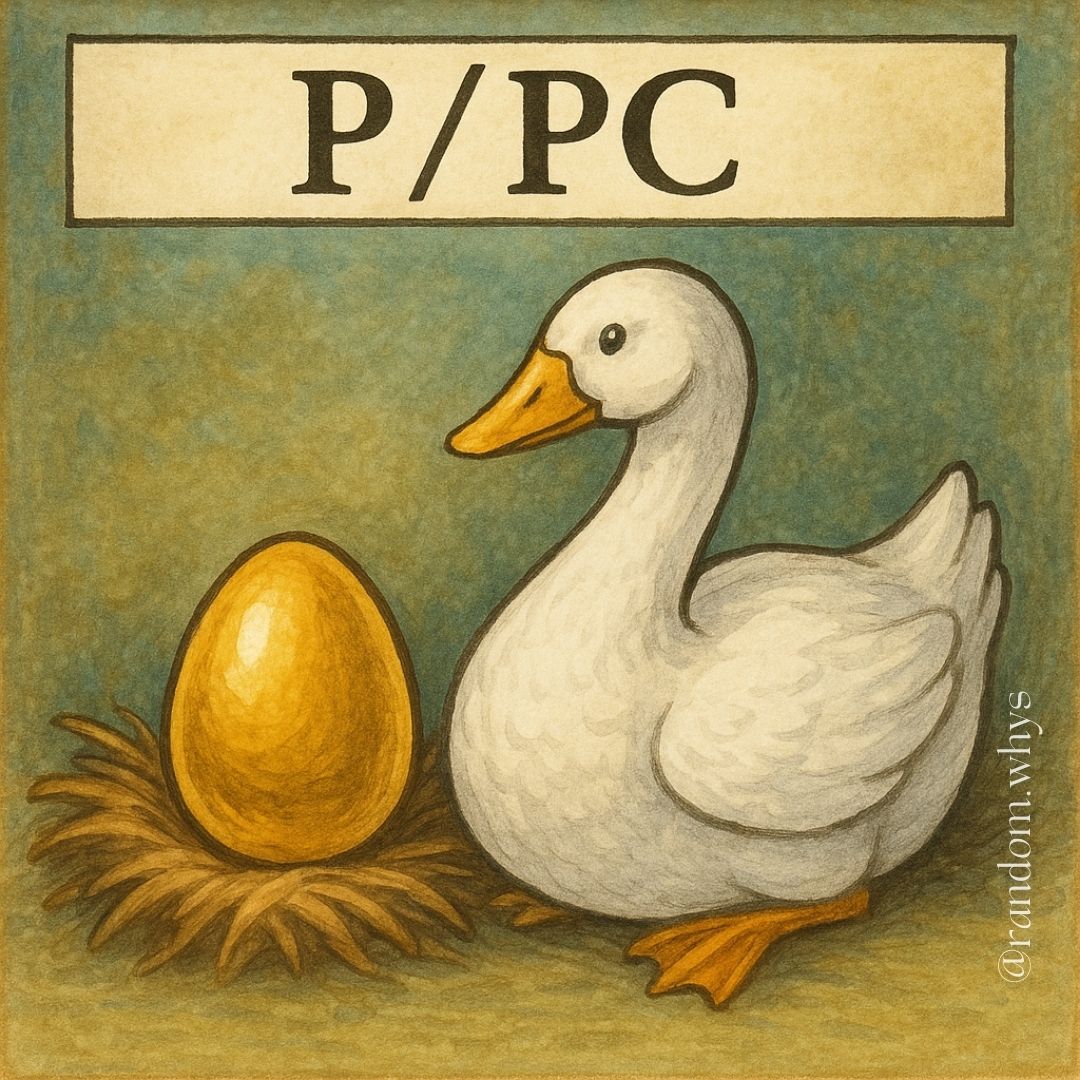
It’s a chicken-and-egg problem. The system pushes what performs. We start copying what the system pushes. Eventually, what could have mattered gets buried because it didn’t look like what people expected disruption to be.

There’s also a speed mismatch. True change takes time. Trust takes time. But the system moves in seconds. So we shrink big thinking into quick content. We oversimplify to stay visible and in doing so, lose the nuance that real work needs.

We’ve outsourced our sense of value to metrics, virality, and perception. That’s the real problem. So the question is

How do we build systems that reward the right kind of innovation?

Because as long as attention is the currency, we’ll keep optimizing for the illusion. And even the push for better systems won’t survive if no one sees it.

And here’s the tricky part! Even the transition to a better system needs visibility to work. Pure quiet revolution isn’t enough. To actually shift things, we’ll have to play the game just enough to change the rules.

Cheers!

PS: Different ecosystems, same trap!

Check out the other post: #DecodeAgri02: Who Shapes the System?

If you like what you see and wish to support my work, then

Share your thoughts/suggestion at the comment section or mail at

randomwhyss[@]gmail[dot]com

Don’t miss out! Get notified about new blog posts straight to your inbox !

(No spam, pinky promise!)

Enter your mail to receive updates

#DecodeAgri14: Who Shapes the System?

2–3 minutes

In my last piece, I wrote about how traders and consumers often act as the real buyers in agriculture. Their preferences, what sells, what fetches premium, what is required in bulk shape what gets grown by the farmers.

But that’s only one part of the system. If you shift the lens from building for the market to empowering farmers on the ground, the story becomes more complex.

Farmers don’t resist change because they’re stubborn. They resist it because they’ve learned to be careful. With limited margins, high risk, and often no fallback, they adopt tools only when they’re useful, proven, and trusted. A weather app that helps decide when to sow, a neighbor who sees better yield after using a soil test and that’s what moves them.

Information, when accessible and actionable, makes them confident. Not because they’re being “pulled” by the market, but because they see value in their own terms. The agricultural system is not a straight line from consumer to trader to farmer. It’s a dynamic web.

Farmers make decisions based on subsidies, local prices, water availability, and peer behavior. Traders respond to what’s produced. Governments quietly shape the direction through policy. And consumers rarely see the full picture.

So yes, in business terms, the buyer is often someone downstream. But in development terms, the farmer is not passive. They’re navigating constraints, testing options, and influencing outcomes in their own way sometimes visibly, sometimes subtly.

They may not pull the demand but they hold up the system. If Part 1 was about following the money, Part 2 is about understanding the ground. Traders and consumers may pull demand they shape what gets bought. But farmers carry the weight, they decide what’s possible, sustainable, and worth the risk.

In agriculture, it’s not about who leads and who follows. It’s about how value flows and how choices are made across a system that’s part market, part habit, part survival.

Cheers!

PS: Farmer lens

Check out the previous post: So… What’s Next?

Follow on IG X for more!

If you like what you see and wish to support my work, then

Share your thoughts/suggestion at the comment section or mail at

randomwhyss[@]gmail[dot]com

Don’t miss out! Get notified about new blog posts straight to your inbox !

(No spam, pinky promise!)

Enter your mail to receive updates
So… What’s Next?

1–2 minutes

I wish I knew. Lol. IDK. But I’m not done yet!

That question, what’s next? keeps showing up!

Doesn’t matter how old you are, how much you’ve built, or how sorted you look. Everyone’s still figuring it out and has their own iterations going on.

People talk about FIRE, exits, freedom. But even the ones with money or status seem to keep going. Boredom doesn’t spare anyone.

So maybe what’s next isn’t a crisis. Maybe it’s just a quiet sign, we are growing again.

As you start to walk on the way, the way appears – Rumi

Cheers

Check out the previous post: Choosing a life partner isn’t a vibe check!

If you like what you see and wish to support my work, then

Share your thoughts/suggestion at the comment section or mail at

randomwhyss[@]gmail[dot]com

Don’t miss out! Get notified about new blog posts straight to your inbox !

(No spam, pinky promise!)

Enter your mail to receive updates

Choosing a life partner isn’t a vibe check!

3–4 minutes

It all started with a comment.

Someone left a sharp reply on my blog post about the movie review Hotspot. It didn’t feel like just an opinion but more like a personal rant wrapped in a review. It stayed in my mind. So, I replied him a few questions.

That moment reminded me that many people carry quiet anger about love, marriage, gender roles until something sets them off. Online or offline, we’re all triggered in different ways. I keep hearing different stories.

And honestly? I didn’t think I’d end up writing one of those “Here are my top 10 lessons” kind of posts. LOL. And yet here I am. (shamelessly laughing). But let me be clear: This post is not about blaming men or women. This space isn’t meant to dissect who’s right or wrong in every breakup, divorce, or murder case. I am not a dating coach.

Instead, I want to share some questions and tools that helped or still helping me find clarity about relationships. These won’t fit everyone so take what lands, and leave the rest.

Part 1: Self Awareness

Before choosing someone, check in with yourself!

1. Why do you want a partner?

Is it love, support, intimacy, shared goals or am I just tired of being alone?

2. What you want vs. what you cannot accept?

Life values, direction, energy, mental health, life goals and more

3. What’s flexible vs. non-negotiable/deal breakers?

Even one clear line helps. You don’t need a perfect map, just a starting point.

4. Define your own love script

Own definition of love, relationship, communications, values including family

5. Understand attachment styles

Are you anxious, avoidant, or secure?

6. Talk money

Income, spending habits, savings, attachment towards money.

7. Can you accept change in both of you?

People evolve. Not all growth is together. Others outgrow or grow away. Can you hold space for both love and loss if it comes to that?

Part 2: Family, Culture, and Social Setup

1. Understand the setup

Especially in India, marriage is rarely just two people. It’s families, expectations, caste, religion, unspoken hierarchies.

Real Talk

Clarity isn’t about getting everything perfect on day one. Because love is emotional. Messy. Sometimes magical. Life is fragile. But also partnership is daily. Shared decisions. Mental load. Money. Space.

Yeah, it’s a lot. Choosing a partner is like choosing a co-founder. If it works, you build something powerful. If it doesn’t, it drains you mentally, emotionally, even financially. And if you haven’t found that fit yet? There’s no shame in being a solopreneur right now. At the same time, don’t fall into decision paralysis. You’re not meant to have it all figured out.

And no. You don’t have to tick all boxes. Life isn’t a checklist. And if you’re in a worst-case setup where choices feel limited, create some leverage.

Above all, don’t lie to yourself.

This is not about judging what kind of relationship you’re in. It’s about asking yourself, Is this working for me or both of us? Whether it’s a casual story or a life partnership. Take what resonates and ignore the rest.

Bookmark this if you’re not ready to answer now. Some questions need time. Share with people who might fight this useful.

Cheers

PS: Thanks, Anirudh. This one’s not for casuals or breadcrumb blues.

Check out the previous post: Slow Art of Deep Connections!

If you like what you see and wish to support my work, then

Share your thoughts/suggestion at the comment section or mail at

randomwhyss[@]gmail[dot]com

Don’t miss out! Get notified about new blog posts straight to your inbox !

(No spam, pinky promise!)

Enter your mail to receive updates

Slow Art of Deep Connections!

1–2 minutes

As the years pass, life begins to shift. People grow into their own world of families, careers, quiet burdens. Part and Parcels of life. Some stay close. Some slowly drift and some quietly fade into memory.

Not every relationship lasts. Not every connection deepens. Some are meant for a moment, some built around shared goals, places, or seasons. They come, they serve, they move on.

But every once in a while, a deeper bond takes root. Not instantly. Not loudly. But slowly across years, shared silences, mistakes, and growth. These are the connections where presence matters more than performance.

They don’t demand attention. They hold space. They evolve as both people do.

Such bonds are rare. They require tending, trust, and truth. But they cannot be forced or demanded. They grow only where both hands are willing.

Only built with consistency, humility, and depth. They are the ones who’ve seen us through different versions, stayed through the updates.

In life, having even two or three such people maybe quiet kind of success. And even if such bonds don’t exist yet, begin now. Build! As Charles once said

To get what you want, you have to deserve what you want.

It holds true for all forms of connection. The work done in solitude, with sincerity, is never wasted. Depth doesn’t arrive by chance. It is built and it is returned.

No matter how isolated you are and how lonely you feel, if you do your work truly and conscientiously, unknown friends will come and seek you. — Carl Jung

Cheers

PS: எனக்கு வேற வழி தெரியல ஆத்தா!

Check out the previous post: Naive Beginnings, Brutal Middles!

If you like what you see and wish to support my work, then

Share your thoughts/suggestion at the comment section or mail at

randomwhyss[@]gmail[dot]com

Don’t miss out! Get notified about new blog posts straight to your inbox !

(No spam, pinky promise!)

Enter your mail to receive updates

Naive Beginnings, Brutal Middles!

1–2 minutes

Sometimes, not knowing is what saves you.

Because if you really knew how hard it was going to be how long, how uncertain, how heavy you might not start at all. We might even flinch! That’s the strange grace of naive beginnings. You don’t know what you’re signing up for. You just start, with bit of courage that things will be okay.

That’s how this blog began. No grand vision. Just a push to write. I showed up. Then I drifted. Thought it was over. Assumed it to be dead!!!

Then, yesterday, a new subscriber showed up (Thank you). Just like that. A tiny nudge! Turns out, some things don’t die.

So here I am. Writing again. Not because I know what comes next. But because something in me won’t let it go.

Because maybe that’s the whole point! Start the thing. Even if it scares you. Especially if it does. You don’t need to know how it ends.

Naive Beginnings. Brutal Middles. Unknown Ends!

Cheers!

PS: You never know!

Check out the previous post: Future Children: of Flesh or of Code?

If you like what you see and wish to support my work, then

Share your thoughts/suggestion at the comment section or mail at

randomwhyss[@]gmail[dot]com

Don’t miss out! Get notified about new blog posts straight to your inbox !

(No spam, pinky promise!)

Enter your mail to receive updates